

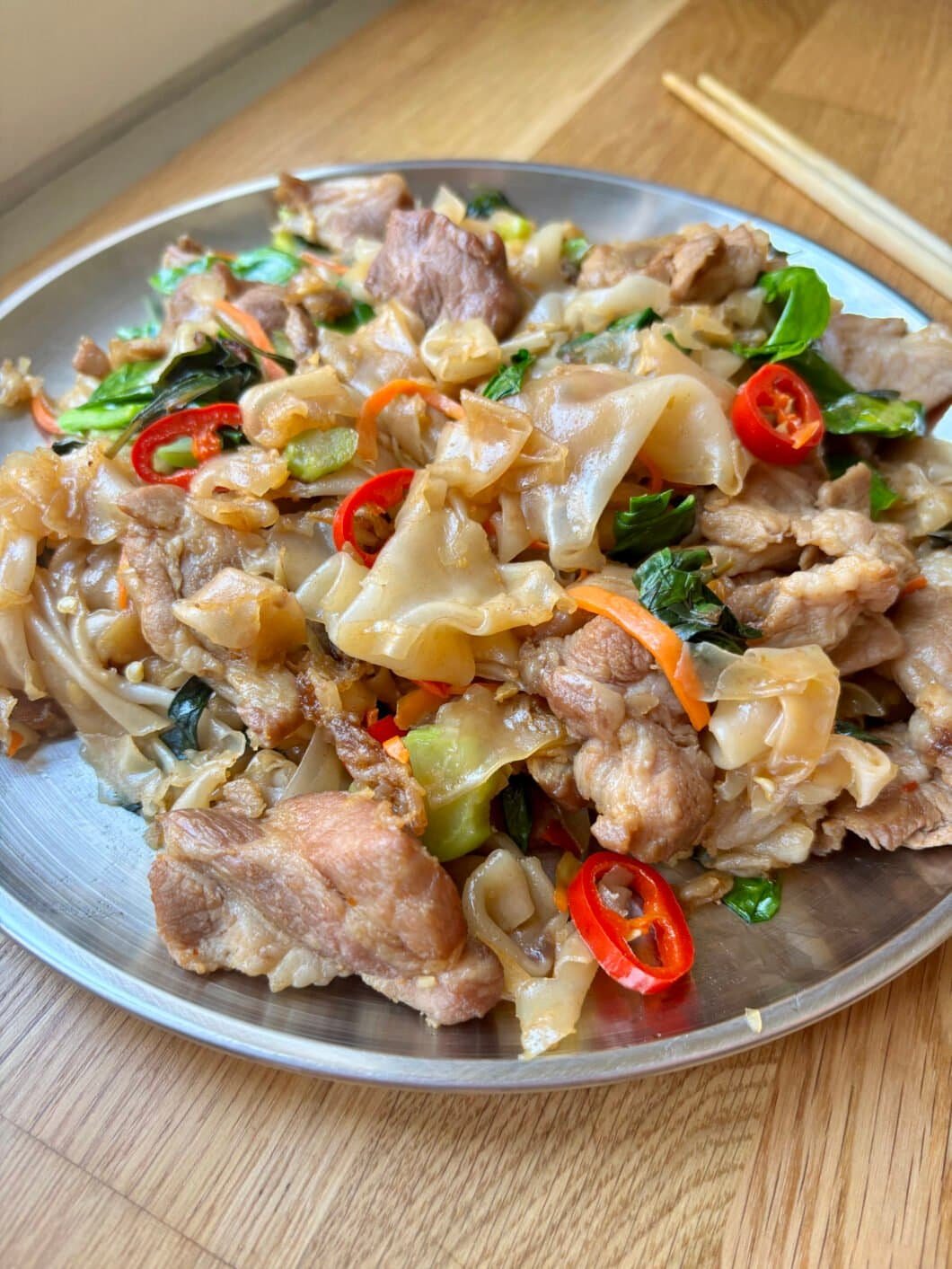
Let me just say it: drunken noodles are my number one stir-fried noodles of all time. And trust me, coming from someone who has stir-fried pretty much every noodle she could get her hands on, that’s saying something.
Here’s the bold part: this version is even better than the ones I had in Thailand. I’m very serious. The perfume of the holy basil and grachai, the slight char on those wide, chewy noodles, and a sauce ratio that sits on the lighter side – which is absolutely PERFECT, because this is not a saucy dish, mind you. It just needs a frank boost of umami savouriness, and then it gets out of the way.
Drunken Noodles – About the Dish
In Thailand, drunken noodles go by pad kee mao – pad meaning stir-fried, and kee mao meaning, quite literally, drunkard. And no, there isn’t a single drop of alcohol in them. Nobody really agrees on where the name comes from: some say it’s the perfect late-night dish to soak up a few drinks (or cure the hangover the morning after), others that it’s so fiery you’ll need a cold beer to survive it, and my personal favourite theory is that it was invented by someone tipsy throwing whatever was left in the fridge into a screaming-hot wok.
Whatever the origin, pad kee mao is a proper street food staple, and it’s all about bold, fresh aromatics rather than sauce. Wide fresh rice noodles are tossed with a pounded garlic and chili paste, holy basil and a handful of vegetables, then left to catch a little smoky char in the wok. It’s hot, it’s herby, it’s savoury, and it’s everything I love about Thai cooking in one plate.
Drunken Noodles – Recipe
Ingredients – Advice & where to find them
- Fresh wide rice noodles: this is the important one! Look for the fresh, flat and wide ones (often labelled “sen yai” or “ho fun”) in the fridge section of rather large Asian stores. Dried noodles just won’t give you that same chewy, slightly charred texture.
- Holy basil: it has a peppery, almost clove-like perfume that’s the soul of this dish. You’ll find it at rather large Asian stores – if you can’t, Thai basil makes a very decent replacement.
- Grachai (fingerroot): a wild ginger with a fresh, earthy, slightly citrusy aroma. It’s optional, but it adds that little something that makes people ask what’s in there. Look for it frozen or fresh at rather large Asian stores.
- Thai chilies: small but mighty. Three will give you a proper kick – lessen them depending on your spice tolerance. The large red chili is mostly there for color and a milder, fruitier heat.
- Chinese broccoli (“Gai Lan”): we’re only using the leaves here, roughly chopped, so they wilt in seconds at the end. Regular broccoli leaves or bok choy leaves will do in a pinch.
- Pork shoulder: a little marbling keeps it juicy over high heat. Slice it thinly – chicken thighs, beef or firm tofu all work just as well.
- Golden Mountain sauce: a Thai seasoning sauce, a bit like a sweeter, more savoury soy sauce. It’s easy to find in Asian stores, but you can simply substitute more soy sauce.
- Oyster sauce, soy sauce, fish sauce & dark soy sauce: the umami squad. Dark soy sauce is mostly there for color, so just a dash is enough.
- MSG: just a pinch, and yes, it makes a difference. It’s what gives that “restaurant” savouriness without making the dish any saltier.
Cooking Tips
- Only cook 2 servings at a time – overcrowd the wok and the meat and noodles will steam instead of char.
- Separate the noodles before cooking: if they’re cold and stuck together, warm them up in the microwave in 30-second intervals until soft, then gently pull them apart. Forcing them while cold is the best way to end up with broken noodle bits.
- Mix your sauce beforehand – everything moves fast once the wok is hot, and you won’t have time to measure anything.
- Get your wok very hot before adding the protein, and spread it out in a single layer so it sears rather than stews.
- Let the noodles sit without stirring for about 20 seconds once they’re coated in sauce, then flip and repeat 1-2 more times – that’s how you get those delicious charred spots.
- Add the basil and Chinese broccoli leaves at the very end, heat off, and toss just until they wilt, so the basil keeps all its perfume.
Hot, herby, smoky and ready in 30 minutes – no alcohol required, but I won’t judge you if you pour yourself a cold beer on the side. Enjoy!
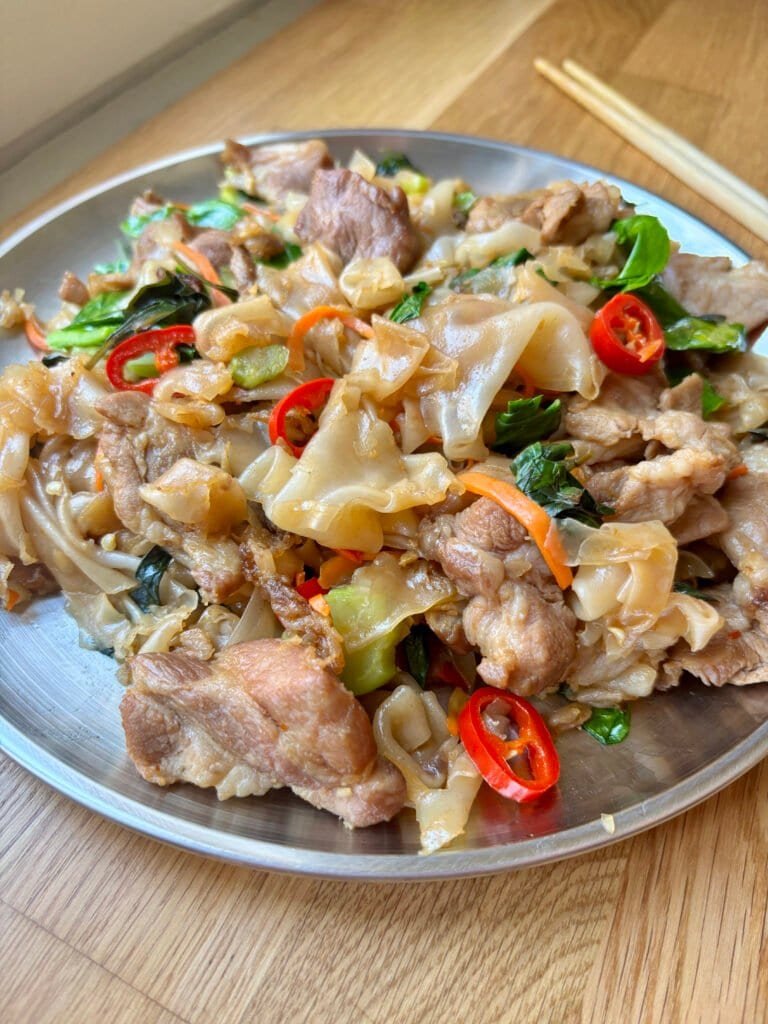

Drunken Noodles
Description
Thai drunken noodles (pad kee mao): fresh wide rice noodles stir-fried with pork, a pounded garlic and chili paste, holy basil and a light, savoury sauce, with plenty of smoky char - ready in 30 minutes.
Ingredients
Drunken Noodles
Sauce
Instructions
Make the Sauce
Mix all the sauce ingredients together.
Marinate the Protein
Use 1 tbsp of the sauce to marinate your protein. Let it marinate while prepping the rest of your ingredients.
Make the Garlic Chili Paste
Pound the garlic and Thai chilies into a paste using a mortar and pestle.
Prep the Veggies
Slice up your veggies: carrots, large red chili, grachai and Chinese broccoli leaves.
Separate the Noodles
Separate the rice noodles from each other. If they are cold, hard and stuck together, heat them up until soft or they will break. Carefully divide them into 3-4 smaller bundles, spread them out on a large plate and microwave in 30-second intervals, moving the noodles around for even heating. Once soft, pull the noodles apart until they are all separated.
Sear the Protein
In a well-seasoned or non-stick wok, heat about 2 tbsp of vegetable oil over high heat. Once very hot, add your protein and spread it out in a single layer. Sear on one side until browned or halfway cooked, then flip or toss and cook the other side until done.
Add the Aromatics
Add the garlic and chili paste. Let it cook for 30 seconds, until fragrant.
Add the Hard Veggies
Add the carrots, large red chili and grachai. Let it cook for 1 minute.
Add the Noodles & Sauce
Add the noodles and the remaining sauce. Toss until all the noodles are evenly coated and the sauce has been absorbed.
Char the Noodles
Once the noodles are well coated, let them sit in the pan without stirring for 20 seconds, or until charred in some spots. Flip the noodles and repeat 1-2 more times.
Finish with Basil & Greens
Add the holy basil and Chinese broccoli leaves and turn off the heat. Toss until they wilt.
Serve
Serve and enjoy straight away!
Note
Only cook a 2-serving batch at a time in the wok, otherwise the meat and the noodles won't char properly. Double the recipe by cooking two batches back to back.