

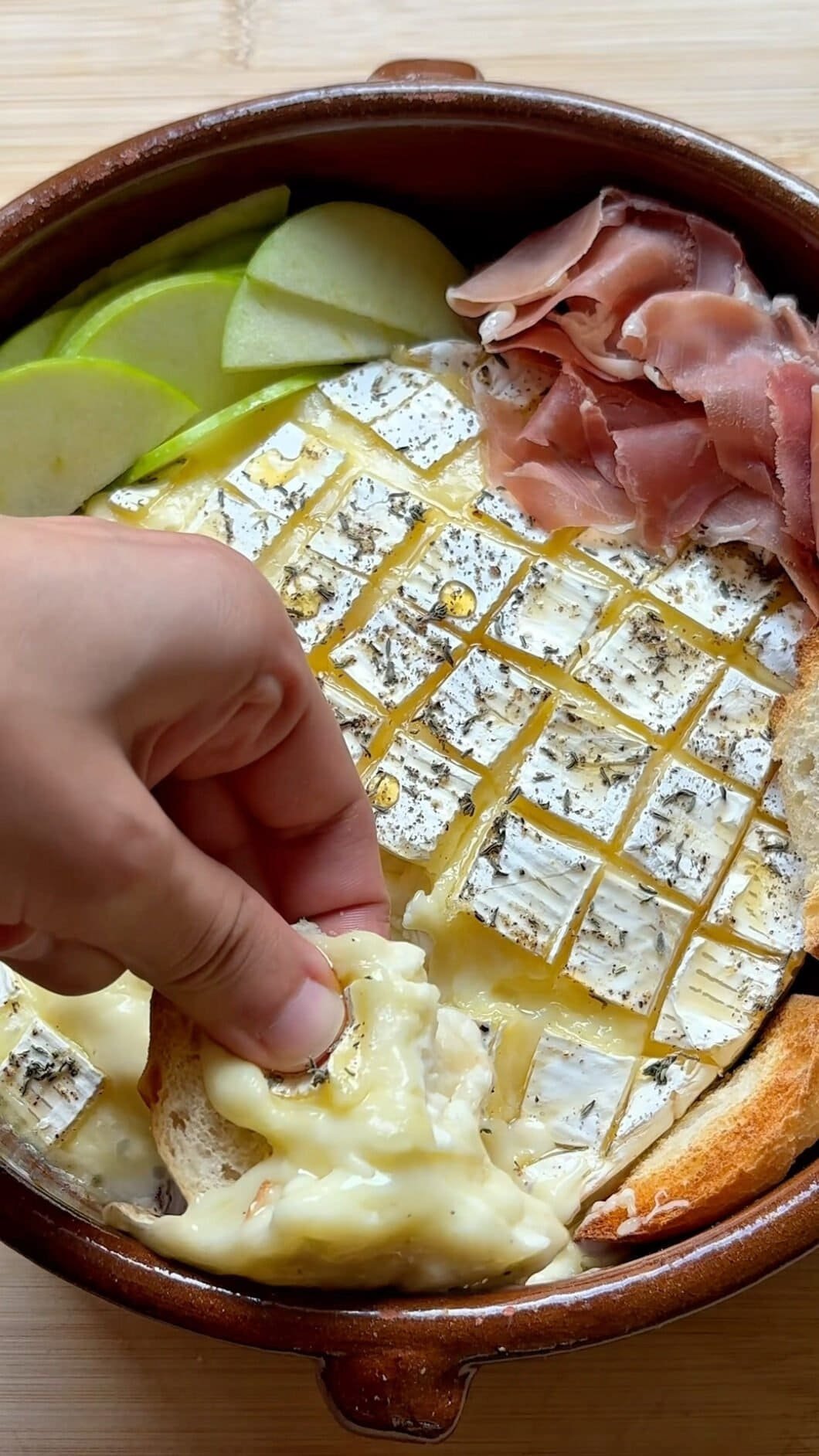
The first time I watched someone slide a whole brie into an oven, I had a very French reaction: I was mildly offended. In my house, brie lived at the end of the meal, cold, on a wooden board, right next to the bread basket, and absolutely nobody was allowed to do anything to it. Heating it felt like a small act of vandalism.
Then I tasted it, and I ate every one of my words along with the cheese. Fifteen minutes in the oven, a drizzle of honey, a bit of thyme, and you get this ridiculous molten pool you tear bread into. It’s now my emergency apéro – the one I pull out when people announce they’re coming over in an hour and I refuse to be seen panicking.
Baked Brie – About the Dish
Brie is named after the place it comes from – la Brie, a stretch of farmland just east of Paris, in Seine-et-Marne. The two serious ones, Brie de Meaux and Brie de Melun, are both AOP protected, and France has never quite recovered from what happened in 1815: at the Congress of Vienna, somewhere between carving up post-Napoleonic Europe, Talleyrand reportedly staged a cheese contest. Dozens of cheeses from across the continent, one winner, and Brie walked away crowned le roi des fromages, the king of cheeses. The story is probably half legend. We tell it anyway.
Baking the thing whole, though, isn’t French at all. Baked brie is North American party food, usually wrapped in puff pastry with cranberries somewhere in the picture, and it turns up on every holiday table from November onwards. This version skips the pastry entirely – no crust, just the rind doing the work – and leans on honey and thyme in the oven, then green apple and Parma ham scattered around it. Sweet, salty, sharp, with a molten centre in the middle of it all. Not quite French, not quite American. Just an extremely effective board.
Baked Brie – Recipe
Ingredients – Advice & where to find them
- Brie: buy a whole small wheel of 400–500 g, never a wedge – you need the rind intact all the way round, because it’s the only thing holding the molten cheese in. One that’s already a little ripe and gives under the finger will melt far better than a firm, chalky supermarket one.
- Green apple: Granny Smith, or anything properly tart. It’s there to cut through all that melted fat, so sweeter varieties like Gala won’t do the same job.
- Parma ham: real prosciutto di Parma if you can, sliced thin at the counter rather than pre-packed. The thinner it is, the better it drapes, and the more it softens against the hot cheese.
- Honey: a runny one with some character ideally – chestnut, thyme or acacia. It goes straight onto the brie before baking so it caramelises slightly.
- Fresh thyme: fresh if possible. Dried thyme turns dusty in the oven, while fresh sprigs perfume the cheese as it melts.
- Black pepper: grind it fresh and be generous – it’s the only thing standing between you and pure richness.
- Bread: sourdough or focaccia, toasted and cut thick. It has to be sturdy enough to survive being dragged through molten cheese without folding in half.
Cooking Tips
- Leave the wheel whole and the rind on – it isn’t a garnish, it’s the bowl. Cut into it before baking and the cheese escapes all over the tray.
- Bake it in the dish you’ll serve it in – a small baking dish, or the wooden box it came in with any plastic removed. Once it’s molten, moving it stops being an option.
- 180°C for 12–15 minutes, and keep an eye on it – you want it liquid at the centre, not collapsed. Go too far and the fat splits and it turns greasy.
- Check with a fingertip rather than a timer – press gently on the middle of the wheel; it should feel like there’s nothing solid left under the rind.
- Slice the apple while the brie bakes, not before – ten minutes of sitting around is all it takes for the slices to go brown.
- Tear the ham, don’t lay it flat – scrunching it into loose ribbons gives the board height and makes four slices look like plenty.
- Open the top at the table – slicing the rind in front of everyone, with the cheese still moving, is the whole point of the dish.
- Serve it immediately – brie sets fast as it cools, and reheating it a second time never gives you the same texture.
Fifteen minutes, one wheel of cheese, and the whole table goes quiet. Bon appétit!

Baked Brie
Description
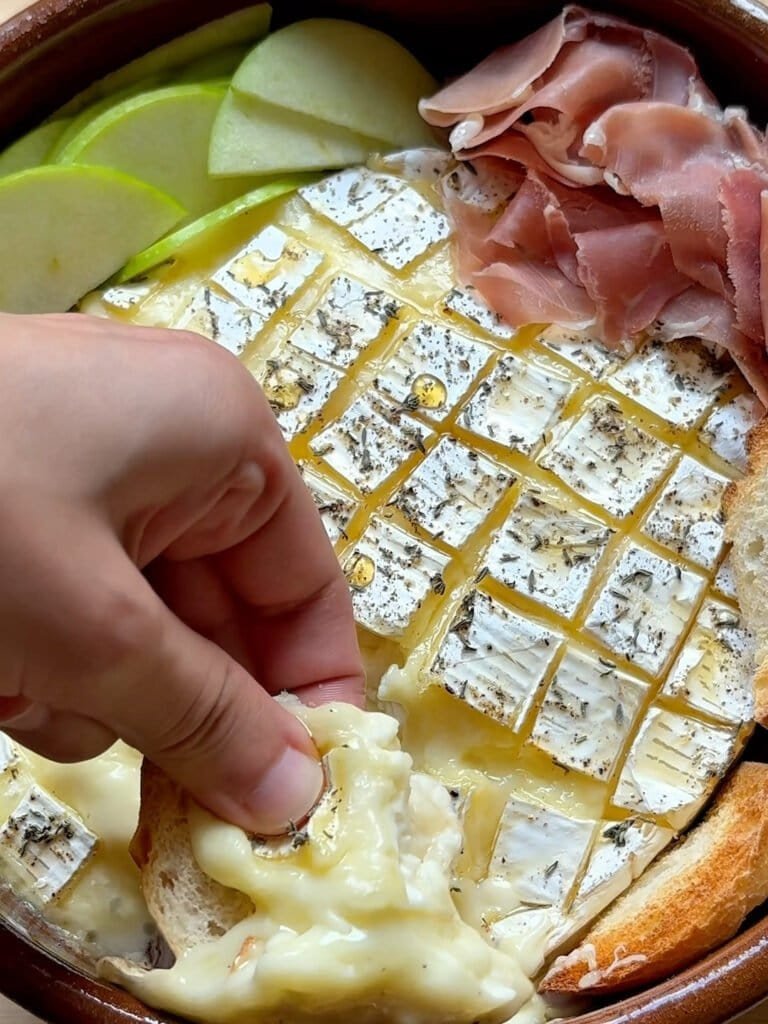
A whole brie baked with honey and fresh thyme until the centre is completely molten, served straight on a board with crisp green apple, torn ribbons of Parma ham and plenty of toasted bread. Fifteen minutes of oven time for an apéro that looks like you made a real effort.
Baked Brie
Baked Brie
Instructions
Bake the Brie
Preheat & Season
Preheat the oven to 180°C (350°F). Set the whole brie, rind and all, in a small baking dish or on a lined tray.
Score the brie in a crosshatch pattern (see video).
Scatter over the thyme leaves, drizzle generously with honey and finish with a good grind of black pepper.
Bake
Bake for 12 to 15 minutes, until the centre feels completely liquid under the rind when you press it gently. Don’t push it further, or the cheese will split and turn greasy.
Build the Board & Serve
Prep the Board
While the brie bakes, slice the apple into thin wedges and tear the Parma ham into loose ribbons – torn rather than laid flat, so the board has some height.
Assemble
Set the hot brie in the middle of a serving board, still in its dish. Slice the top of the rind open to reveal the molten centre, then arrange the apple slices, the ribbons of Parma ham and the toasted bread or focaccia all around it.
Finish & Serve
Add a last turn of pepper. Serve straight away, while the cheese is still moving. Enjoy!