

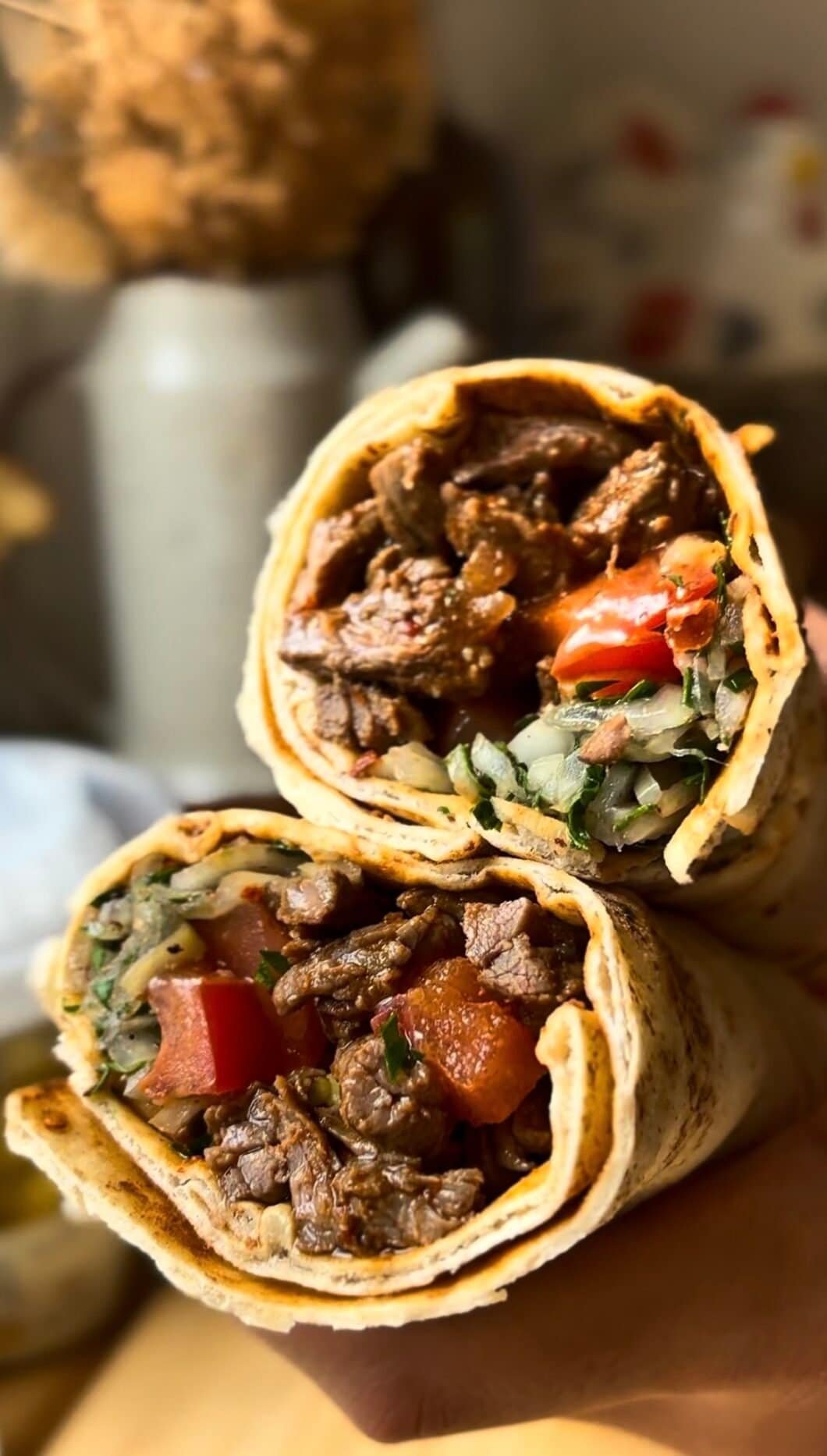
I’ve never been to Turkey, but the day this recipe landed in front of me, I genuinely started looking at summer flights. No exaggeration. It’s the umpteenth recipe to convince me that Turkish food is one of the great cuisines out there: menemen and Turkish eggs are already staples in my kitchen, and I don’t think they’ll be the last ones to join that list.
Here, you get all the pleasure of a kebab, but sharper, lighter, and a lot less heavy on the stomach.
Beef Tantuni – About the dish
Tantuni comes from Mersin, a city on Turkey’s Mediterranean coast, where it grew out of the cooking of Turkmen and Yörük nomadic communities. The name is thought to be onomatopoeic, echoing the “tan-tun” sound of metal spatulas hitting the sac, the large convex griddle street vendors cook it on.
For most of the 20th century, tantuni was considered food for people with very little money, made from cheap cuts, offal, lung, and beef fat. It wasn’t until the 1970s and 80s that vendors started using proper cuts of beef, and the dish climbed from frugal street snack to one of Mersin’s proudest culinary exports. It’s now tied so closely to the city that “Mersin Tantunisi” earned an official Geographical Indication in 2017, the same kind of protected status Champagne or Parmigiano-Reggiano carry.
Street vendors cook it fast and loud on that sac, then steam the bread directly over the sizzling meat before rolling everything together. At home, without a sac or a dedicated tantuncu setup, this version keeps the spirit intact: beef sliced paper-thin, seared hard and fast in beef tallow, and rolled into lavash dragged through the spiced pan juices right before you fill it.
Beef Tantuni – Recipe
Ingredients – Advice & key points
- Beef: bavette, flank steak, or chuck roast all work well here, look for something with enough marbling to stay juicy once shaved thin.
- Beef tallow: save trims from a previous cook, or buy it rendered. Makes the damn thing even more flavourful. That being say, if you don’t have it, neutral oil works.
- Pul biber (Aleppo pepper): don’t swap this out, it gives the meat a gentle, fruity heat that plain chili flakes can’t replicate.
- Sumac: brings the tart, lemony backbone to the onion salad, find it at any Middle Eastern grocery store.
- Onion: slice it paper-thin into half-moons. This isn’t a garnish onion, it’s meant to be eaten in real quantity.
- Bread: thin lavash, markouk, or any thin Lebanese-style flatbread. A thick pita will overwhelm the filling and won’t roll properly.
Recipe – Advice & key points
- Slicing the beef: freeze it for about 30 minutes first if you can, then cut it into thin slices before chopping those into small pieces.
- Get the pan properly hot: melt the tallow until it’s shimmering before the beef goes in, you want a real sear, not a simmer.
- Don’t touch it: let the meat sit undisturbed for 45 to 60 seconds once it hits the pan, that’s what allows the building of flavour.
- Season at the end: salt, cumin, paprika, and pul biber go in once the beef is nearly cooked, then give it another minute so the spices bloom in the fat.
- Add the water gradually: a few tablespoons at a time, you’re aiming for glossy and fragrant, never soupy.
- Warm the bread in the pan juices: a few seconds is all it takes, it’s what ties the whole wrap together.
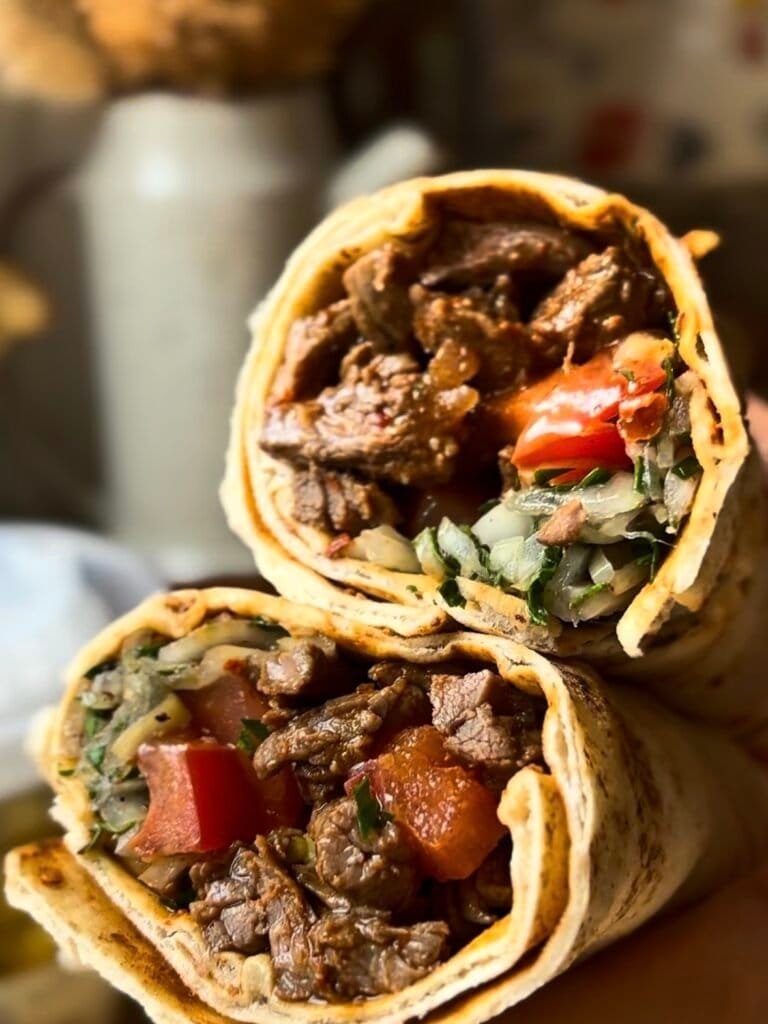

Beef Tantuni
Description
Paper-thin shaved beef, seared hard in beef tallow with pul biber and cumin, then rolled in warm lavash with a tangy sumac-onion salad. Ready in under 30 minutes.
Meat
Meat
Spices
Onion-Sumac Salad
Toppings
Bread
Instructions
Instructions
Slice the beef
Freeze the beef for about 30 minutes to firm it up, if you can, then cut it into thin slices.
Cut those sheets into small pieces, this double-cut is the real secret to authentic tantuni texture.
Heat the pan
Set a large skillet, plancha, or wok over high heat. Add the beef tallow and let it melt until shimmering and very hot.
Sear the beef
Add the beef and spread it out immediately in the pan. Let it sit undisturbed for 45 to 60 seconds to build a real sear, then start stirring.
Season
Once the beef is almost cooked through, lower the heat and add the salt, cumin, paprika, and pul biber. Cook for another minute so the spices bloom in the fat.
Add the water
Pour in the warm water a little at a time, stirring as you go. The mixture should turn glossy, saucy, and very fragrant, but never soupy or liquid.
Warm the bread
Pass the lavash through the spiced pan juices for a few seconds to warm it and pick up all that flavor.
Assemble
Layer the beef, onion-sumac salad, and fresh tomatoes onto the warm bread, squeeze over some lemon juice, and roll tightly. Serve right away with pickled peppers and extra lemon wedges on the side.