Post Type ArchivesRecipes

Express gochujang mushroom tacos

Do you believe in Korean-Mexican fusion ?

I’m not sure I did, but I sure do now ! And it makes sense ; these two countries do have a passion for fiery, bold food.

This tacos idea popped into my head on a weeknight, when I was wondering what to do with some mushrooms patiently waiting in my fridge. I was craving tacos, but I did not have the necessary time or ingredients to make authentic Mexican salsas.

Drooling about all these spicy salsas, it dawned on me : gochujang ! Gochujang is spicy, gochujang is a ready-made paste : just play around with it and it’ll make a damn good sauce !

The recipe is as simple as it gets :

  • tear apart your oyster mushrooms ;
  • mince some garlic ;
  • cook the mushrooms, while you mince your cheese and make the express sauce ;
  • assemble your tacos in a pan with some cheese.

Fair warning : these tacos taste amazing, even for non-vegetarian people. The meaty texture of the oyster mushroom is enhanced with my secret ingredient : smoked salt ! If, in addition, you turn up the heat by the end of the cooking time, you will get nicely brown, smoky-flavoured bites.

The melted cheese on top is just an added bonus.

Caution : It’s definitely not a very spicy recipe, but if you have to be ok with a bit of heat to enjoy these tacos. If you feel wary, you might replace half the gochujang with ketchup.

Express gochujang mushroom tacos – Recipe

Ingredients – Advice & key points

Four ingredients here might be tricky to find : tacos, Oaxaca cheese, Gochujang, and smoked salt.

  • For the tacos and Oaxaca cheese, if you’re in France or in Spain, you can order from La Esquinita. They also have a physical shop in Paris I go to. They don’t always have Oaxaca cheese, though ; when I can’t find it, I just replace it with mozzarella cheese (the harder kind sold in tubes, not the mozzarella balls, as they contain too much moisture).
  • For the smoked salt, I found mine in a cooking store in Paris : G.Detou. The easiest way to find it though if you do not live here is to order it online ! It’s ok if it’s not Salish smoked salt from Washington ; as long as it’s wood-smoked salt, it’ll be perfect.
  • For the gochujang :
    • If you’re in Paris :
      • you can go to Tang Frères in the 13th (they have other stores in Paris but be careful, some are small, this one is large) or Paris Store in the 10th ;
      • ever since I moved to the 18th, I’ve been going to XP 16 or Chen Market, but those shops are slightly smaller, especially XP16, and they sometimes run out of stuff. 
    • If you’re in France :
    • For my foreign friends : I bet you can easily find some Asian shops around you or online, but if you can’t, message me with your location and I will try to find it for you !

Ingredients & cooking – A few specifics

  • Tacos : As usual, I recommend using corn tacos, which are more traditional are flavorful than their wheat counterpart. But you can still use those if you want.
  • Gochujang : This is a traditional Korean red chili paste that also contains glutinous rice, fermented soybeans, salt, and some sweeteners. It’s Don’t buy Gochujang “sauces”, which are mostly packaged in bottles ; it needs to be a paste, which is highly concentrated, salty, savory and a teeny bit sweet. It is often packaged in red rectangular plastic boxes, or in glass jars.
  • Mushrooms : I tend to use a cast iron pan to get a nice char on those mushrooms, which I recommend. But you can still get a char with any pan you use. If the shroomies released too much moisture, just make sure to turn up the heat for a few minutes towards the end of their cooking time, when they’re dried and ready to brown up !

Now let’s taco !

If you want more vegetarian recipes, you can also check my Autumn mini-pizzas.

Authentic Polish Golumpki (Stuffed Cabbage)

My companion has Polish roots from his father side.

Somehow, this made me take an interest in Polish cooking. He was not served many Polish dishes when young, but it makes it feel extra special to pay tribute to his family, who are all absolutely lovely people.

The first Polish staple I learnt to cook is Golumpki ! I had it a couple of times at the restaurant and loved it. The homey flavours of a handmade, humble meal just hit the spot for me. I like the fact the meat here does not prevail ; I’m no vegetarian, but I try to make my cooking more sustainable by mostly seeing meat as a flavour booster rather than a meal in itself. With equal parts rice and meat, you will not get an overly meaty filling.

The flavours here are delicate and simple : veal, pork, rice, onion, and rosemary, that’s basically it ! The texture play though is lovely ; this moist filling is wrapped in tender yet still slightly crunchy cabbage, and the tomato sauce coats it all, making it cozy while adding a needed acidity to the recipe.

Golumpki are a labour of love : this is not a weeknight recipe, but bear with me, you will get a 6-servings delicious, original and cheap meal out of it !

Authentic Polish Golumpki – Recipe

Ingredients – Advice & key points

  • Cabbage : Use white or green cabbage to make it authentic. You can also use savoy cabbage, which I did once, and it turned out great.
  • Meat options : I use a 50/50 mix of veal and pork. You could use beef and pork, which is more traditional, but I like the tenderness of veal in meat fillings. You can also use any kind of meat or mixed meats you want (chicken, lamb…). If you choose lean meats such as chicken, be sure to add 1 to 2 tbsp of oil to your mixture to make it moist enough.
  • Rice : Use any kind of rice you like ! I usually use basmati rice.
  • Optional egg addition : If you want your filling to hold itself together well, you can add one egg to it.
  • Tomato sauce : In some recipes, you will see the addition of heavy cream. Feel free to add some if you like ; I prefer mine without to preserve the acidity and full taste of tomatoes.
  • Broth : I use store-bought here, since the meat already brings in lots of flavour. Feel free to use homemade if you can !

Cooking Advice & key points

  • To see how to parboil cabbage leaves and roll golabkis, check out my recipe video.

Now let’s roll !

Sausage Bánh mì

I’m all about skimming the internet in order to find the most authentic, traditional recipes you can -because it’s often traditional for a reason.

But sometimes, your girl just wants to have fun !

I needed to use leftover sausages and mayo from a barbecue with friends. I also happened to have pickled carrot and radishes lying in the fridge, that I made for a Bò bún recipe.

Then it dawned on me. Of course ! Let’s make Bánh mìs ! I always keep some French baguette in the freezer, so there was nothing extra I needed to buy.

Bánh mì is one of my favourite sandwiches : my companion and I are fond of it. We order one on a monthly basis. We once queued for 30 minutes to get, supposedly, one of the best Bánh mìs in town -which turned out quite disappointing, anyway.

These sausages are an easy way to replicate the porky flavour of the traditional dac biet with minimal fuss. The cooking part is just : cook your sausages. That’s it.

Now of course, you might not have mayo and pickled carrot and radishes on hand. This is why I add an extra 40 minutes to this dish, because without, it’d be ready within 15 minutes, cooking included. You’d also have to prep your pickles the day before.

I was very happy with the end result ! You’ll find all the flavour markers of true Bánh mìs, except for the meat – and yes, I don’t like maggi sauce, so I don’t use it. Plus, you’d have some good mayo to use up with any fries you want, and some long-lasting pickles to put in salads, sandwiches or, like I did, in a Bò bún.

If you like banh mis, give it a go !

Sausage banh-mi – Recipe

Ingredients – Advice & key points

  • Mayonnaise : I recommend using a homemade mayonnaise. You can use my recipe for a foolproof mayonnaise.
  • Radishes : I used classic European pink radish here, because it was what I could find and its taste is close to Daikon. Daikon, a big white radish, is what you’d prefer using ; you can find it at the fresh produce section of your Asian grocery store.
  • Daikon and carrot pickles : I will publish a recipe for it if you want. Meanwhile, you can use this recipe ; i’d simply use white vinegar and adjust the vinegar amount to almost match the water amount.
  • I’d advise you to use a mandoline for all your veggies to make it quicker, but you can still do it with your classic knife.
  • I really prefer my baguette not overly crispy in Bánh mìs, which would make it less agreeable while eating.

Let’s sandwich !

Authentic ragù alla bolognese

When I think about pasta alla bolognese, the first picture that comes to my mind is the dish I used to be served at the school cafeteria. I remember how the cafeteria lady poured two big ladles of a very tomato-ey sauce on top of yellow buttered spaghetti. I’m sorry to say that my mother didn’t fare much better with her quick homemade version.

Therefore, I was never a big fan of pasta alla bolognese. Nothing special about them, juste this intense tomato taste that overshadowed the meat, which itself was quite dry and tasteless ; it was comforting, yes, especially when you buried it under copious amounts of cheese, but that was it.

Then I went to Sardegna, and had proper ragu alla bolognese out of luck. I say we got lucky because the dish originates from Bologna, in the Italian Peninsula, and differs from the food you can typically find in Sardegna. I am grateful for eating such a brilliant version of it without having to go to Emilia-Romagna. Please visit Hostaria Via Aemilia if you ever go there.

This experience blew my mind : the original version had nothing to do with whatever you can be served in most countries. Gone was this acidic, plain tomato taste ; instead, you were served pasta in a rich, stew-like meaty sauce that contained barely any liquid. It looked orangey-brown, without a hint of aggressive red. The ragù wasn’t simply plopped over some overcooked pasta but coated each bit of fresh, homemade pappardelle. The meat was not your thinly ground, overly-processed looking beef, but thicker bits of beef and pork coarsely ground, which felt and tasted like actual meat.

I knew I had to recreate this dish at home the Italian way, without messing with tradition. I was only half surprised to discover that they went so far as filing it with the Bologna Chamber of Commerce on October 17, 1982 !

They are right though : this recipe is precious, and should not be forgotten over the years with the shortcuts most people take with it. On top of that, the traditional recipe is really simple to make ; just keep in mind that it ideally needs to simmer for 2,5 to 3 hours, or at least 2.

Authentic ragù alla bolognese – Recipe

Ingredients – Advice & key points

As a reminder, I usually go to Eataly to get the produce I need. If you don’t have one near your location, you can find the fresh produce you need at your local Italian deli, especially fresh pasta and pancetta.

  • Pasta :
    • Fresh pasta are favoured by most Italians for a ragù. Fresh pappardelle is the most traditional option, but you can also use any long pasta of your choice. Even short pasta will be well-suited for the recipe, as they will capture the meat from the sauce.
    • I buy fresh pasta from a local deli. It’s a great option if you don’t feel like spending 5 hours in the kitchen.
  • Meat options :
    • Ask your butcher for some coarsely ground beef, ideally not too lean ! He can chop it himself with a knife, or use a different setting from his grinding machine. This is what the authentic recipe calls for, because the flavour will be stronger.
    • In order to get the right richness for the sauce, it is important to add, besides your beef, the fattier pancetta. I used pancetta arrotolata, which the deli man sliced quite thin (around 0,5cm thick), then diced it in small strips, about about 1cm x 5cm.
  • Tomato sauce :
    • Use quality tomato sauce !! It makes a world of difference. The brands I use and recommend and Antonella, Nanù and Afeltra, with Afeltra as my personal favourite, especially their San Marzano kind. But just use any Italian good quality tomato sauce you can get your hands on.
    • I used peeled and diced canned tomatoes, but you can also use tomato purée (passata).
  • Soffritto : Please dice your onion, carrot and celery really thinly, without using a mixer.
  • Broth : I use store-bought here, since the large amount of meat already brings in lots of flavour. Feel free to use homemade if you can !
  • Milk : Yes, this is one of the secret ingredients of the authentic recipe. It counteracts the tomatoes’ acidity and improves the meat’s texture.

Cooking your pasta – Pieces of advice

  • Pasta :
    • Salt your pasta water appropriately, with around 10g of salt/liter.
    • Although we’ll end up adding the pasta to the pan with the sauce, we’ll just leave them here for a minute there, contrary to the Carbonara recipe.   
  • Plating :
    • I recommend heating your plates in the oven for 10 minutes at 80°C before plating. This will keep your pasta warm longer.

Take out that Dutch oven and treat yoself !

Not to mention, this ragù is the foundation for decadent homemade lasagna… A recipe I will be glad to post soon, too.

Leftover chicken, egg and celery wrap

I love sandwiches ! I never understood why it was seen by many as subpar, or something to eat when you’re short on time. A tasty sandwich can lighten up my day. When I was studying in Korea, I bought ready-made egg sandwiches at least once a week from the 7-eleven near my uni. They only contained eggs, mayo, and bread. I do not know their secret, but it was deliciously soft and moist. I wish I could find them in France.

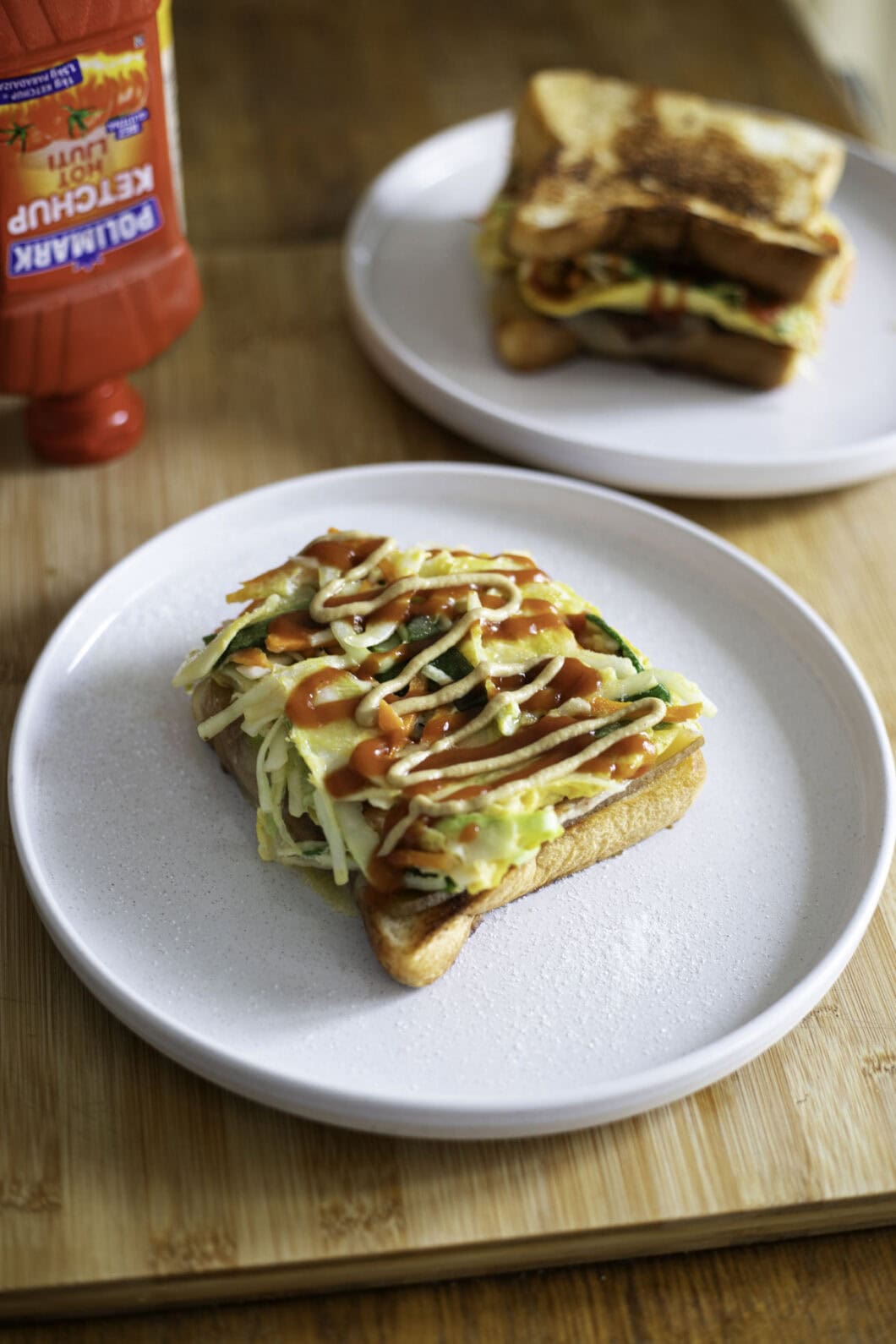
Egg salad is always a good idea, especially in some sort of bread. Hence, this sandwich. The addition of chicken helps build the flavour and texture. The much-needed shallots, green onion and celery brighten up this classic blend while adding some crunch. Just add some creamy and tangy mayo with sriracha, and you’ve got yourself a damn good wrap.

Feel free to replace the wrap with another type of bread of your liking.

Leftover chicken, egg & celery wrap – Recipe

Ingredients – Advice & key points

  • Mayonnaise : I recommend using a homemade mayonnaise. You can use my recipe for a foolproof mayonnaise.
  • Chicken : I usually make this sandwich when I have leftover chicken. Alternatively, you can quickly pan-fry 1 large or 2 small chicken breasts, which will only take around 5 minutes per side.
  • Salt and pepper : Use enough of them ! In simple recipes such as this one, you cannot be lacking in the seasoning department.
  • For my vegetarian friends, I would double the amount of eggs, squish them a little with a fork, and mix them directly with the rest of the ingredients. As it would lack a bit in texture, I’d recommend using classic bread slices instead of a thin wrap.

Let’s wrap !

Foolproof Mayonnaise

The French have a passion for mayonnaise. In decent French bistrots, you will always be served homemade mayonnaise with any dish containing meat and/or fries.

Homemade mayonnaise’s texture is just a dream. Thick but slick, eggy, rich and creamy, really in-between butter and oil.

I’m not one to obssess over making everything from scratch, but here, the grocery store version and the homemade one are simply worlds apart. What’s important is also that it doesn’t take longer than 10 to 15 minutes from start to finish. Try it and see for yourself : I don’t think you will ever go back to store-bought.

I used to be intimated by the thought of making it. But since using this recipe, I have yet to fail and see my mayonnaise fall apart.

A few pieces of advice -to make sure it all goes well !

  • Your ingredients should all be at room temperature ideally.
  • Not only does the addition of vinegar and mustard bring some flavour and tang to this mayo ; they both act as stabilizers, which is why this mayonnaise is failproof.
  • The addition of salt -which acts as a biding agent- before starting to whisk also helps.
  • The most important thing to keep in mind is to pour your oil ever so slowly, especially at the beginning. It should trickle down in one thin drizzle. I also recommend pausing from time to time if you feel you’ve overdone it.
  • You can use a simple whisk -your arm will have to work hard, but it will be ok, especially if you make a few pauses. The trick then is to use a kitchen towel to secure your bowl, because your hands will be busy holding the oil and the whisk. Alternatively, and I tend to do it most of the times, use a hand mixer with the whisk part attached. It will still feel a bit heavy anyway, with the hand mixer in one hand and the oil in the other, but everything will be stable.
  • In case it goes haywire, it’s possible to mix a small amount of botched mayonnaise with a fresh egg yolk in a clean bowl. Then gradually add the mayonnaise.

Now you’re ready to slather the deliciousness all over your sandwiches, fries and into your salads.

Beef bulgogi

Ever since I came back from Korea, I’ve been missing the classic beef bulgogi.

This dish shows that the Korean cuisine, that I would usually describe as bold (strong fermented tastes, spicy dishes), can also be delicate yet still as flavourful. The dominant flavour would be soy sauce, but here it becomes quite sweet thanks to the fruit juices and the sugar. The garlic and ginger bring a bit of punch. Just add some spring onions by the end and it becomes everything you want ; salty, smoky, sweet, perfumed and fresh.

Beef bulgogi is at its best when barbecued, but you can pan-fry it (use a cast-iron pan if you can) as well.

Bon appétit !

Beef bulgogi – Recipe

Ingredients – Advice & key points

  • Be careful to account for the marinade time ! It’s best to prep this dish the day before you cook it.
  • Beef :
    • You can buy it pre-sliced at the frozen section of your Asian grocery store, if the store is large enough.
    • If you cannot find it, it’s ok ; you can easily slice the meat paper-thin at home ! You will only need to freeze your cut around 1 hour (maybe more, depending on its size) to make it easier to cut. It should be quite solid, but not rock-solid. I often do this even if I can get frozen pre-sliced meat, simply because it is easier for me to check the meat’s quality when I buy it from by butcher.
    • If choosing from a butcher, I recommend using a good cut of beef, like ribeye or tenderloin, but you can also use flank steak ; the marinade will help tenderizing it. It is important to choose a cut that is not too lean so that the meat remains tender.
    • Also, remember to cut against the grain to get a tender texture.
  • Nashi pear : You might find it at your Asian store if they have a fruits and vegetables section. Otherwise, replace it with red apple.
  • The remaining ingredients are either basic Asian pantry items or produce you can easily find at the grocery store.

How to eat bulgogi

  • You can eat it like me, wrapping your bulgogi in lettuce leaves, with some rice, Ssamjang and a bit of kimchi !
  • You can also make simple bulgogi rice bowls, which is what I do most of the time. Simply cook some Korean rice and pour over your bulgogi. This is easy to make and reheat for lunch or later use.

Let’s dig into it !

Spicy Szechuan beef soup (Mala Xiao Mian)

This is one of my all-time favourite dishes. I am excited just writing those lines.

Around 10 years ago, I did not know much about Asian cuisine. I was finishing a finance internship in Paris, and we were looking for a cheap, student-friendly place to eat. A foodie friend took us to this new little restaurant called Trois fois plus de piment, specialized in Szechuan cuisine. I ordered a ravioli soup, thought, meh, this is spicy and pungent, not sure I like it.

Fast-forward 2 years, I went to South Korea as an exchange student and discovered the beauty of their spicy, fiery cuisine. It was an eye-opener for me, and the starting point of my journey towards Asian cooking, which, itself, is how I begun to cook so much and develop a passion for it.

I returned to France with a trained new palate, educated in all things spicy. I went back to Trois fois plus because I was craving some real heat, ordered the right dish this time : their best-seller Spicy Szechuan beef soup. Dang. It was love at first bite.

My boyfriend and I kept coming back for it. Soon I started trying to find a recipe for it, but they all seemed off to me.

I kept on researching, hoping that one day, I’d be able to make a Trois fois plus copycat. I am so grateful for authentic cooking blogs that developed over the past few years, coming from as far as China, allowing some random French people to discover wonderful foreign cooking secrets.

A few months ago, after some long-term research and trial-and-error, my boyfriend tried my latest recipe. I asked, “is it almost as good as Trois fois plus de piment ?”. He answered : “No. It is better.”

I couldn’t believe it. Then I tasted myself. And I had rarely been this happy and proud.

Mission accomplished.

Spicy Szechuan beef soup – Recipe

I know, this is a long list of ingredients. But you mostly stir everything together, wait for it to cook, and assemble !

If you’re not into spicy food though, or if you’re looking for an easy weeknight recipe, you want to go for a clearer, more straight-forward broth, such as this beautiful Napa Cabbage soup with shrimps from servedwithrice.com.

Ingredients – Advice & where to find them

Although I thing this dish is worth every effort, I recommend trying it if you are interested in Chinese cooking enough to make a few different national dishes. Indeed, it requires you to a buy a small list of specific pantry items.

  • If you’re in Paris :
    • you can go to Tang Frères in the 13th (they have other stores in Paris but be careful, some are small, this one is large) or Paris Store in the 10th ;
    • ever since I moved to the 18th, I’ve been going to XP 16 or Chen Market, but those shops are slightly smaller, especially XP16, and you might not find everything you need. 
  • If you’re in France :
  • For my foreign friends : I bet you can easily find some Asian shops around you or online, but if you can’t, message me with your location and I will try to find it for you !

Ingredients – What the hell are those

  • Suì mǐ yá cài, or yá cài : pickled mustard greens with a salty and pungent flavour. It uses the upper, thinner part of mustard leaf stems.”Suì mǐ” (“crushed rice”) refers to the appearence of the pickle, with a vegetable that is thinly minced. “Yá cài” refers to the vegetable name.

I couldn’t find it in the store, so I used Zha Cai, which is the lower part of the mustard stem. You can use it as a replacement. You’ll have to mince this one. But don’t skip it ! It is essential to reach the soup’s umami-deep flavour.

  • Doubanjiang, or Toban Jan : spicy, salty paste made from fermented beans and soybeans, salt, rice and various spices.
  • Shaoxing rice wine : one of the essentials of your Chinese pantry ! This one is darker than your classic rice cooking wine, and has a more complex taste
  • Chankiang vinegar (Chinese black vinegar) : another essential if you’re cooking Chinese food, or even if you only want to dump your chinese dumplings into the classic soy sauce and chinese vinegar mix. It is made out of glutinous rice, and has a malty, slightly sweet flavour.

Now let’s turn your kitchen upside down !

Basic Pickled Onions

Last winter, I had friends coming over to my place for brunch. I served them some avocado toasts with soft-boiled eggs and cilantro. When I grabbed my pickled onions jar to put some over, they were funnily impressed ! They though it was fancy and gourmet.

This is funny to me, because pickled onions are the simplest condiment to make. And you only need 3 ingredients besides water and salt ! You can customize their basic version if you want and add things like mustard seeds or bay leaves, but the plain ones are great too.

You don’t want to throw em everywhere just because they’re pretty ! I add some to a dish when it seems relevant, to offset a sweet flavour or a quite high fat content. They also give a nice kick to raw vegetables, say in salads or sandwiches.

Get ready to have your guests impressed though. It never hurts !