

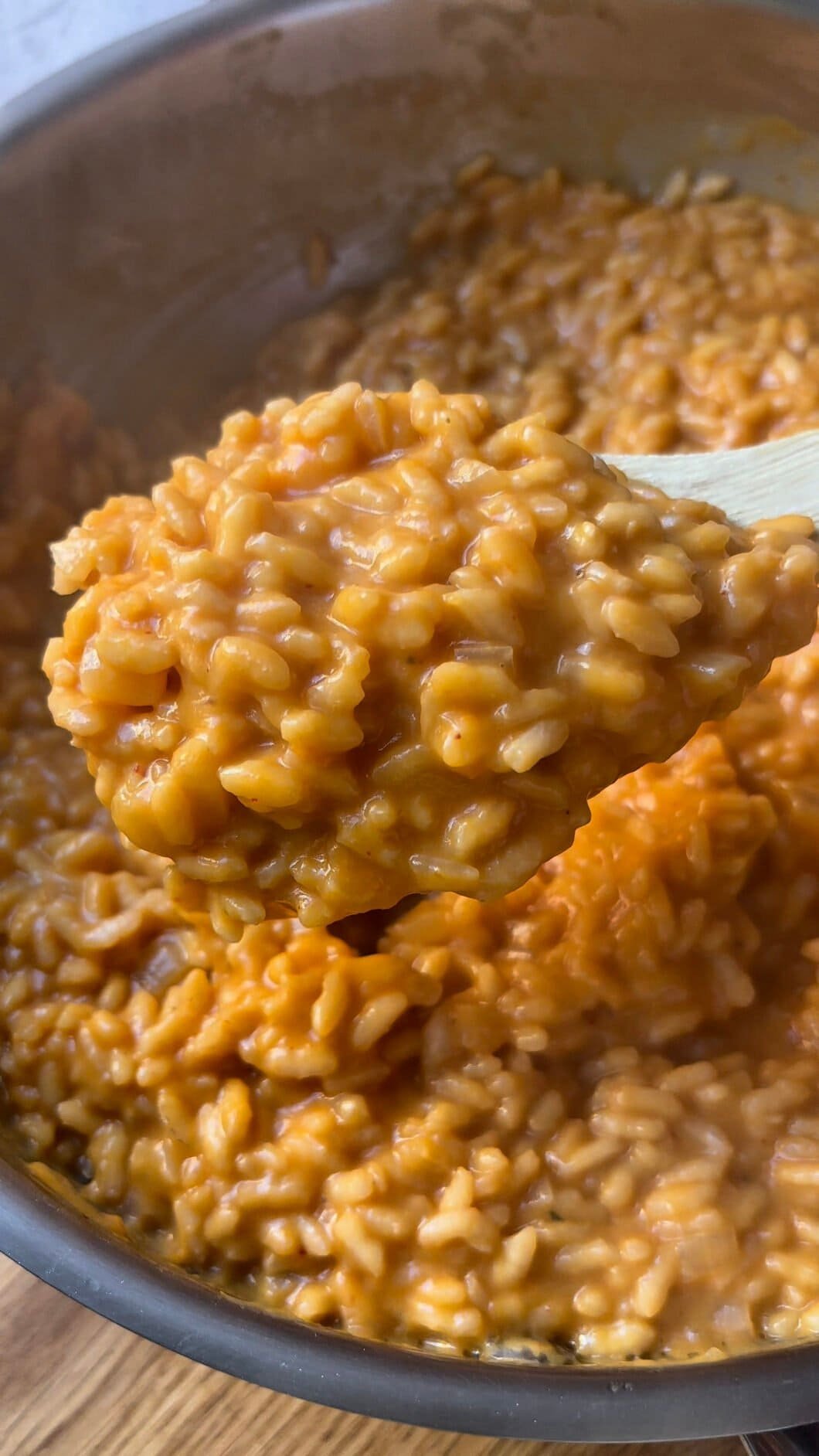
Every autumn, I make this risotto again. And every autumn, I’m genuinely amazed at how rich, generous and indulgent a vegetarian risotto can be. No meat, no cream, no shortcuts: just squash, good stock, butter and Parmesan, because we want it truly Italian -they know what they’re doing.
It’s not just rich, it’s subtle too. The roasted squash purée makes it silky and sweet, the tiny raw squash dice on top bring a fruity crunch, and the lemon zest wakes everything up right at the end. Every spoonful has a little bit of contrast, which is precisely what stops it from being heavy.
I’ll be honest: I’m very proud of this one. It’s the dish I cook when I want to impress without trying too hard – and it’s a proper Sunday-meal kind of risotto.
Roasted Butternut Squash Risotto – About the Dish
Risotto comes from northern Italy, where rice has been grown in the Po Valley – across Piedmont, Lombardy and Veneto – for centuries. The name simply comes from riso, rice, and the technique is what makes it unique: the rice is toasted, then cooked slowly with hot stock added ladle by ladle, so it releases its starch and turns creamy all on its own, without a drop of cream.
Squash risotto, risotto alla zucca, is an autumn classic in Lombardy and Veneto, the same land that gave us pumpkin-filled tortelli di zucca. Every step of the method has a name: the tostatura (toasting the rice), the mantecatura (beating in cold butter and Parmesan off the heat), and the perfect texture is all’onda – “like a wave”, loose enough to ripple across the plate. My version stays true to all of it, and adds a raw squash and lemon finish for freshness.
Roasted Butternut Squash Risotto – Recipe
Ingredients – Advice & where to find them
- Butternut squash: one squash, two uses – half roasted for the purée, half kept raw and finely diced for the finish. I used a sucrine du Berry, a sweet French heirloom squash, but a good butternut is my go-to. Pick one that feels heavy for its size, with firm, matte skin.
- Risotto rice: ideally Carnaroli, often called the king of risotto rice: it holds its shape and releases plenty of starch, so you get creaminess without mush. If you can’t find it, Arborio or any rice labelled for risotto will do – just never long-grain rice.
- Vegetable stock: this is what gives the rice its flavour, so use a good one. My trick: I keep a bag in the freezer and add vegetable peelings to it as I cook, then simmer it all into stock when it’s full. Perfect, and zero waste. If you buy stock, choose a quality and low-salt one.
- Butter & Parmigiano Reggiano: don’t skimp on this combo, it’s essential for the flavour. Use unsalted butter, keep the mantecatura portion really cold, and grate the Parmigiano yourself from a block.
- Dry white wine: any dry white you’d happily drink, nothing sweet or oaky.
- Star anise & sage: roasted with the squash, they perfume the flesh. Use one small star anise only: you want a whisper of aniseed, not a liquorice risotto.
- Espelette pepper: a mild, fruity chili powder from the French Basque Country, found in the spice aisle or in delis. If you can’t find it, use a pinch of chili flakes.
- Lemon: organic and unwaxed, since you’re using the zest. Don’t skip it – it’s what wakes the whole dish up.
Cooking Tips
- Follow every step of the risotto: sweating the onion, the tostatura, the wine, the stock ladle by ladle, the mantecatura with cold butter. Each one matters, and skipping one shows in the plate.
- Keep the stock simmering: always add it hot. Cold stock stops the cooking every time it hits the pan and the rice cooks unevenly.
- Toast the rice for 2 to 3 minutes: stir until the grains are hot and pearly. This seals them so they stay al dente at the core.
- Taste the rice as you go: count about 22 minutes of cooking, but start tasting a few minutes before – every rice is different. Stop when it’s creamy but still has a slight bite.
- Check the salt before the finish: taste and adjust the seasoning before the mantecatura. Once the butter and Parmesan are in, an under-salted risotto will just taste flat.
- Do the mantecatura off the heat: add the purée, the cold butter and the Parmesan, beat vigorously, then cover and let it rest for 1 minute. Loosen with a little stock if needed to get that all’onda texture.
- Warm the plates and serve immediately: risotto waits for no one. The finish – raw squash dice, lemon zest, Parmesan, pepper – goes on right at the table, otherwise it will taste bland.
Rich, fruity, crunchy and bright – this is the one risotto I come back to every single autumn. Enjoy!
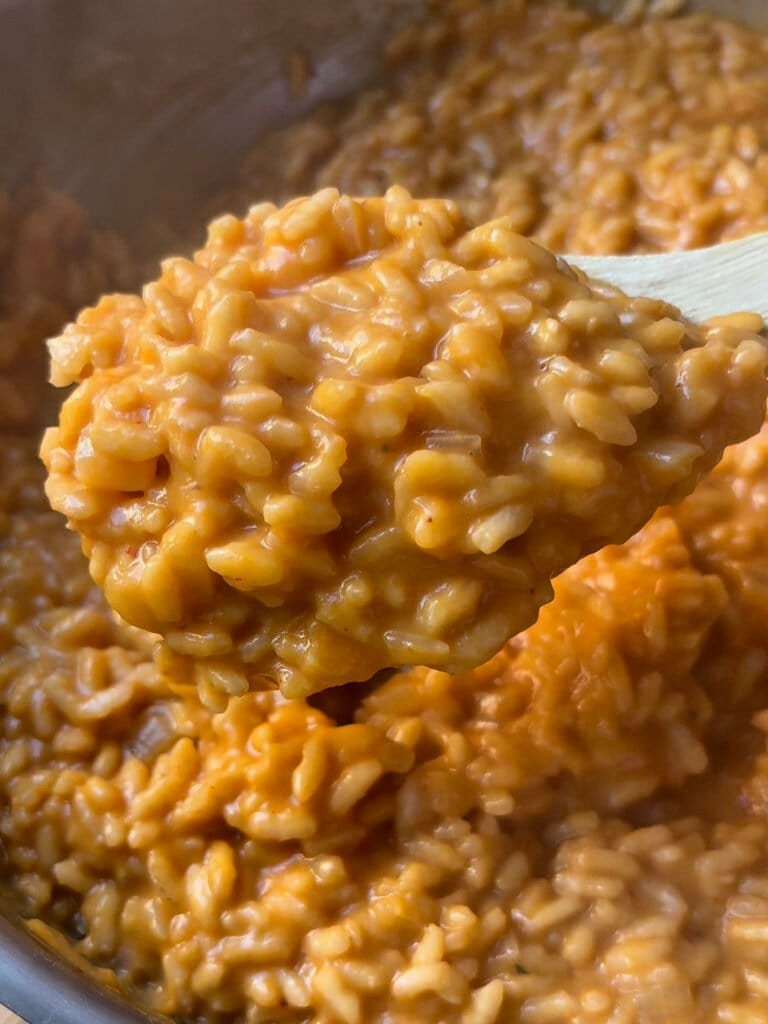

Roasted Butternut Squash Risotto with Sage
Description
A rich, generous vegetarian risotto: roasted squash purée stirred into creamy Carnaroli, finished with raw squash dice for crunch and lemon zest for brightness.
Ingredients
Roasted squash purée
Risotto
To serve
Instructions
Roast the Squash
Preheat the oven to 200°C. Cut the squash in half and set one half aside, raw, for the finish.
Scoop the seeds out of the other half, add the garlic cloves, the star anise and the sage leaf. Drizzle with olive oil and roast for 40 minutes, until the flesh is very tender.
Prep while it cooks
While the oven works its magic, very thinly dice half your remaining butternut.
Thinly dice your onion.
Warm stock on the stove.
Blend the purée
Remove the star anise and the sage. Scoop out the flesh, squeeze the garlic out of its skins and blend both with the Espelette pepper, 3 tbsp olive oil, 2 tbsp stock and salt.
Warm the Plates
Put your serving plates in the oven at 70°C, so that the risotto remains hot when your serve it.
Sweat the Onion
In a large, deep frying pan or saucepan, heat the olive oil and 20 g butter. Sweat the onion over low heat for 5 to 7 minutes, until translucent.
Toast the Rice
This is the tostatura: add the rice and stir for 2 to 3 minutes, until the grains are hot and pearly.
Deglaze
Pour in the white wine and let it evaporate completely.
Cook the Risotto
Add the hot stock ladle by ladle, stirring often, for about 22 minutes (taste and adjust depending on your rice), until the rice is creamy but still al dente. Check the seasoning and adjust the salt.
Mantecatura
Off the heat, stir in the squash purée, the 50 g cold butter in pieces and the 50 g Parmigiano. Beat vigorously, cover and let it rest for 1 minute. Add half to a full ladle of stock if needed, for an all’onda texture that ripples and spreads across the plate.
Serve
Serve immediately in the warm plates: top with the raw squash dice, the lemon zest (important!), a little Parmigiano and a grind of black pepper.