

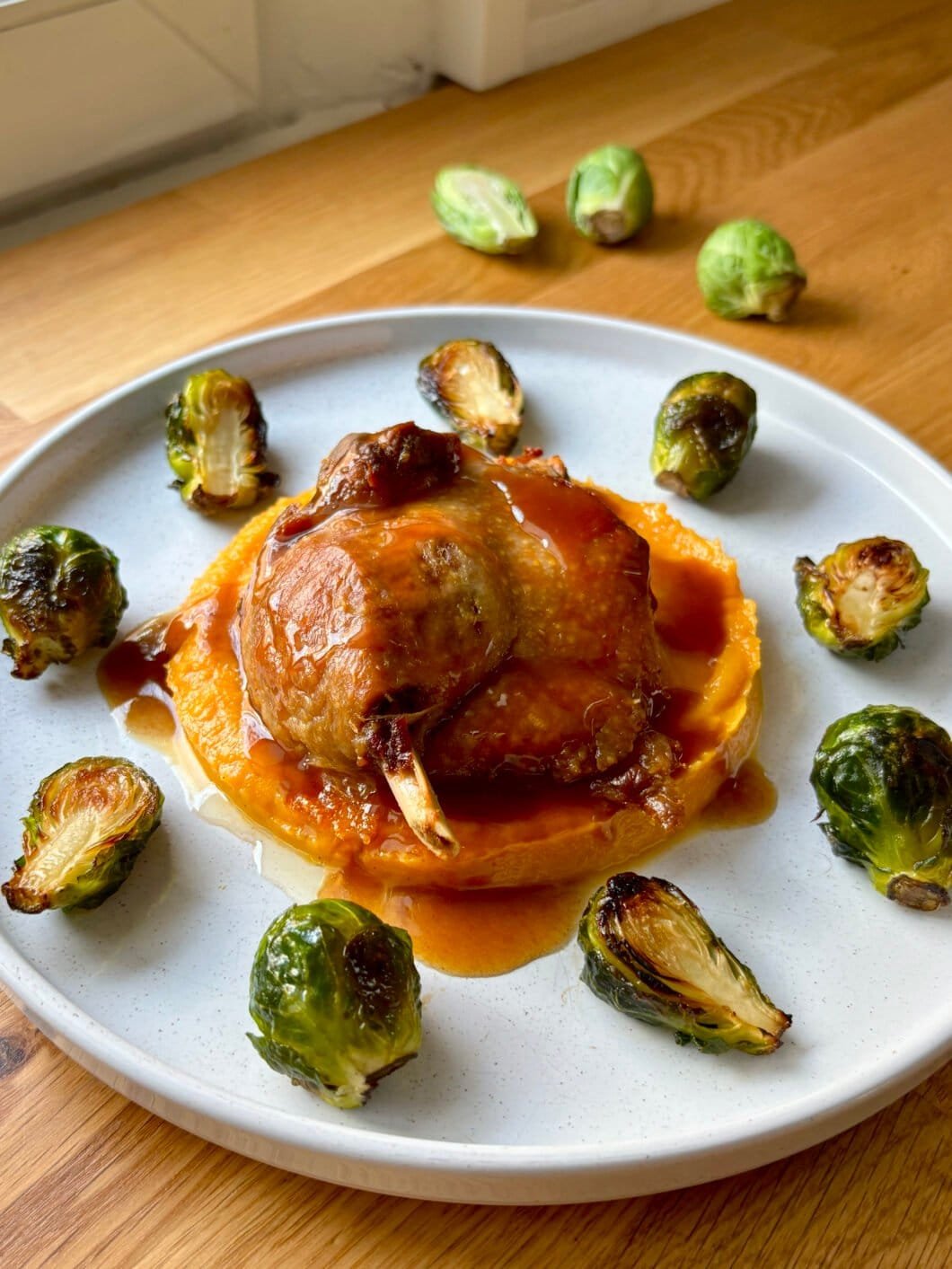
I’m not a big meat eater. In fact, I usually shy away from anything with a strong, gamey flavor—wild boar, venison, you name it.
But duck confit is a completely different story.
Slow-cooking duck legs in their own fat works a kind of alchemy:
- the meat becomes rich and intensely savory,
- the fat becomes aromatic and silky, and
- the skin, when roasted, turns shatteringly crisp.
It’s that rare combination of melting tenderness, deep umami, and caramelized edges that very few meats can deliver.
So when I was told you could enjoy all of this straight out of a can, I was… skeptical, to say the least. Yet the truth is simple: choose a quality canned duck confit and you’ll be blown away by how good it is.
Good confit isn’t industrial—it’s heritage cooking.
Producers in Southwest France (IGP Sud-Ouest) still craft it the old-school way:
- slow confit
- clean ingredients
- no shortcuts.
When you open a jar from a real maison—Maison Lafitte, Comtesse du Barry, Clos Saint Sozy—you’re tapping into centuries of gastronomic know-how.
And you can see the quality: the fat is pale and clean ; the meat is firm ; there’s no strong smell. This isn’t “canned food” the way most people imagine it. It’s craft preserved in tiny cutey boxes.
Now with the main protein handled, all that’s left is to focus on the sides and elevate the whole plate into something restaurant-worthy.
If you’re looking for an easy Christmas dinner idea, or simply a comforting autumn–winter dish that balances rustic depth with a touch of elegance, this trio never disappoints: oven-roasted duck confit, caramelized Brussels sprouts with balsamic and maple syrup, and a velvety butternut squash purée so smooth it could make your favorite bistro blush. Then you finish it all with a 10-mn saucy sauce and people will call you Chef all day !
This beautiful dish is refined, seasonal, and surprisingly effortless—especially because, yes, using canned duck confit is more than fine (and often far better than most so-called “fresh” shortcuts).
Let’s dive in.
Duck Confit, Butternut Purée & Roasted Brussels Sprouts – Recipe
Recipe – Advice & key points
- How to buy quality canned duck:
- Check for the IGP Sud-Ouest on the label — a reliable sign of origin and quality.
- Pick artisan producers such as Maison Lafitte, Comtesse du Barry, Clos Saint Sozy, etc.
- Buy a quality balsamic vinegar!
The cheap stuff flooding supermarkets is an insult to the name “balsamic.” A good aceto balsamico should be syrupy, aromatic, and balanced—not just brown vinegar with caramel coloring.- My go-to for everyday cooking ? Aceto Balsamico di Modena IGP. The prices range from 8€ to 25€ a bottle. And it keeps forever, because you use teeny tiny amounts !
- If the first ingredient is grape must, it’s usually higher quality.
- If wine vinegar is listed first → cheaper, harsher taste.
- My go-to for everyday cooking ? Aceto Balsamico di Modena IGP. The prices range from 8€ to 25€ a bottle. And it keeps forever, because you use teeny tiny amounts !
- The magic trick for an exceptionally silky purée? Roast your butternut halves cut-side-down on the baking tray. This traps steam inside the squash, softens the flesh deeply, and concentrates its sweetness. When it’s done, the flesh becomes so tender it practically scoops itself out. Blend it for maximum smoothness.
- If you have a powerful blender: you’re set.
- If not: pass the purée through a fine sieve for a restaurant-grade texture.
- For the Duck sauce, if you don’t have homemade veal stock, buy quality powdered veal stock !
- The key is to look for a natural / traditional process — stocks produced following traditional methods (long simmering of bones + veggies) rather than quick industrial bouillons tend to yield richer, deeper flavour, better texture and more balanced taste
Now let’s purée away !
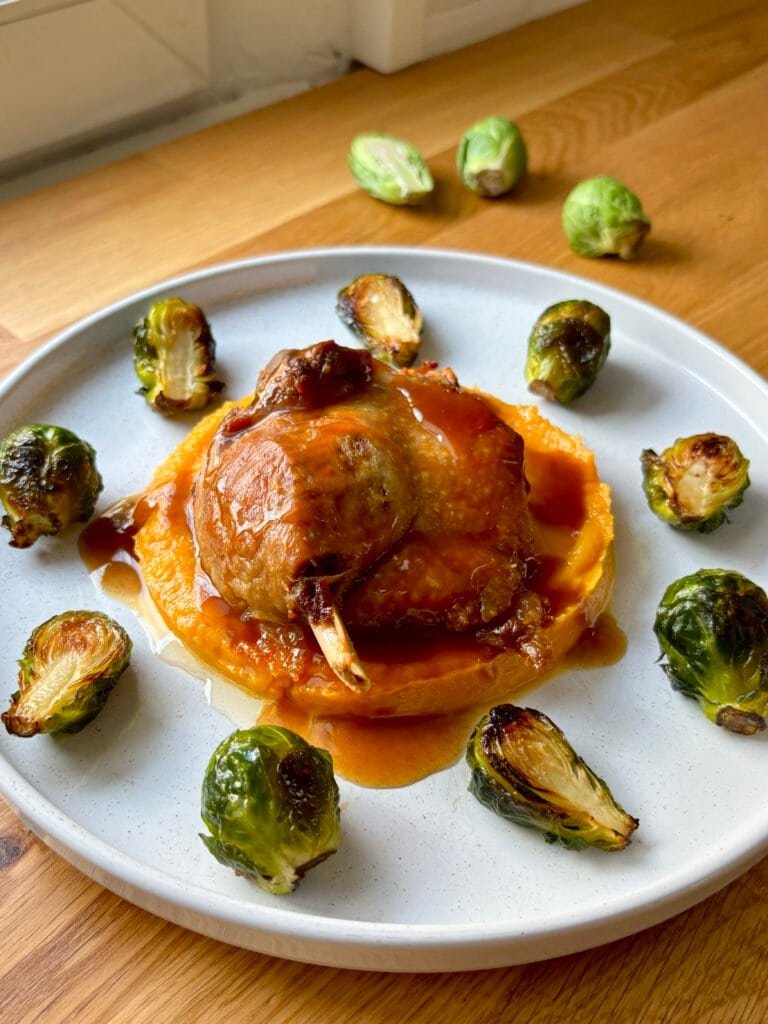

Duck Confit, Butternut Purée & Roasted Brussels Sprouts
Description
Crispy duck confit served with balsamic–maple roasted Brussels sprouts and ultra-smooth butternut purée—a rich, elegant, and effortless autumn comfort dish.
Ingredients
For the duck
For the butternut purée
For the Brussels sprouts
For the sauce
Instructions
If needed, start with your purée !
If not already made, start with your purée (check out my Oven Purée recipe).
Chop chop
Peel and mince the garlic and onion.
Mince your tarragon and parsley.
Stir-fry your beef
Heat the oil and butter in a frying pan.
Sauté the garlic and onion over medium heat, with thyme sprigs, without burning, for about 4 minutes. Remove thyme sprigs.
Add the meat & increase the heat to sear it, around 6 minutes. Season with salt and pepper.
Pour in the stock.
Continue cooking for a further 10 minutes, to reduce the beef stock.
At the very end, add the herbs and turn off the heat.
Assemble & bake !
Place the meat at the bottom of a large baking dish and add the mashed potatoes on top, spreading it with a spatula.
Make ridges on the purée and sprinkle evenly with breadcrumbs.
Broil for 10 min at 220°C, or until the top gets evenly browned.
Et voilà !! You're done !
Check your dish frequently while broiling, as you can quickly end up with a burnt Hachis !