Post Type ArchivesRecipes

Pasta e Fagioli from Napoli

Beans. Great for your health, rich in proteins and very gut-friendly, yes ; but unappealing. No kid has ever rushed to the dinner table when hearing that beans were on the menu, right ?

That’s because most people don’t treat beans the way they should. And what is this way ? Well, the only one there is : the Italian way ! More precisely here, the Neapolitan way, as this recipe has many variations depending on the location and available ingredients.

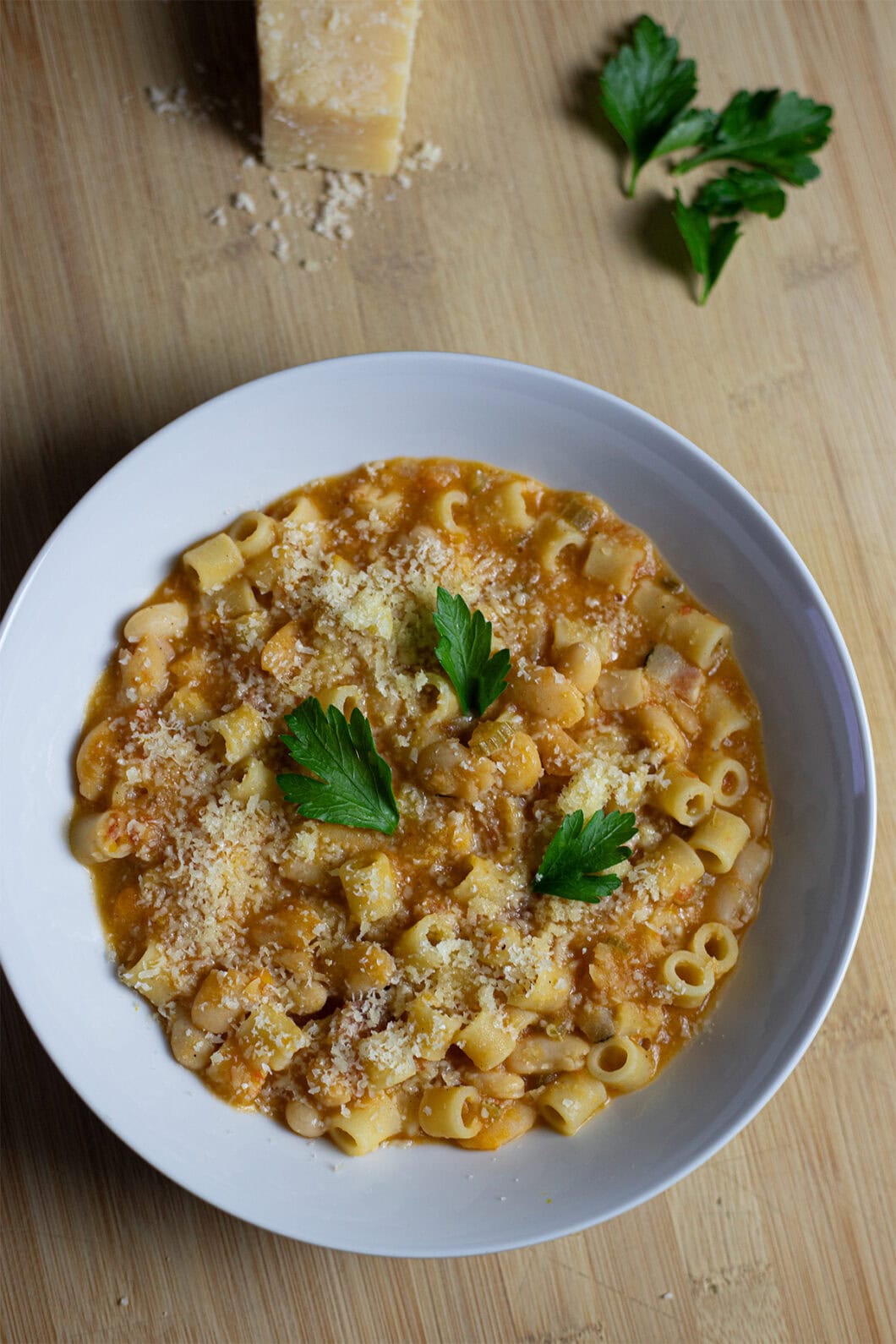
It always contains two main stars, though : short pasta and white beans, kept cozy in a warm, creamy broth flavoured by veggies and, optionally, a small amount of cured meat. This is really my favourite type of cooking : slow and easy, with delicate flavours ; humble food, but quality ingredients.

In Napoli, it is typical to include a bit of tomato and pancetta. But you could definitely make a white version, or use guanciale instead of pancetta, or even no meat at all !

Whichever option you choose, this soupy pasta is as nourishing and healthy as it is comforting -just like its pasta e piselli cousin. The flavours are delicate, with an umami-feel brought abought by our tomato and Parmiagiano friends.

Pasta e Fagioli from Napoli – Recipe

Ingredients – Advice & key points

I usually go to Eataly to get the produce I need. If you don’t have one near your location, you can find fresh produce like parmigiano at your local Italian deli, maybe even your pasta. For pasta, if not available there, you should be able to order it online quite easily. Funnily enough, I find my Ditalini pasta in African produce stores, because it is also commonly used in Tunisian cooking.

  • Pasta :
    • Try to find ditalini or tubetti or pasta if you can, which are cut in short tubes.
    • Don’t worry if you can’t find it, as any short pasta will do.
  • Beans :
    • I use white beans that I’ve soaked overnight.
    • Ideally, you want to use Borlotti beans, but any type will do.
  • Important : If making a large batch, when you know you won’t eat it all, remove the excess amount from the pot (and store it away) before adding pasta.
    • Why ? Because reheated pasta & fagioli won’t be as good -the pasta won’t be al dente.
    • This way, when you reheat your fagioli base leftovers, simply add a bit water if needed and cook the matching amount of pasta straight into it !
  • Want to make it vegetarian ? Simply remove the pancetta and replace the water with vegetables stock.

Cooking your pasta

  • Pasta :
    • This is one of the very, very few authentic “one pot” pasta dishes ! Yes, everything cooks quickly plus there’s almost no dishes to wash. Dream life.
    • Don’t forget to stir twice or thrice once you add your pasta, else it will stick to the bottom of the pot.
    • You can start tasting 2 minutes before the theoretical end time, so that you get perfect al dente pasta.

Now come and cook !
Easy Bossam

Even after spending 4 months in Korea, eating everything I humanly could, there was still some dishes I missed and discovered once back in France.

Bossam is one of those. I love how Koreans wrap their meats, both because of the textures and tastes combination aaand, mostly, because it’s so comfy. I don’t know why. If everything was eaten wrapped in lovely small bites, with one large platter everyone shares, I bet people would be happy all the time. Well, I’d be.

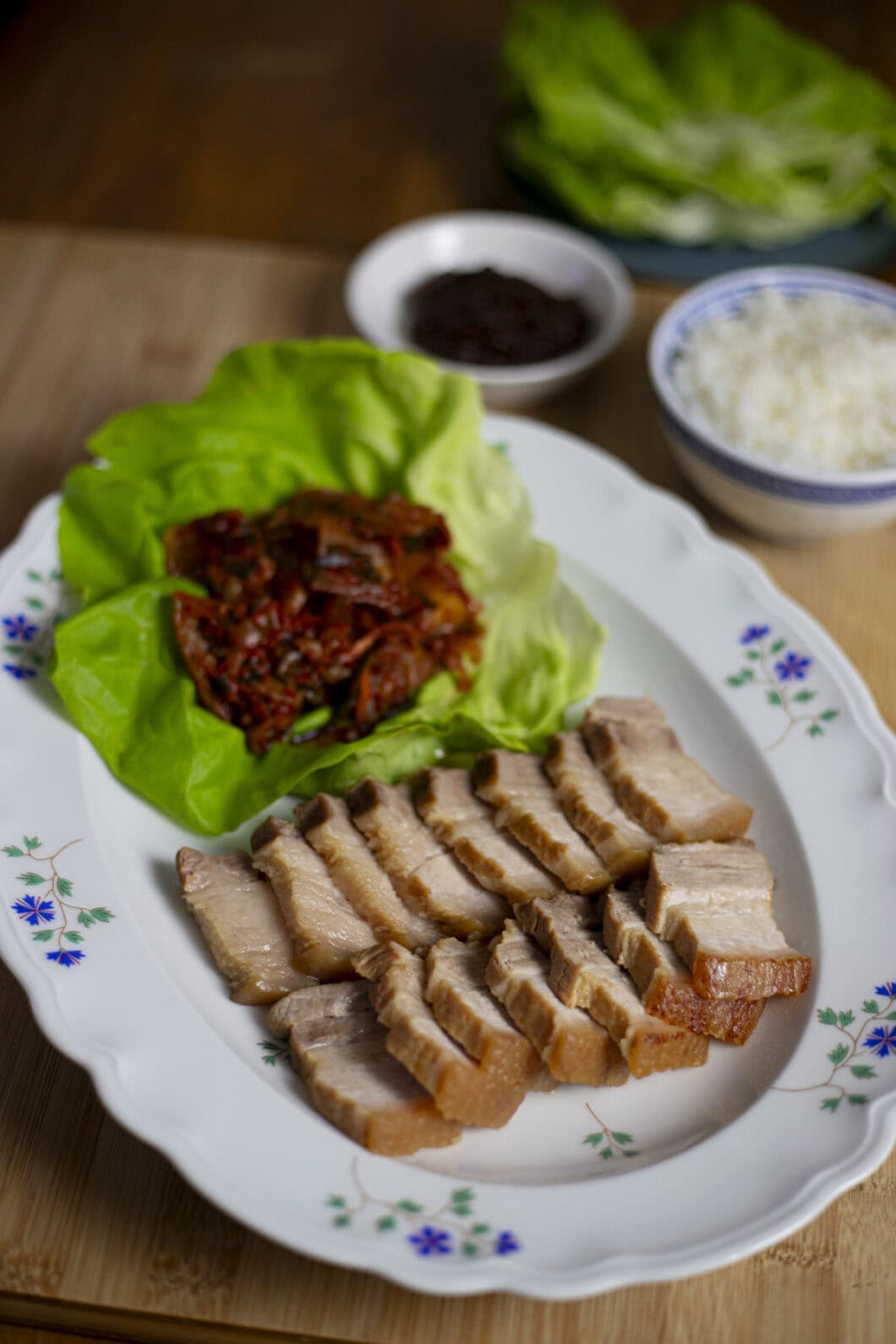
The most traditional Bossam version is quite time-consuming and involves making pickled cabbage leaves as well as a specific kimchi kind. I simplified it here ; if you’ve already made some Kimchi, or if you’ve bought some along with Ssamjang, you just have to boil your pork in a simple broth and make some rice. Easy peasy !

Contrary to what one might think looking at the broth’s color, its flavours are quite delicate : one must be into pork belly’s texture and taste to enjoy this Bossam -if not, you can opt for pork shoulder. The acidic kimchi counteracts the fattiness of the pork, and the salad leaves offer some pleasant texture and freshness.

Easy Bossam – Recipe

Ingredients – Advice & key points

  • Fair warning about pork belly :
    • This dish is usually eaten skin-on, but I know some people would be uncomfortable with it. If in doubt, kindly ask your butcher to remove the pork belly’s skin.
    • If you’re not sure you’d like large pork belly bits in terms of taste and texture, choose pork shoulder instead ;
  • To check whether you meat is tender enough after one hour, simply poke a chopstick through it. If it goes through easily, it means it’s cooked.
  • You should easily be able to find Doenjang and Ssamjang at your usual Asian grocery store if it’s large enough ; you will definitely find some in any Korean store, as those pastes are national staples.
  • If you have Bossam leftovers, you can make a great many deal of new meals out of it, using the delicious cooking liquid, too ! I made a pork belly, kimchi and scallions fried rice ; and quick stir-fried noodles with pork belly using rice noodles, that soaked all the beautiful broth.

How to eat your Easy Bossam

  • The traditional way would be to wrap your pork in lettuce leaves, with some rice, Ssamjang and a bit of kimchi !
  • Simply want a quick lunch and not a nice sharing meal ? Make Bossam bowls, using all the aforementioned ingredients !

Let’s dig into it !

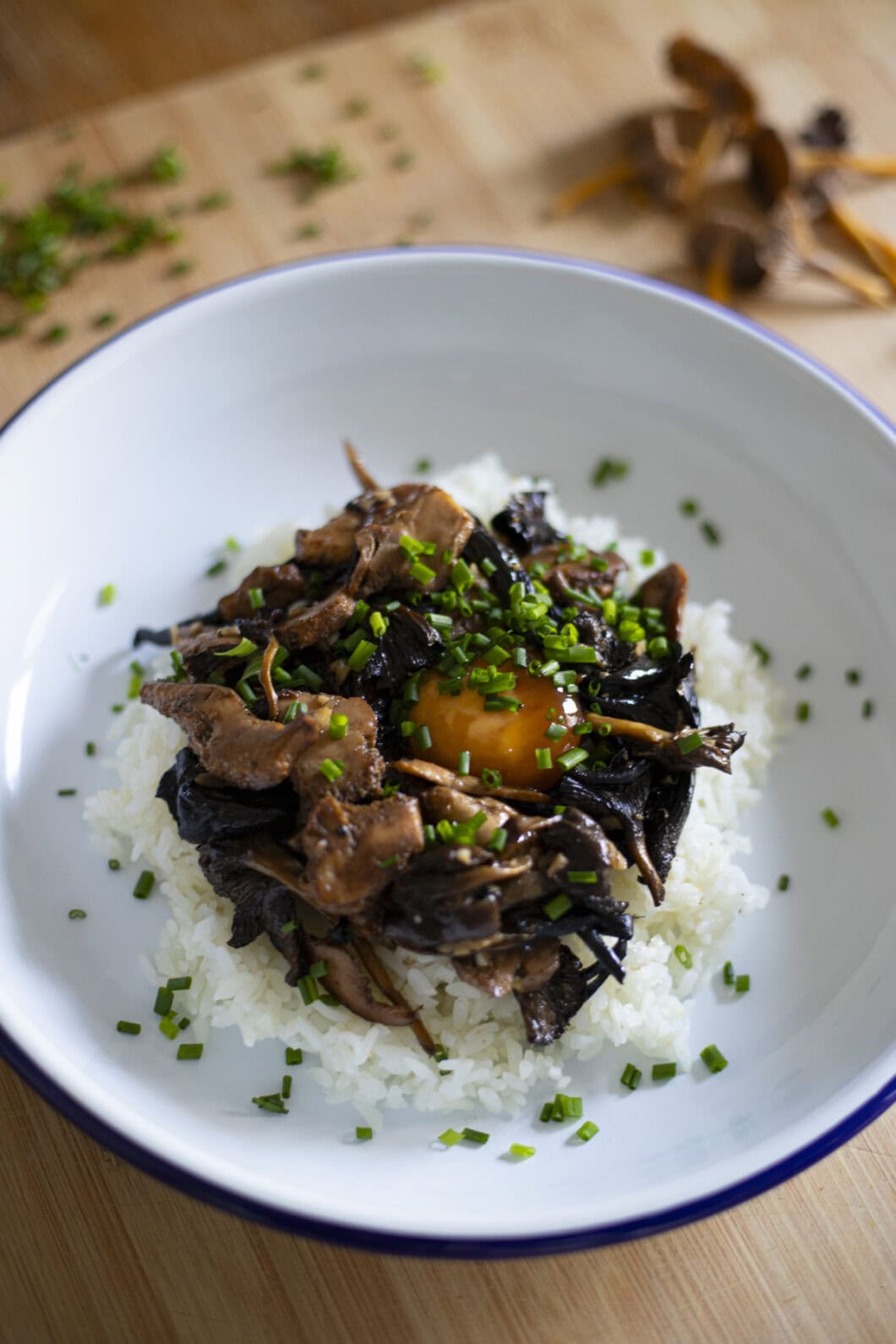
Mushroom Donburi (Mushroom rice bowl)

Trying to faithfully replicate the flavours and emotions from a country’s cuisine is one thing -and a hard enough task, if you ask me- but creating a decent fusion dish is another one entierely.

From working in my kitchen and in finance, and I can tell you : fusions go bad. Merging two entirely different sets of techniques, flavour profiles and ingredients requires a real understanding and knowledge of each party. I’m no genius, so when I give such a project a go, I make sure to follow this mantra : the simpler, the better.

French cuisine and Japanese cuisine can easily be a good match. Both go easy on the spices and focus on making the ingredients shine without transforming them much, though tricks like a liberal use of butter in one case, and umami kicks in the other.

Here, I borrowed two treasures from each culture : delicious buttery mushrooms from my home country, and an umami bomb from Japan I’m so happy I stumbled upon ; the magic soy cured egg yolk.

Let me tell you that this recipe would be worth doing with only one or the other on top of your rice. Combine both, and you get a dish that will make your day -all within 30 minutes.

Do take into account that you need to cure your egg ahead -overnight or throughout the day !

Mushroom Donburi – Recipe

Ingredients – Where to find them

Make sure to pick the best season for this recipe, when mushrooms are tasty and found in abundance – where I live, it’d be during fall.

The other ingredients are basic Asian pantry items (soy sauce, rice vinegar…). You should be able to find those in traditional grocery stores, without needing to visit an Asian one.

Ingredients – Advice & key points

  • Choose your favourite mushrooms ! It’s all a matter of what you have on hand. I used a mix of Chanterelles, Trompettes de la Mort (Black Trumpet) and Pieds de Mouton (Hedgehog Mushrooms), which was oh so very flavourful.
  • This is a nice recipe for when you work at home. Why so ? Because you can master the curation level of your egg !
    • For best results, the egg needs to be cured in soy sauce for 8 to 10 hours. This way, it’ll be creamy and coating, but neither liquidy nor too hard.
    • Don’t worry, you can still make it work without being as precise ! I’d recommend marinating it between 5 hours and 14 hours.
    • Even 24 hours would be ok, I’ve tried it once -but the yolk will definitely be quite hard and you’ll have trouble putting it on all your rice grains.
  • To make this recipe fully vegan, replace fish sauce with soy sauce and heavy cream with dairy-free heavy cream (coconut cream, oat cream….)
  • I recommend using a cast-iron pan for frying your mushrooms, but other pans are fine, too.

All set ? Let’s make this amazing Mushroom Donburi !

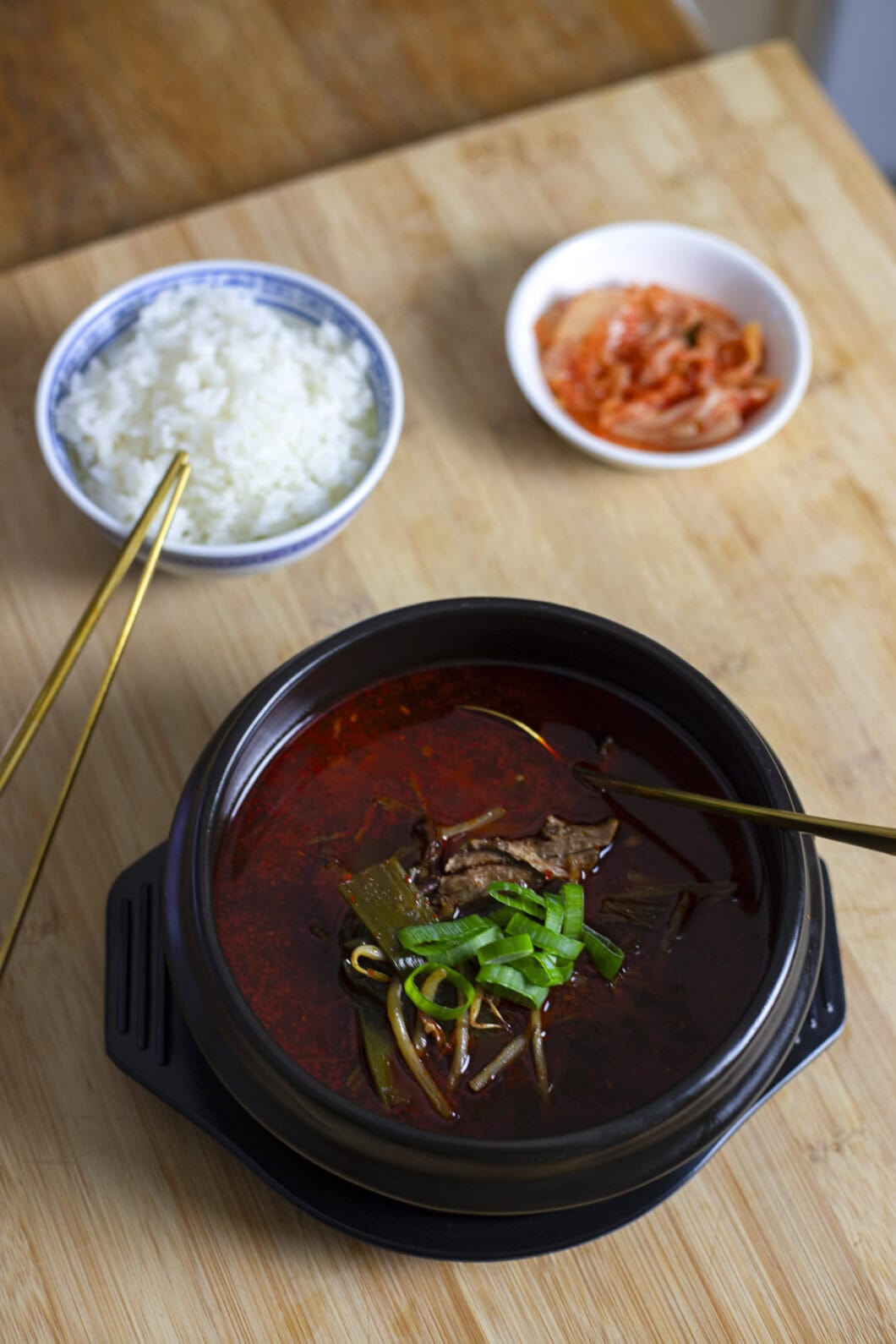
Yukgaejang (Spicy beef soup)

I don’t know whether I was Korean or Italian in some other life -maybe both ? I just know that my two favourite things to eat are Italian traditional pasta, and Korean stews.

Yukgaejang (Yuk meaning meat, Gaejang meaning spicy stew) resembles Kimchi Jigae somewhat ; both are spicy, meat-based soupy stews. The resemblance ends there, though. The Kimchi Jigae flavour profile is powerful and pungent, relying on a kick-ass base : rich pork, umami anchovy and kimchi broth. Yukgaejang, on the other hand, is more delicate and soupy. Do not be fooled by the bright red color ; the broth is spicy, yet not crazy spicy. The lean beef meat, combined with fernbrake and dried shiitakes, yields a mild earthy flavour.

Unfamiliar with fernbrake (named Gosari in Korean) ? It is a young, curled-up shoot of the bracken fern plant, which grows wild in forests and mountainous areas. In Korean cuisine, gosari is a popular ingredient in dishes like yukgaejang and bibimbap due to its unique, earthy flavor and slightly chewy texture. It looks like this in its dried form :

건고사리 Gosari Fougère Comestible Séchée 100G [Assi] DDM 31.12.2025

While I tend to prefer fermetend-based soups, which add a nice depth of flavour, I must say that simpler soups like Yukgaejang make for a nice change, with a more direct and cleaner taste. It could also be a good entry point for those who are not familiar with Korean soups and stews !

This soup is also perfect for those who watch their weight and care for their health ; fiber-rich, low in fats with the use of lean meat, Yukgaejang is absolutely perfect to feel like you’re indulging when you’re actually not.

Yukgaejang – Recipe

Ingredients – Advice & key points

  • Gosari :
    • Fear not, if you cannot find some dried gosari at your favourite Korean grocery store, you’ll be able to easily order it online !
    • Do account for the fact that you need to soak your gosari at least 6 hours (ideally overnight).
    • You can buy pre-soaked gosari, but careful : you don’t want to buy sweet, seasoned gosari that’s used for Bibimbaps or Gimbaps.
  • The other Korean ingredients are common ; you’ll have no trouble finding them at your usual Asian or Korean grocery store.
  • Meat :
    • I use short ribs here, which are a tad more fatty, but a popular cut for Yukgaejang is brisket.
    • You want your meat to be quite tender, but it won’t be pull-apart tender like pulled pork, for example.
  • If you can take a bit of heat, but not much, just halve the gochugaru amount. I do not recommend skipping it altogether, as you might find the stew a bit lacking in taste. If you don’t want a spicy stew, wait up, I’ll soon post non-spicy stew recipes !

Cooking and eating Yukgaejang

  • You don’t need to use a Dolsot like I do. The cool part about Dolsots is that they retain the heat well, so your Kimchi Jigae will remain piping hot as you eat it. But simply use any pot you have ; I’m sure it won’t turn real cold, because you will devour this dish in no time !
  • It is nice to eat some side dishes (banchans) to go with your Yukgaejang. If you’re brave enough, you could cook 1 or 2 vegetables banchans along with it, such as simple spinach, bean sprouts or cucumber ones. I simply tend to buy them from the Korean mart -because they are delicious !
  • I often eat my Yukgaejang with rice and kimchi only, and it’s absolutely pleasurable.

All set ? Let’s cook a beautiful stew !

Pumpkin Rice Porridge (Korean-Inspired Juk)

Korean winters are rough. All you can hope for as it starts to get cold is a warm bowl of Juk ; if you’re familiar with Congee, its Chinese cousin, you’ll know what I’m talking about !

I remember discovering Juk at the Seoul National University cafeteria. You don’t order it at the restaurant, not that I have seen ; it is either lovingly made by the ajummas from the school to make up for all this pork belly and fried chicken you keep eating, or by your family, especially when sick. In the spirit of our Western chicken soup, it is usually made with chicken, or small beef pieces.

I remember buying instant porridge cups over there, and one was pumpkin-flavoured. It was my inspiration for this recipe. As I knew the flavours would be rather mild, I decided to go for an umami mushroom topping.

Clearly remaining delicate taste-wise, the thick rice soup mixed with puréed pumpkin is made bolder by the addition of fish sauce and sesame oil, which are strong flavour markers from the original recipe. The thinly diced mushrooms then provide a minced meat feel, especially with the oyster sauce and soy sauce seasoning.

Bon appétit !

Pumpkin Rice Porridge (Korean-Inspired Juk) – Recipe

Ingredients – Advice & where to find them

  • All of the condiments and pantry items used are rather basic Asian items (soy sauce, oyster sauce, sesame oil, short-grain rice) that you can easily find at your nearest Asian grocer, possibly even your usual grocery store !
  • I used Red Kuri Squash here, but go with what is available nearby. I meant to use Kabocha squash, which is a popular choice in Asia, but I couldn’t find any where I live.
  • If you cannot find fresh shiitake, either pick a different mushroom kind with a rich flavour (black trumpet mushrooms, king oyster mushrooms, chanterelle mushrooms), or use 15-20 dried ones !
  • If you don’t want to roast your pumpkin, simply boil it, but roasting will bring a deeper taste.
  • You can easily make the dish vegetarian by using vegetarian oyster sauce and fish sauce (or replace fish sauce with soy sauce).

All set ? Let’s dig into it !

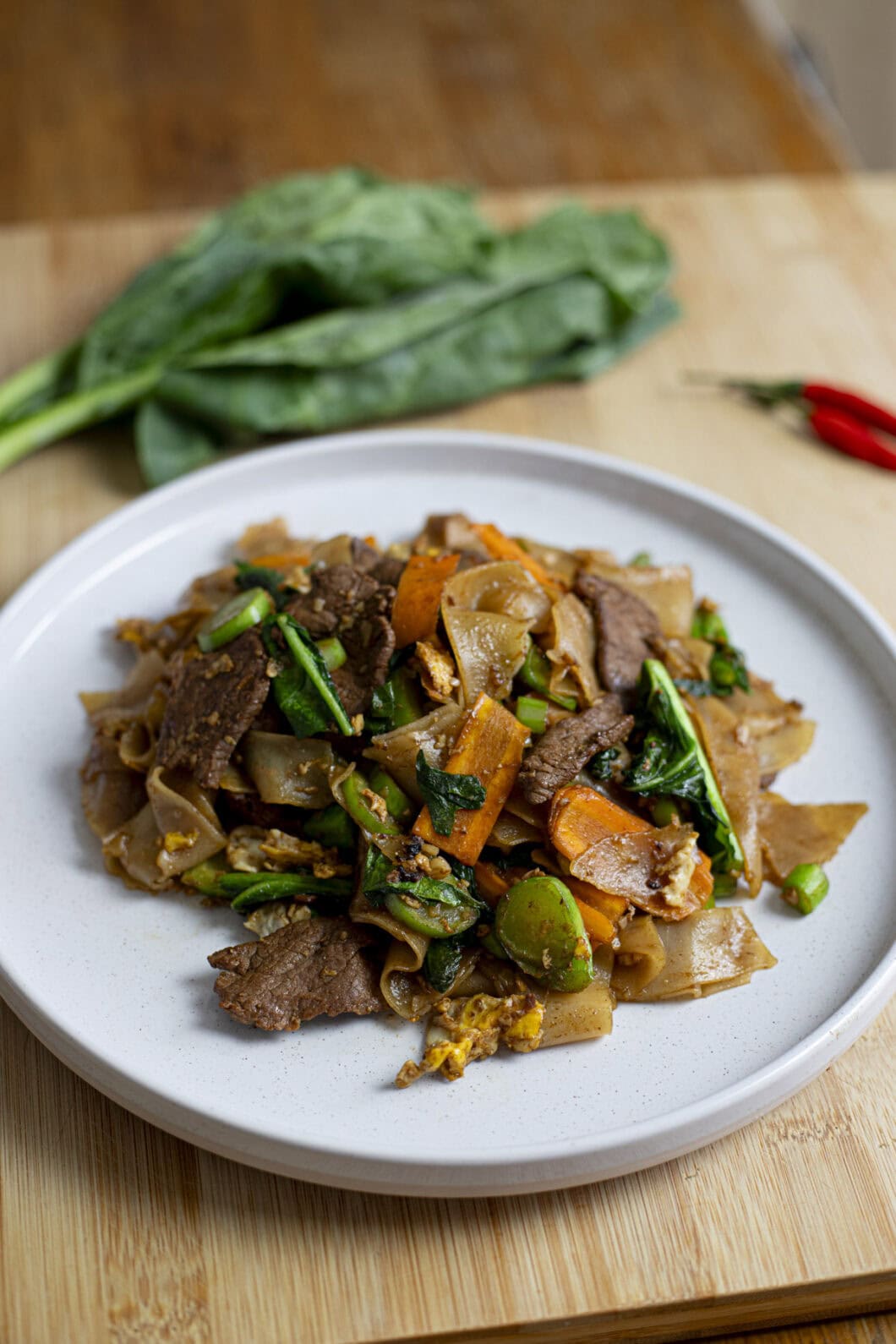
Authentic Pad See Ew

Most people know about Pad Thaï ; fewer are lucky enough to have tried its tasty, Chinese-inspired cousin, Pad See Ew.

The fresh, wide noodles, the same as in Rad Na, are a game changer. They make for a slurpy, slighly gooey and comforting sensation when you gobble them, which constrats with the crunchier carrots and Chinese broccoli.

Taste-wise, the charred, umami noodles with beef, whose flavour is strenghtened by soy-based and oyster sauce seasoning, are exactly what you want from a savoury stir-fry. Less nuanced than Pad Thaï, but more intense, Pad See Ew is in my top three of the all-time best stir-fries.

The recipe is particularly simple and quick, and only 2 ingredients can be tricky to find : Gai Lan (Chinese Broccoli), which you can easily replace with broccolini, and fresh wide rice noodles.

Unpopular opinion here : I don’t recommend making this dish if you cannot find fresh wide noodles. I’m usually all for replacing and finding appropriate solutions, but the noodles’ gooey and moist texture, absorbing all the delicious sauce, is central to the pleasure of this dish.

Authentic Pad See Ew – Recipe

Ingredients – Where to find them

I’d advise you to go to a well-stocked, quite large Asian store, which will likely fresh wide noodles (in the refrigerated section) and gai lan.

Ingredients – Advice & key points

  • If you cannot find Gai Lan, replace it with broccolini.
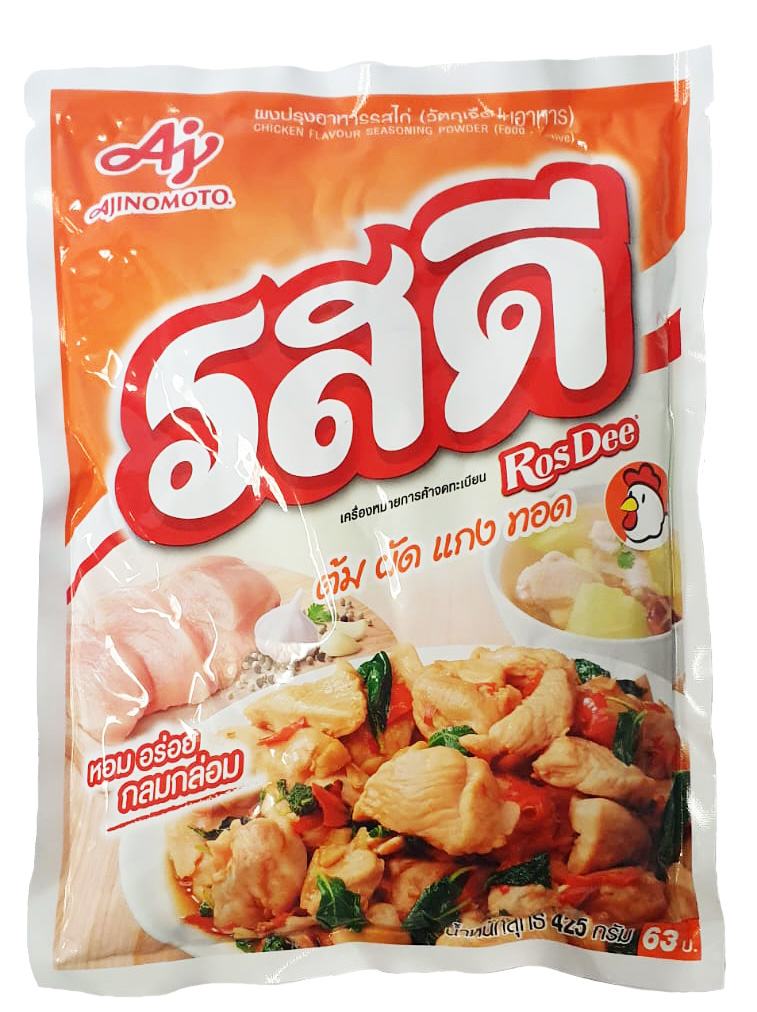
  • Can’t find Rosdee powder ? Replace it will a small pinch of msg, or powdered chicken bouillon, or mushroom powder.
  • Assaisonnement arôme Poulet Rosdee - Paris StoreIf your Asian store doesn’t store fresh wide noodles, as written before, I don’t recommend making this dish. Try Pad Thaï instead, for example, that’s perfect with dry noodles !
  • The wok part goes quite fast ; I recommend you get all your ingredients ready and nearby before your start cooking.
  • My favourite choice of protein is beef for this recipe, but feel free to replace it with another you like. Use tofu to make it vegetarian !

All set ? Let’s heat that wok up !

Easy Rad Na

Upon our arrival in Thaïland with my companion, we barely took the time to unpack ; it was nearing 1PM, and we felt this imperious need to visit our first listed restaurant before it closed.

We took a quick shower and hurried to this place, where we had 2 of the best-ever Chinese-Thaï dishes : Pad See Ew, and Rad Na. Each dish was a true discovery, but Rad Na conquered my heart unexpectedly, as I had never seen it nor heard about it in France.

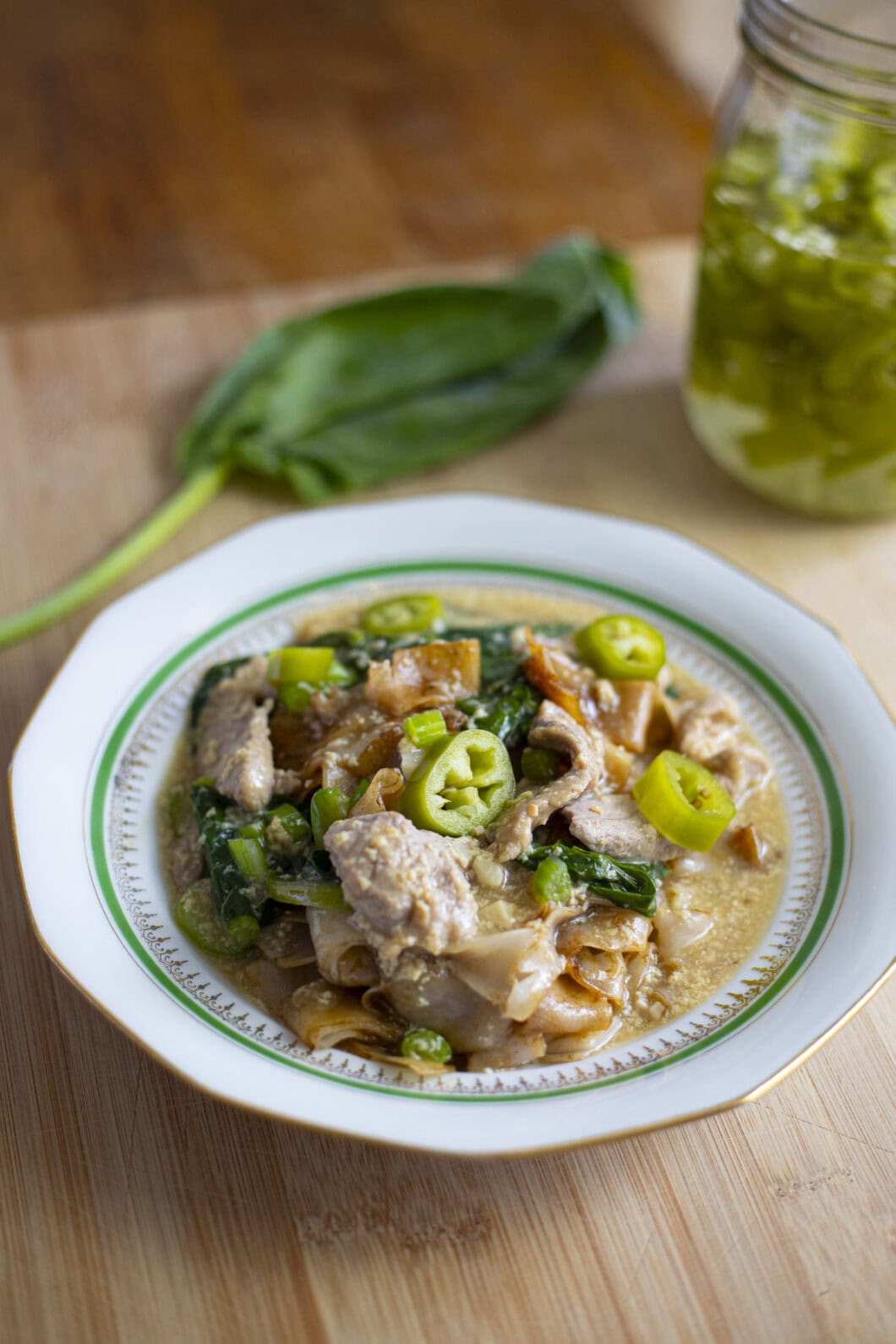
Rad Na is a Thai dish that translates to “thick sauce over noodles.” It primarily consists of wide rice noodles stir-fried with vegetables and proteins (the most authentic variant being pork) and topped with a slightly thick, savory gravy made from broth and a few Asian condiments.

There is something so comforting about Rad Na. The saucy, brothy gravy gives you chicken soup vibes, all the while conquering your palate with more complex tastes. The many savoury sauces used in the broth and the pork marinade give some strength to the end gravy, and the kick from the pickled chilies is just what you need to get a perfectly balanced result.

Aside from the gravy, the charred wide rice noodles are essential to the flavour of this dish. I tried some Rad Na leftovers with udon, and it was just meh. Do not skip the charring part !

The overall recipe has several steps, but each of them is quite quick :

  • Make a marinade for your pork ; mix, and set aside;
  • Chop your veggies;
  • Mix together the gravy’s ingredients ;
  • Make a quick cornstarch slurry ;
  • Coat your fresh noodles with dark soy sauce and char it in a hot wok ;
  • In the same wok scrubbed clean, add your gravy ingredients, let it boil a few minutes and call it a day !

The whole recipe takes around 1h to make. It is not the quickest workweek recipe, granted, but it is doable, and definitely rewarding. The homey gravy, the mellow, smoky noodles ; it’s all worth it.

Easy Rad Na – Recipe

Ingredients – Where to find them

Some ingredients here might be tricky to find. I’d advise you to go to a well-stocked, quite large Asian store, which will likely fresh wide noodles, Golden mountain sauce and gai lan.

Ingredients – Advice & key points

  • If you cannot find Thai fermented soybean paste (tao jiew), which I couldn’t this time around, simply replace it with miso, adjusting the amount for salt (only 2/3).
  • If you cannot find fresh wide noodles, you could use thin rice vermicelli (dried), which is another popular choice in Thailand.
  • Instead of Golden Mountain sauce, you could use oyster sauce or even fish sauce.
  • If you can use pork stock instead of chicken one, it’s perfect for this recipe. Fancy making it yourself ? Even better !
  • I recommend you get all your ingredients ready and nearby before your start cooking, since the wok part goes quite fast.
  • The most popular choice of protein is pork for this recipe, but feel free to replace it with another you like.
  • For any other ingredient, I would recommend against changing the recipe.

All set ? Let’s heat that wok up !

Prik Nam Som (Thai Pickled Chilies)

Thailand is like a home country for all of my chilies’ fanatics. As such, it offers many ways to enjoy a good kick.

One of the most popular -and simplest, that you’ll find at almost any street food stall, is Prik Nam Som (Thai Chili Vinegar). It is usually added to noodle-based dishes, such as Rad Na and Pad See Ew, to give them an acidity kick.

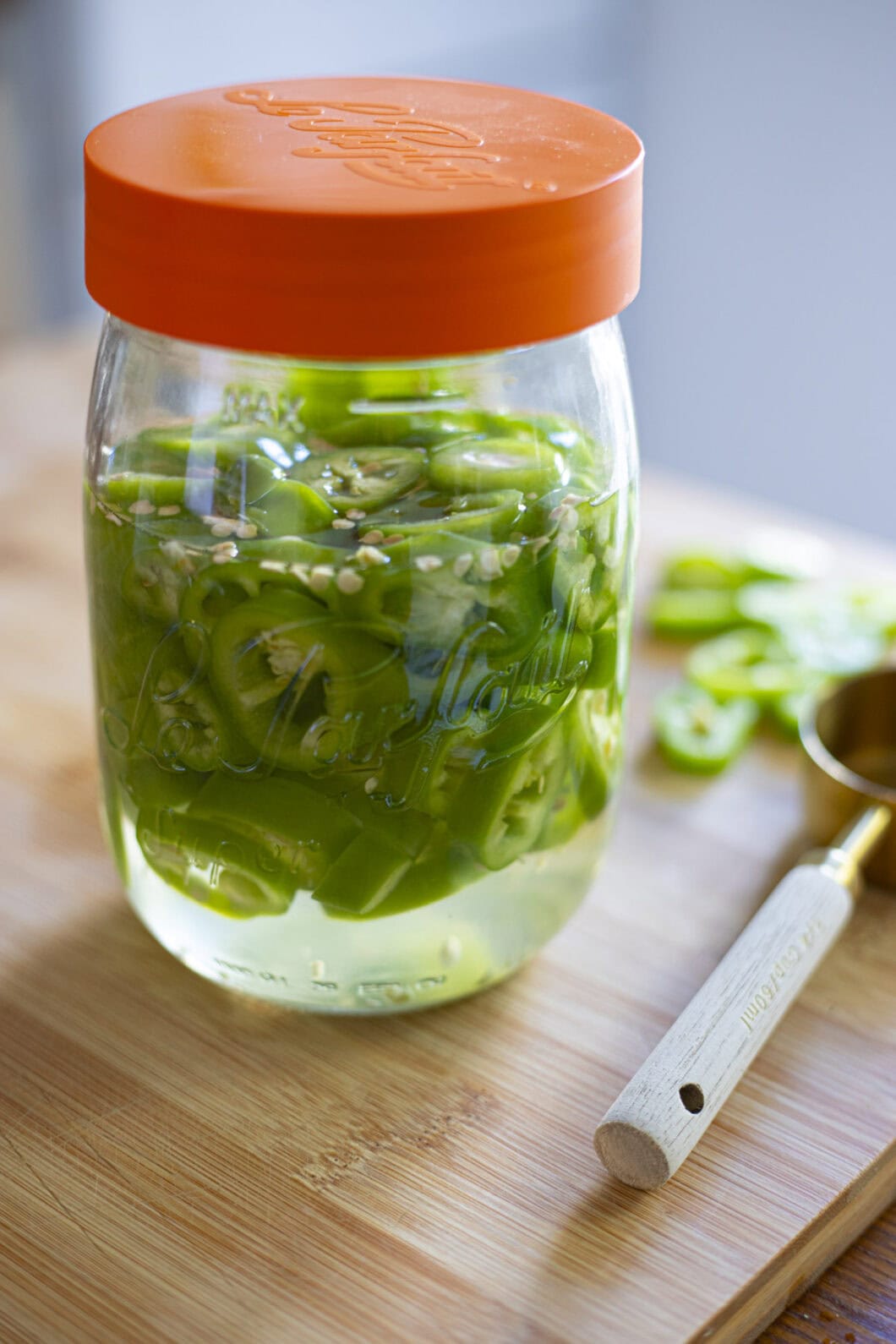
Simply slice up your chili peppers ; add to a jar with vinegar, warm water and salt, and you’re done !
I’ll have to make Prik Nam Pla, too, a more flavourful sauce which is usually added to rice-based dishes, but it is a story for another time !

Prik Nam Som – Ingredients & advice

  • You can use any chili you’d like, although I would advise against picking an overly spicy variety -the aim here is to be able to add a spoonful to your dish to bring out some acidity as well as a spice kick.
    • The version I’ve seen most and preferred in Thailand was Prik Lueng, a beautiful, orange pepper, not too large but not too small. They add a tangy sweetness and a rather mild spiciness.
    • However, those are hard to come by in France! I’ve simply used green chili pepper, which works well for this recipe.
  • The ratio of water to vinegar is 2:1, so adjust the amounts depending of the chili pepper amount.

Miso pork fried rice

Ever had a Chashu fried rice ? You know, with the braised pork you put on top of ramens. If not, know that this is the kind of fried rices of your dreams, but it requires making a Chashu, meaning 10+ hours of your time.

Good news is, you can get a satisfying pork fried rice within 20 minutes instead.

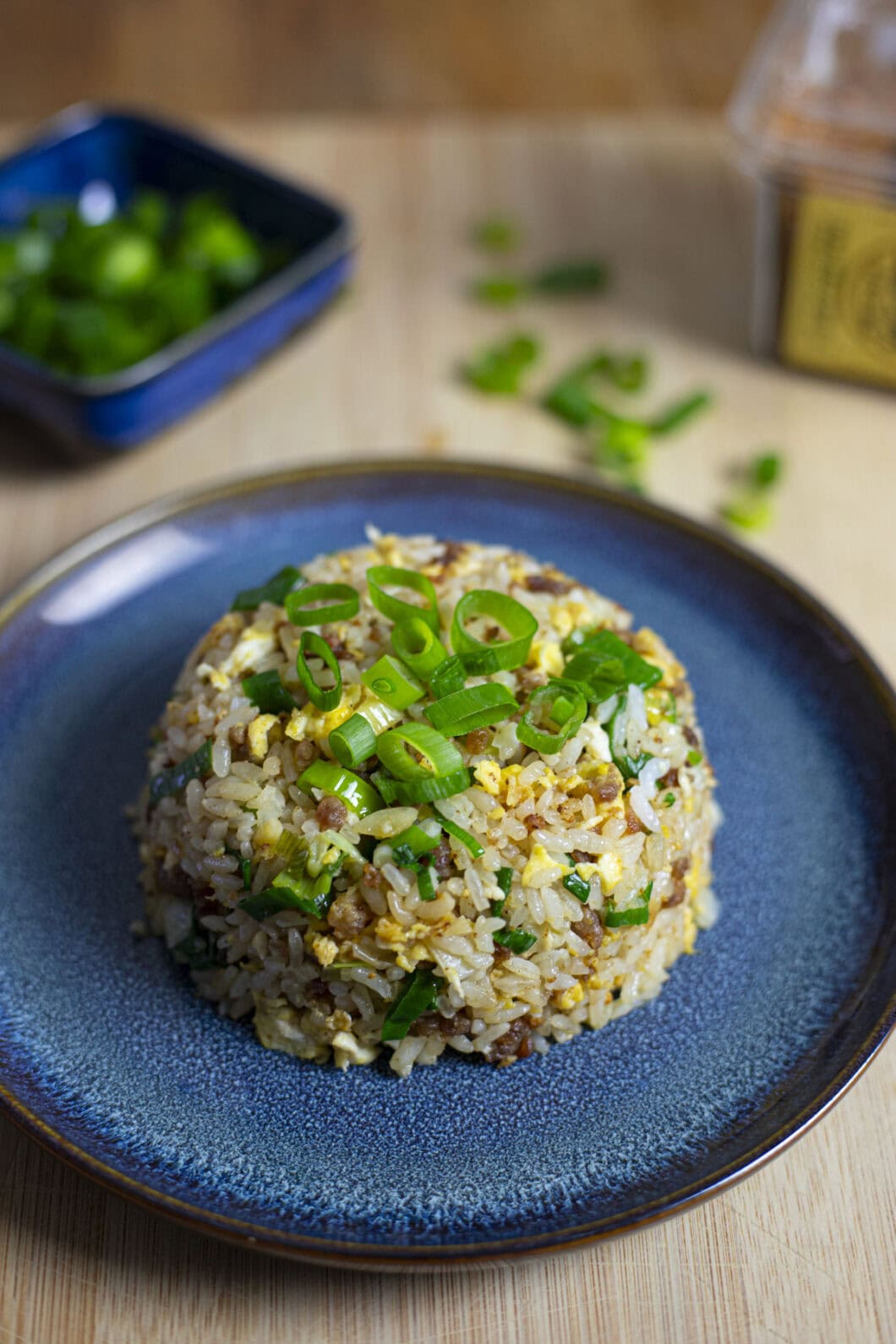
You simply chop some garlic and green onions, beat a few eggs, and turn up your wok for 15 minutes. That’s it. No funny ingredients, no crazy amounts of chopping. The perfect weeknight meal !

This fried rice is delicate flavour-wise, as most Japanese meals. The meal centers around a rich pork flavour that perfumes your whole meal, offset by lots of fresh green onions, and the rest is subtle hints of miso, garlic and sesame. I also love to add a few eggs, which bring some creaminess to the final dish.

Miso Pork fried rice – Recipe

Ingredients – Where to find them

You should be able to find miso and short-grain rice in any Asian store, possibly even in your grocery store.

Careful, for your minced pork, we want it to be quite fat ; I get mine from my local Asian store, because my French butcher makes it too lean.

Recipe – Advice & key points

  • Day-old rice is the preferred choice for stir-fried rices, yielding a drier, firmer texture and preventing your stir-fry from getting mushy.
    • A trick to cook it right before it’s made : reduce your water to rice ratio. I traditionally use a 1:1 ratio when soaking 30 minutes or 1:1,2 without. Here, use a 0,9:1 ratio without soaking ; your rice should be dry enough. 
  • You don’t want to drench your fried rice with soy sauce here ! The seasonings need to remain delicate.
  • Make sure to get your wok hot enough so that you don’t end up with an overly oily fried rice.
  • If you don’t own a seasoned carbon-steel wok and only have a nonstick wok or nonstick pan, it’s OK. You’ll just have to preheat it well for a few minutes ; also use 1/2 the amount of oil indicated ; and cook the ingredients a bit longer, especially the rice.
  • This recipe yields enough fried rice for 3 large portions as mains, and 4 portions as small rice bowls that could be sides with other Chinese dishes such as dumplings, stir-fried veggies, etc.

All set ? Let’s fry some damn good rice !