Post Type ArchivesRecipes

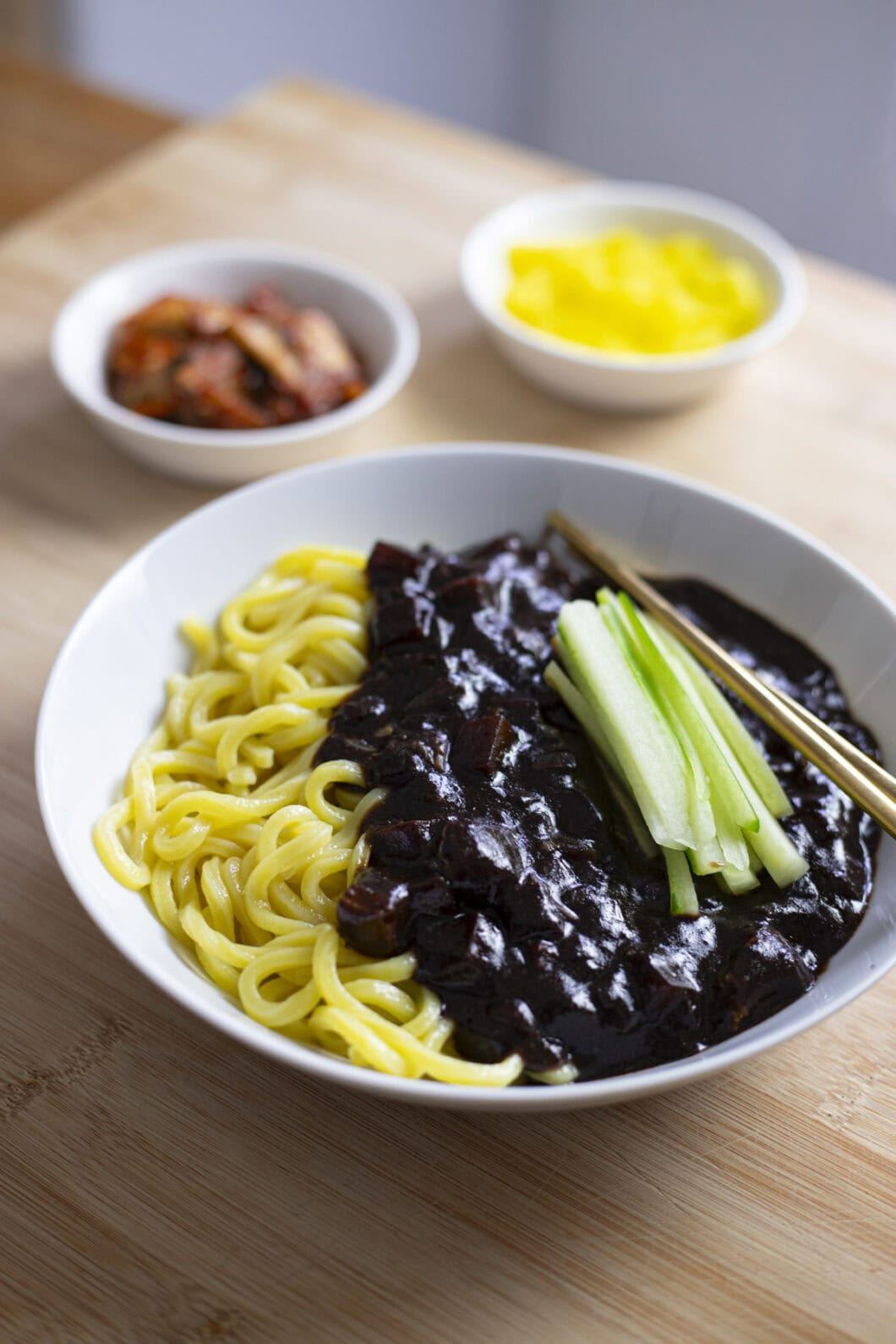
Korean noodles with black bean sauce (JJajangmyeon)

Do we have any K-dramas fan around here ?

If so, I know you know about this dish. Jjajangmyeon must have made you wonder while watching many of them : what is this dark-colored sauce ? What’s in it ? What is it about it that Korean people seem to love it so much ?

I was lucky enough to try my first one in Korea. I remember asking myself the same questions, seeing the questionably-looking plate that sat on many of our neighbours’ tables -noodles covered with a thick, brown blob of unidentified ingredients.

Let me tell you right away ; when it comes to food, always trust the Koreans. Jjajangmyeon is no exception. As soon as you taste it, you’ll become addicted, just like them. This is one of the dishes, such as Kimchi Jigae and Doejang Jigae, that they have on a weekly basis. Unlike those last two, which are often either homemade or eaten at the restaurant, Jjajangmyeon is mostly ordered as takeaway food in Korea. It is precisely what you need after a long, tiring week ; Jjajangmyeon is comfort in a bowl.

It all comes down to the black bean sauce (chunjang). Its unique taste, quite savoury, but also a wee bit bitter and earthy, is central to the umami-feel of this dish. It pairs wonderfully with the fatty pork belly, which does not feel excessive and greasy as it is used in small amounts and cubed quite thinly. The veggies (cabbage, Korean radish, potatoes, onions) are cut thinly, too, and add some sweetness and bite to this very mellow and savoury dish. Don’t forget about the cucumbers matchsticks, too ! They’re cute, but more importantly, they add an important freshness to each mouthful.

JJajangmyeon has its roots in Chinese culture, as the original dish it is inspired, Zhajiangmian, from was brought by Chinese immigrants to Korea. I’m absolutely fond of this version too, but it is a story -and a recipe- for another time !

Bon appétit !

Korean noodles with black bean sauce (JJajangmyeon) – Recipe

Ingredients – Advice & where to find them

  • Pork : I love to use pork belly here, ever the flavour booster but feel free to substitute with chicken thighs, which also has an interesting fat profile.
  • You can definitely eat a vegetarian version of this Jjajangmyeon, as the main flavour is in the black bean paste ! I’d replace the meat with cubed and soaked (~15mn) dried shiitakes, around 10 of them. I’d also add 1 more tablespoon of oil to make up for the lack of added fat.
  • Replace cabbage with zucchini in summer ! Both versions are authentic.
  • Try to find Jjajangmyeon noodles ! I get them at the frozen section of my Korean store. They are bouncy and slippery, making it perfect for slurping the noodles. They get denser than spaghetti noodles, but less so then udon noodles. You can use udon noodles as a replacement, and it will still be delicious.
  • You should also be able to find black bean paste and Korean radish (or daikon) at your Korean grocery store. If all else fails, order your bean paste online and replace the radish with turnips !

How to eat Korean noodles with black bean sauce (JJajangmyeon)

  • You can eat the Jjajang sauce with noodles as instructed, but feel free to try the other version of this dish, which is called Jjajangbap (myeon meaning noodles, and bap meaning rice).
  • The dish is usually served with two banchans : Kimchi and Danmuji (yellow pickled radish).

Let’s dig into it !
Garlic You Cai

Think Chinese food. What do you picture ? Dumplings, fried rice, stir-fried meats, am I right ?

How we see Chinese food, with indulging and quite greasy overall meals, couldn’t be further from the truth. A traditional Chinese meal would usually include a bowl of rice, a soup, a small portion of meat or fish, and a side of greens.

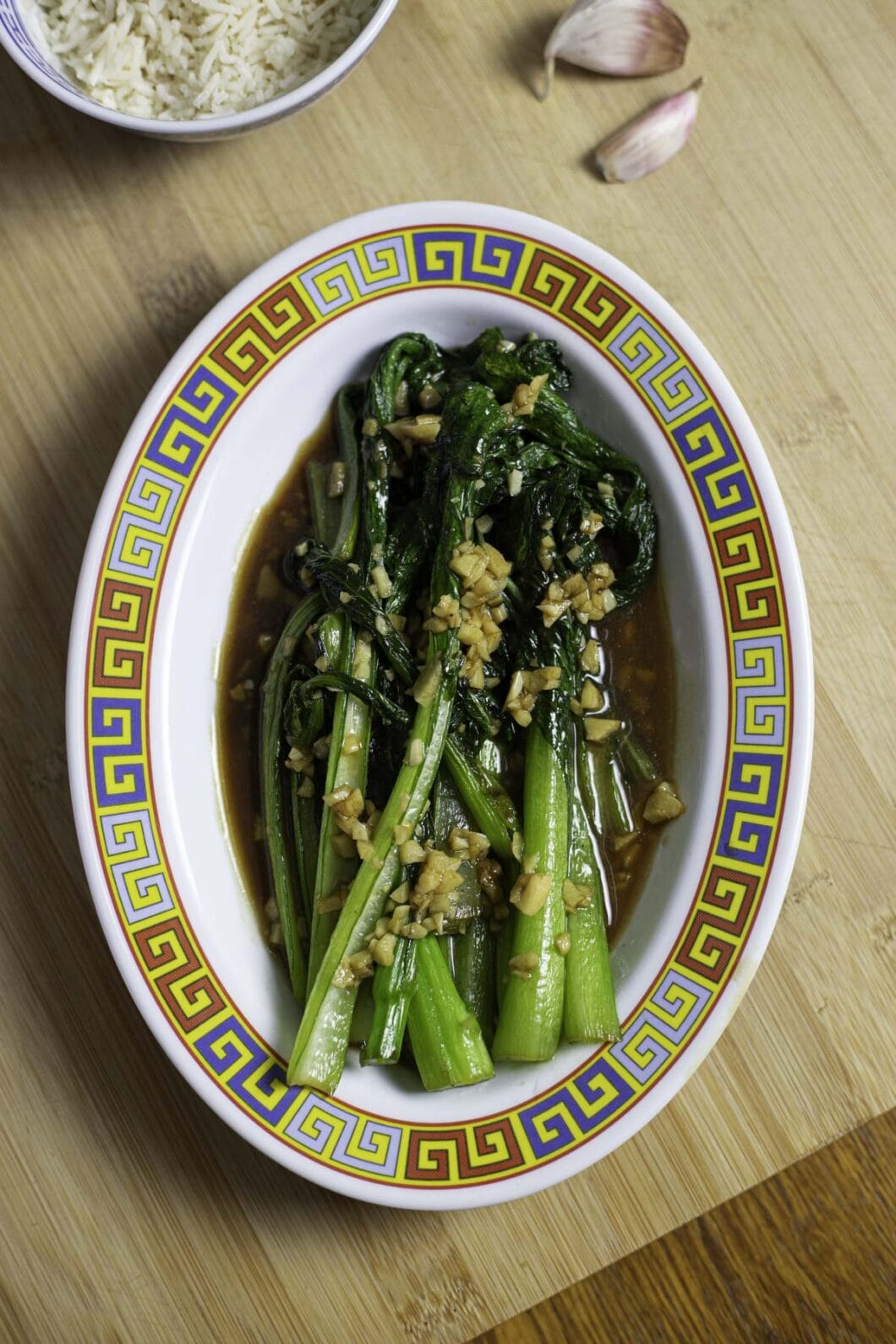
In our busy daily lives, a quick side of greens with a bowl of rice is already a good enough meal in my book ! Here, I offer you You Cai, or Choy Sum, also known as rapeseed or Chinese rapeseed, a leafy green vegetable popular in Chinese cuisine. It has a tender texture and a slightly bitter, mustard-like flavor.

Simply stir-fry it in a hot wok (or a pan !) with a bit of soy sauce and oyster sauce, some lovely garlic, and call it a day ! You can use veggie oyster sauce (mushroom oyster sauce) to make it vegan.

Garlic You Cai – Recipe

Ingredients – Where to find them

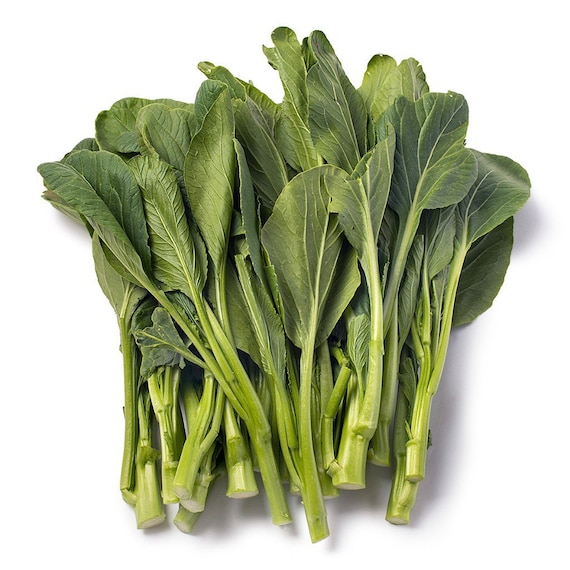
I’d advise you to an Asian store with a decent fresh veggies section in order to find some You Cai, which should look like this :

Plus de 16 000 graines de YU CHOI de 2 oz / You Cai Xin / Choy Sum /  héritage sans OGM

I know I can easily find eat all year long, usually next to other Chinese greens such as Gai Lan (the more popular Chinese broccoli).

Recipe – Advice & key points

  • Simply use veggie oyster sauce (mushroom oyster sauce) to make it vegan.
  • Make sure not to burn or overcook your You Cai, or it’d get bitter.  
  • If you don’t own a seasoned carbon-steel wok and only have a nonstick wok or nonstick pan, it’s OK. You’ll just have to preheat it well for a few minutes ; also use 1/2 the amount of oil indicated ; and cook the ingredients a bit longer, if needed.
  • This recipe yields enough for 2 portions as mains with rice, and 4 portions as sides with other Chinese dishes such as dumplings, stir-fried meats/rices, etc.

All set ? Let’s stir-fry those greens !

Easy Lo Mai Fan (Cantonese sticky rice)

I’m a sucker for stir-fried rices. Easy, quick, delicious and healthy, it also perfumes your whole house ; what’s not to love ?

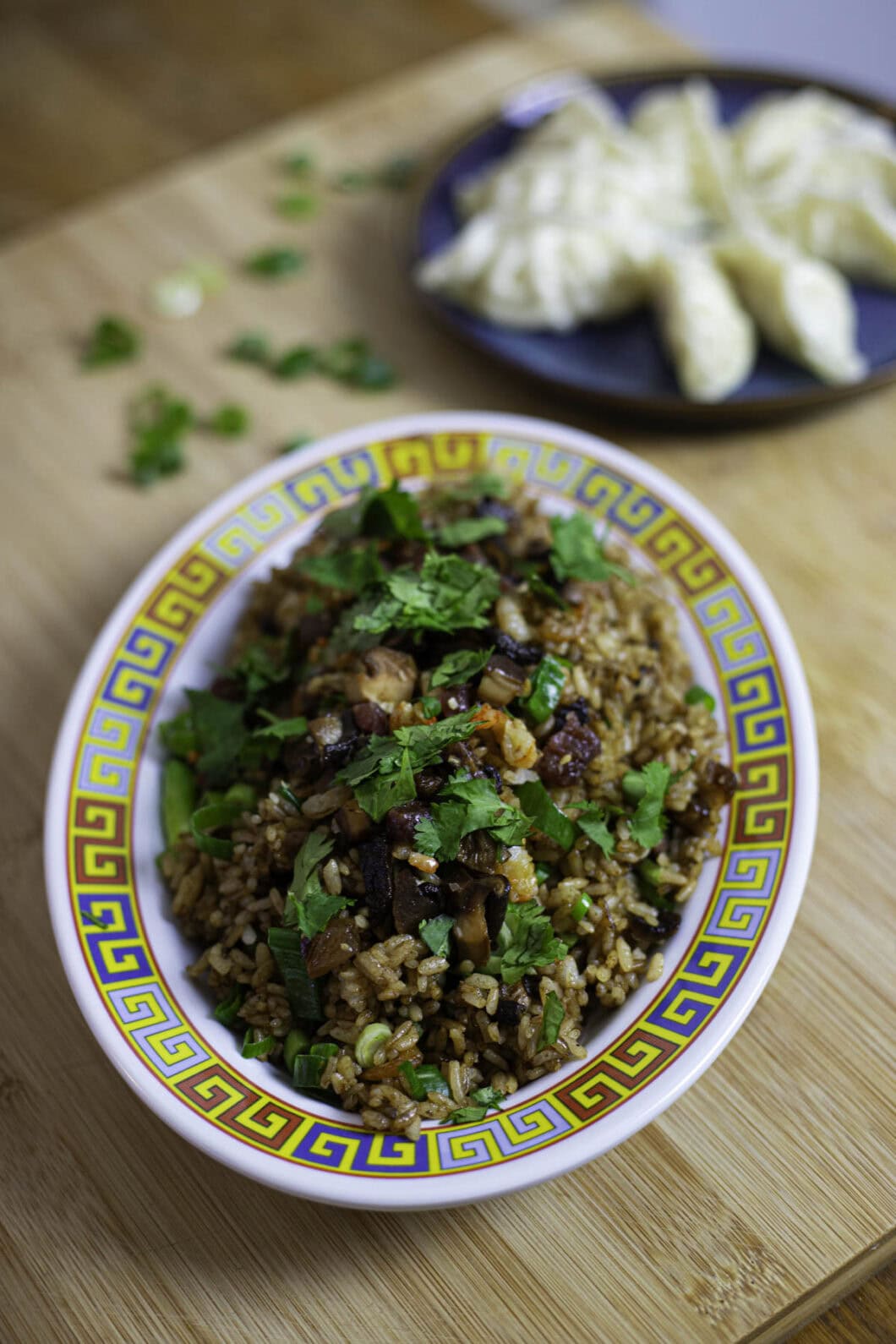
I wanted to dig a tad deeper past the classic egg fried rice that we all know and love. I recently found out about this flavour bomb of a stir-fry, called Lo Mai Fan. It’s a Cantonese type of fried rice ; originating from a region where glutinous rice is a staple, the dish is a symbol of unity and family, commonly eaten during celebrations and dim sum meals.

This version is not perfectly authentic, as I didn’t want my rice to be as sticky as it is in traditional Lo Mai Fan. It is quite sticky though, since it uses sticky rice instead of jasmine rice (which is usually your go-to for most Chinese stir-fried rices).

Ingredients-wise, though, it’s typically what you’d find a true Lo Mai Fan ! What makes this rice special is the inclusion of 4 concentrated flavour bombs : cured pork belly, cured chinese sausage (Lap Cheong), dried shrimps and dried Shiitake. Good news is, you don’t even need much of each, making it a cheap-as-hell and quite light meal !

I was so pleasantly surprised to see how delicate the flavour harmony was. The dried ingredients are strong indeed, especially cured pork, but in such small quantities, they do not overpower the final taste, with a nice added freshness and aroma from the green onions and cilantro.

Easy Lo Mai Fan – Recipe

Ingredients – Where to find them

I’d advise you to visit a large, well-stocked Asian store to find the necessary ingredients for this recipe, in particular for :

  • the Lap Cheong (chinese sausage), which should look like this :Chinese Sausage, Chinese Food, Dachshund, Sausage PNG Transparent Image and  Clipart for Free Download
  • and cured pork belly :Food for Thought: Take the five-day cure for pork belly | KNKX Public Radio

It will still be delicious if you can only find one of those products, but I’d advise against making this recipe if you can’t find either.

Recipe – Advice & key points

  • I chose to make the rice ahead, because this ends with a drier, firmer texture I like better for fried rices -and it’s still a bit sticky from the sticky rice used. However, a more authentic version of this dish would be to cook it right before it’s made. Feel free to try one or the other depending on your personal prefrence !   
  • Make sure to get your wok hot enough so that you don’t end up with an overly oily fried rice.
  • If you don’t own a seasoned carbon-steel wok and only have a nonstick wok or nonstick pan, it’s OK. You’ll just have to preheat it well for a few minutes ; also use 1/2 the amount of oil indicated ; and cook the ingredients a bit longer, especially the rice, until it caramelizes a little.
  • This recipe yields enough fried rice for 2 large portions as mains, and 3 portions as sides with other Chinese dishes such as dumplings, stir-fried veggies, etc.

All set ? Let’s fry some damn good rice !

Authentic Tofu Pad Thaï

Two months ago, I was lucky enough to go to Thaïland.

This trip was long overdue. I had spent years dreaming about those flavours, that I could picture in my head although they were impossible to find in France. Which was precisely why I wanted to go so bad. What is it about Thailand and Vietnam that makes it so hard to come across authentic dishes outside the countries themselves ?

As much as I was dreaming about Thaïland’s spicy food, I couldn’t care less about Pad Thaï. To me, this dish was quite bland and uninteresting. Actually, I only had one towards the end of the trip, and it was a veggie one.

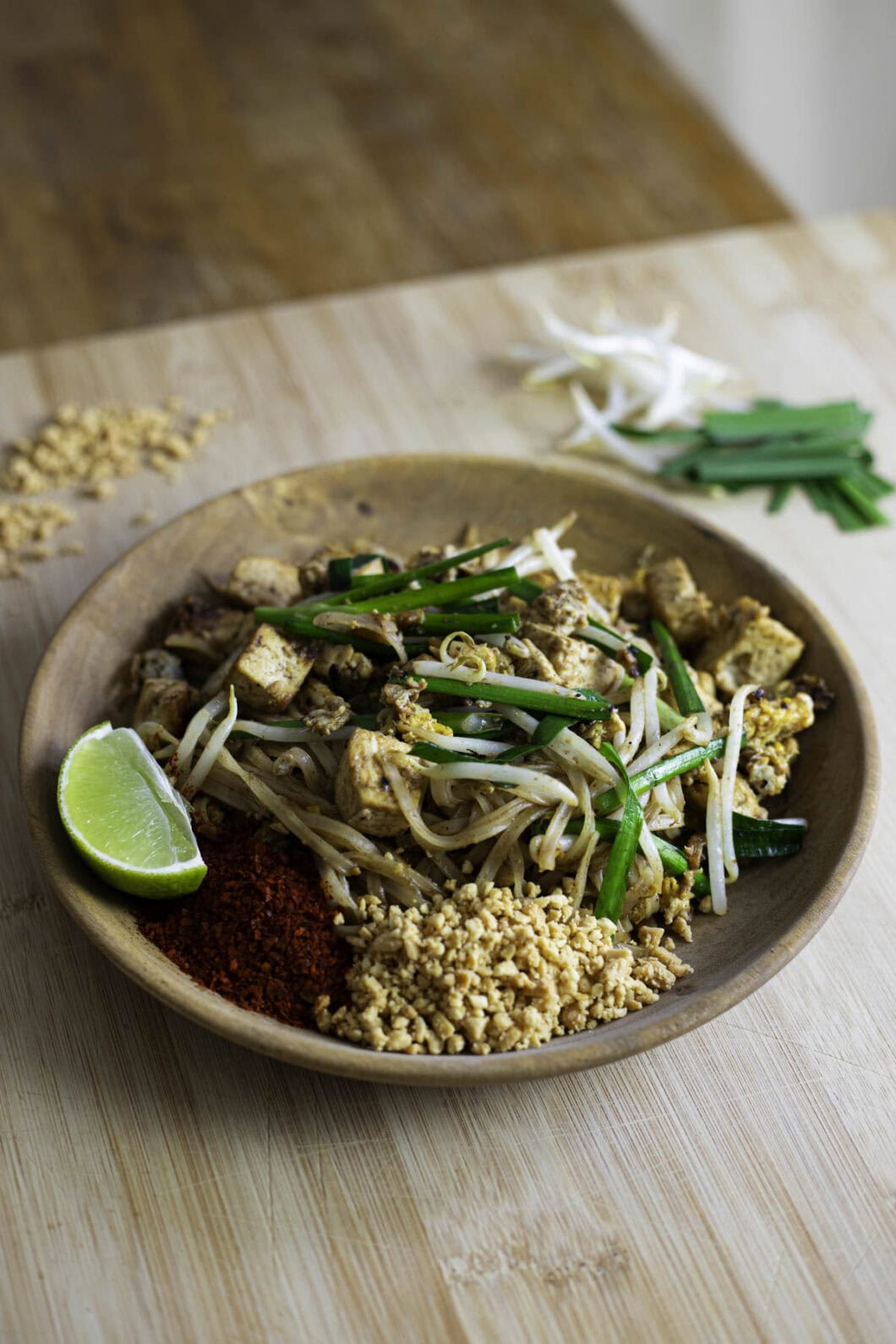
I love to be mistaken that bad. This was a food epiphany ; how can a beige, humble vegetarian noodle dish taste so complex and delicious ? There was some real tang here, with sour tamarind paste, pickled radishes and lime ; but it was not attacking your palate at all, as it was perfectly balanced with sugar and brightened up with lots of freshness from the chives and bean sprouts.

As a textures’ fan, I absolutely love the combination of chewy rice noodles, tender, creamy tofu and eggs, and crunch from the veggies and peanuts.

The authentic recipe calls for small amounts of dried shrimps and fish sauce, but you can make the dish fully vegan by replacing them respectively with dried shiitakes (double the amount) and soy sauce.

Don’t hesitate to take a chance on this dish, as I know you’d be just as surprised as I was by how this version puts other unauthentic ones to shame.

Authentic Tofu Pad Thaï – Recipe

Ingredients – Where to find them

Some ingredients here might be tricky to find. I’d advise you to go to a well-stocked, quite large Asian store, which will likely sell dried shrimps and sweet & salty pickled radishes. If you cannot find them, I’ll later post a less authentic, but truly satisfying, too, Pad Thai version, with ingredients that are simpler to source.

Ingredients – Advice & key points

  • I recommend you get all your ingredients ready and nearby before your start cooking, since the wok part goes quite fast.
  • You could add or remove some veggies if you’d like. I’ve had Pad Thai versions with shredded carrots, for example. Also, if you cannot find chives, you may replace them with scallions.
  • Feel free to add any protein you like. Surprisingly, I don’t find it to be really interesting in Pad Thaï, but a popular Pad Thaï in Thailand was Chicken Pad Thai.
  • For any other ingredient, especially the seasoning sauce, I would recommend against changing the recipe, which can easily lose its precious balance.

All set ? Let’s heat that wok up !

Simple Kimchi (Mak Kimchi)

Of course I would post a Kimchi recipe.

This is the staple of one of my absolute favourite world cuisine ; I fell in love with Korean food ever since I went there -and I fell hard. You have Korean dishes such as Kimchi Jigae which are proof that you can reach, and quite easily so, a perfect balance between the savoury, the sweet and the sour (plus some lovely umami and a spice kick), keeping your meal interesting and utterly pleasurable right until its last drop.

Kimchi is the foundation of this dish, along with many others I love -such as Kimchi bokkeumbap (Kimchi fried rice) or Kimchi jeon (Kimchi pancakes). It is also the quintessential banchan (side dish); I cannot think of one meal where I wasn’t served Kimchi during my whole stay in Korea.

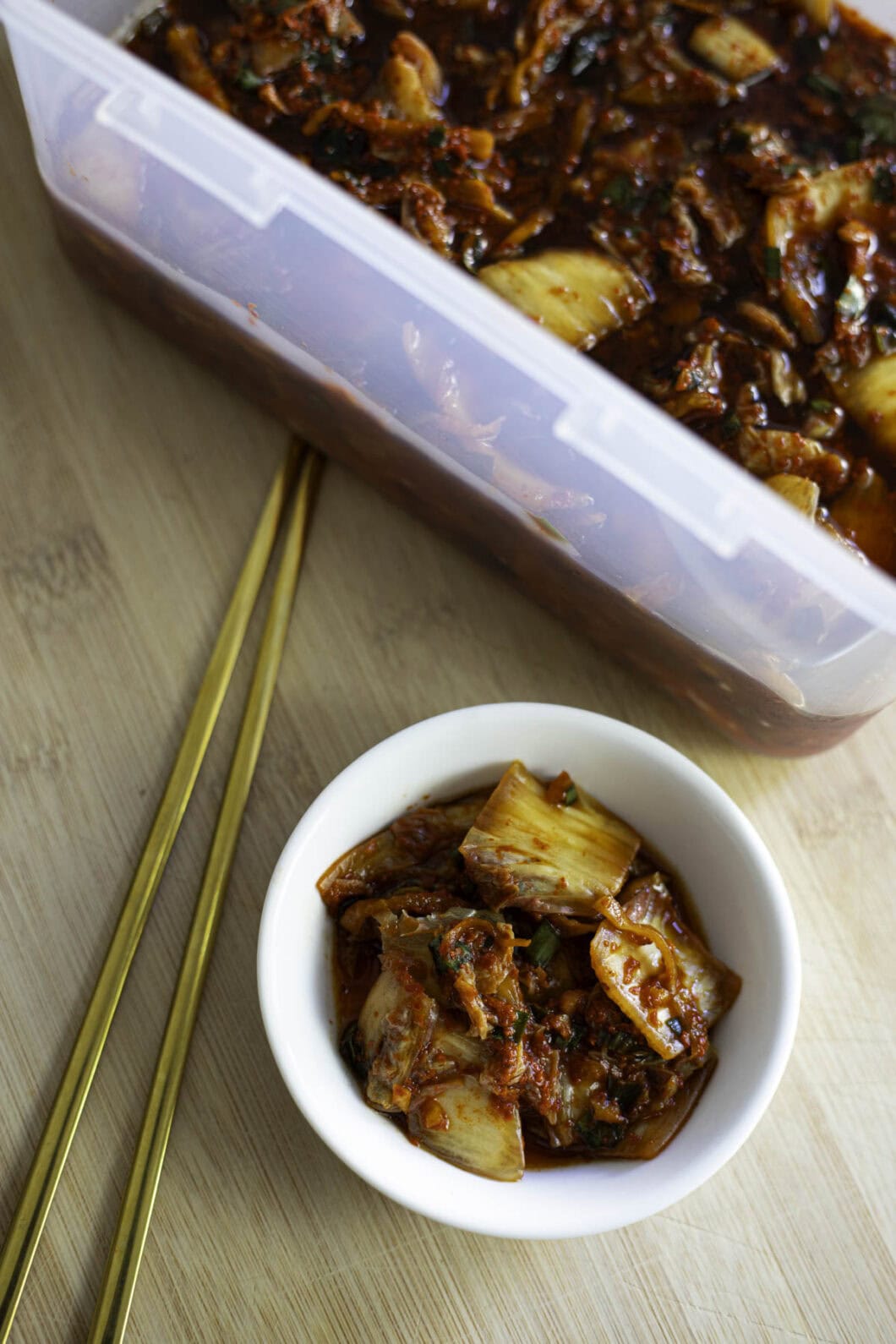
For those who are not familiar with Kimchi, it is an ubiquitous dish in Korean households and restaurants, made out of fermented vegetables, typically napa cabbage -though other vegetables can also be used. It is seasoned with a variety of spices and ingredients, the main ones being gochugaru (Korean red chili flakes), garlic, ginger, green onions, fish sauce, and salted seafood. The fermentation process gives kimchi its characteristic tangy, spicy, and slightly sour flavor.

I’ve already made traditional kimchi, where you keep the leaves of the cabbage whole and spread your seasoning paste on each leave. It’s a bit more time-intensive to make, and not very convenient once made, as you need to cut the desired amount with scissors every time you want a Kimchi serving. Therefore, I prefer cutting the cabbage in bite-sized pieces : this altered recipe is called Mak Kimchi (which roughly translates as Simple Kimchi). Fear not : the taste and texture is exactly the same. It only tends to ferment faster because of its smaller size ; that’s all.

This Mak Kimchi will still take a bit of effort, and I recommend you clear a 2,5 to 3-hour slot in your schedule to make it, depending on how fast your work in the kitchen ! Not to worry though ; every step is straight-forward. Once you get all the ingredients you need, it is all a basic matter of soaking and cutting and mixing.

Mak Kimchi – Recipe

Ingredients – Advice & key points

  • I recommend going to a Korean mart for this recipe, especially in the hopes of finding Korean red pepper flakes and frozen, salted shrimps in brine. This last item looks like this :

If you cannot find it, it’s OK ! You can simply add one more tablespoon of fish sauce.

You should be able to find the other ingredients in any other medium/large Asian mart which includes a fresh produce section (you’ll need this one for your Daikon and chives).

  • I chose to put quite a lot of red pepper flakes because I like it spicy ! Feel free to adjust the amount ; if you like your Kimchi just a bit spicy, simply halve the amount.

How to make a delicious Mak-Kimchi : main steps

  • Cut and salt your cabbage ; let it sit for 1h30.
  • Meanwhile, you have the time to :
    • make your porridge (which will help binding the seasonings) ;
    • cut your veggies ;
    • prepare your Kimchi’s seasoning sauce.
  • Don’t forget to mix your cabbage every 30mn so that it salts evenly.
  • After 1h30, thoroughly rinse your cabbage.
  • Eventually, simply mix everything together : your seasonings, porridge, veggies and cabbage !
  • Leave your Kimchi for 2 days at room temp, then off to the fridge !

Isn’t that simpler than you thought ? Let’s make it together !

Raw ham & goat cheese wrap

Be it for entertaining or for a quick lunch, wraps are a life savior.

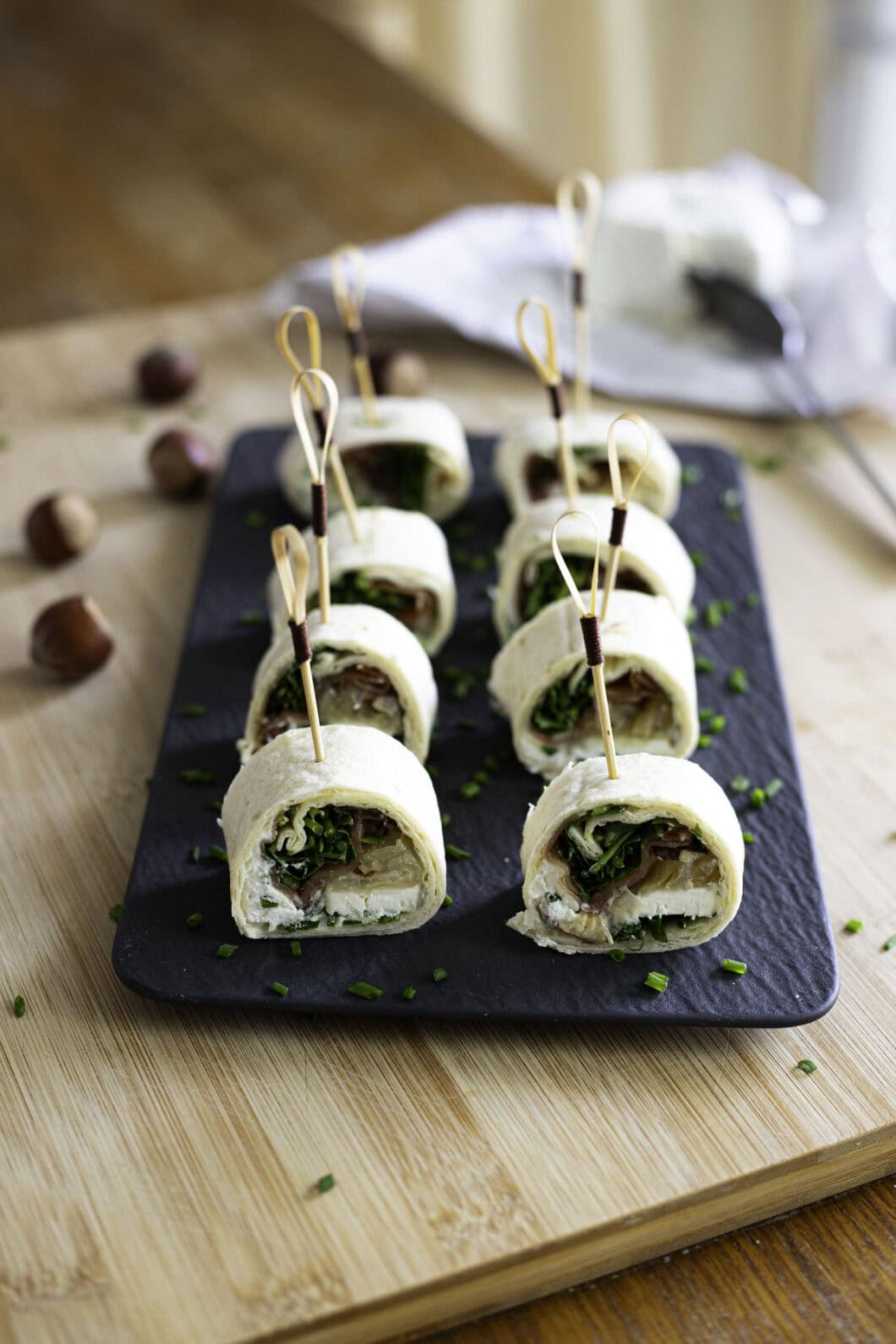
Those sweet and savoury wrap bites are quite Frenchy. I chose to mix some raw ham with two goat cheeses ; a fresh one as a spread for the wrap, and a slighty matured one for the stronger taste and creamy texture it brings. The onion confit is really important here to offset the lactic acidity from the cheese, and it pairs wonderfully with the raw ham.

Add a bit of freshness with arugula and chives, and a touch of crunch using nuts (hazelnuts, or walnuts) : there you have it, a quite fancy little bite, ready within 30 minutes. You simply launch your onion confit first, as it takes some time to melt, then chop off a few ingredients ; fill and roll the wraps then, and you’re done !

Raw ham & goat cheese wrap – Recipe

Ingredients – Advice & key points

  • Goat cheese : It’s ok if you use supermarket goat cheese for this recipe, as we don’t want too strong a flavour from it.
  • Tortilla wraps : Don’t forget to heat them up slightly before using, or the wrap won’t fold nicely !

Let’s wrap !

Sweet Potato & Black Rice Salad

With the salad bars trend in Western countries, those shops have simply popped everywhere, especially when there are offices nearby. I usually go for this handy option for lunch around once a week -often on Mondays, when you know you took things a bit too far on the week-end.

There’s this misconception about salads that they’re diet-oriented and boring ; I’d say it all depends on how your build it. To me, a salad can rival the most decadent pasta.

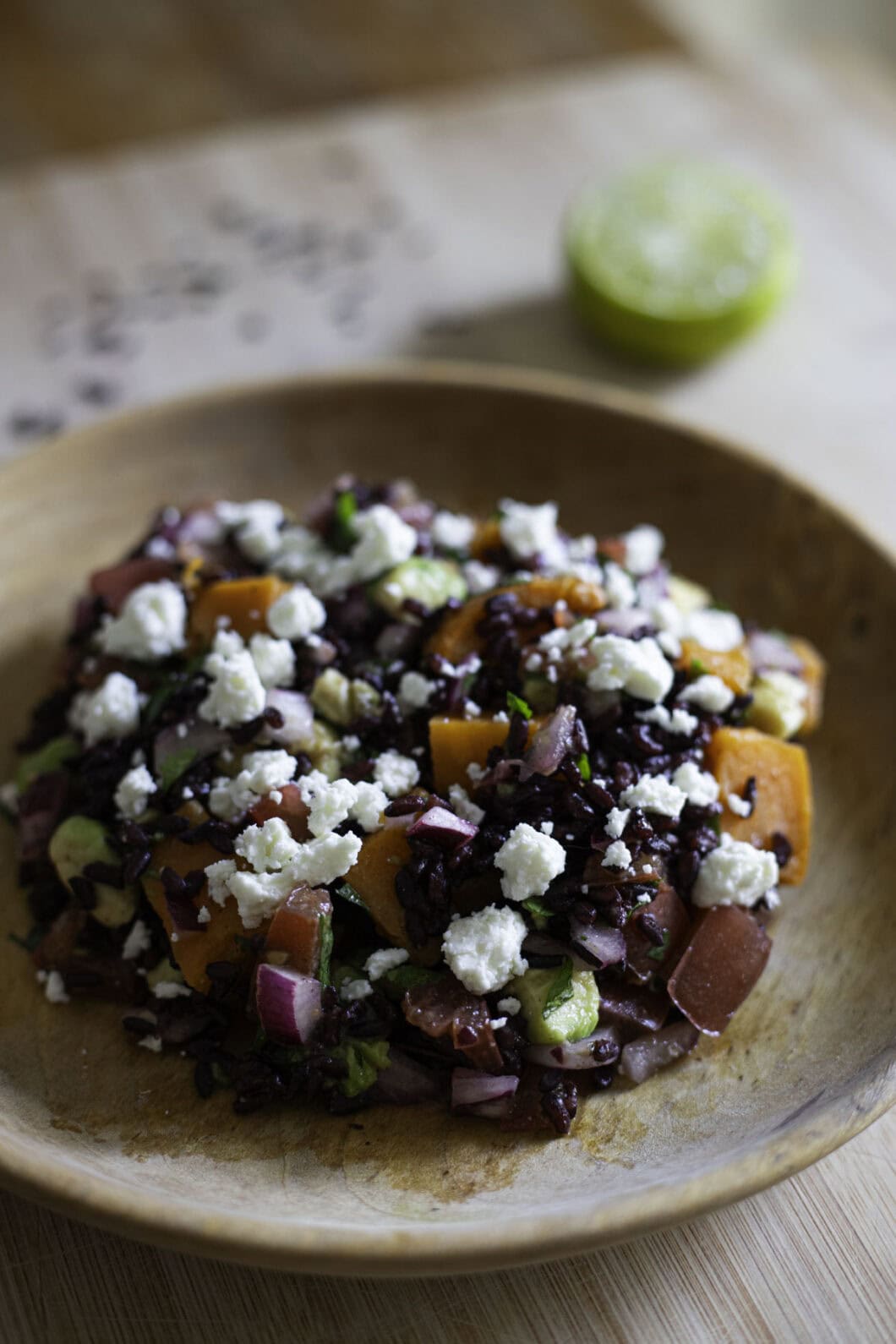
It’s the case for this one. I buildt it up one day in a salad bar, and I fell madly in love with it. In terms of textures, it’s just heavenly : you get the softness of the sweet potatoes and avocado, the juiciness of tomatoes, the resistance/crunch from the rice and onions, and they all pair so well. Taste-wise, it’s bursting with fresh and sharp flavours with what’s almost a pico de gallo sauce – tomatoes, cilantro, onion, lime juice. We soften it all with a bit of olive oil and fresh feta cheese ; wow. I’m craving one right now.

There’s a bit of prep work involved, but nothing too daunting ; you’ll be done within 40 minutes, and that’s because the black rice takes a bit longer to cook.

Sweet Potato & Black Rice Salad – Recipe

Ingredients – Where to find them

Those ingredients are easy to get from your typical grocery store, and for the few which aren’t, you can easily replace them !

Ingredients – Advice & key points

  • I love black rice in this recipe, because it has more resistance and bite than your usual white rice, plus this nutty flavour that pairs so well with the sweet potato. If you don’t have some or can’t find it though, I’d recommend to replace it with whole-grain rice, quinoa, buckwheat -or any other cereal with a bit of bite and a nutty taste ! If all else fails, simply use white rice, it’ll be great too.
  • Feel free to play around with the ingredients used ! You could add cucumber, or radishes, or make the salad spicy using hot sauce. Have fun in your kitchen !

Come now, let’s make the best salad ever !

Shrimp & Mango Salad

This is a summery recipe slightly inspired by my road trip in Yucatan, with almost no heat needed.

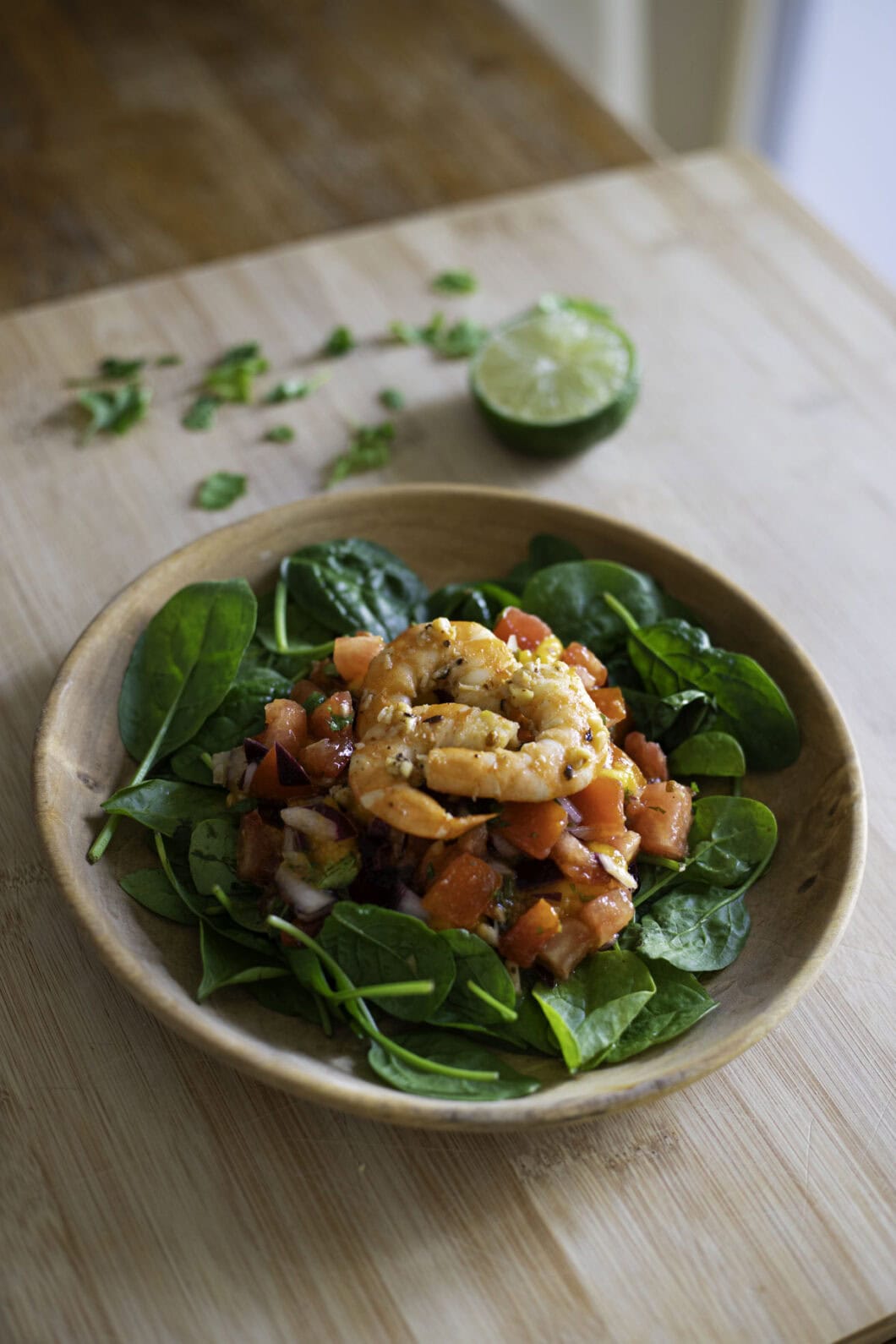
We’re basically making a fresh salsa, almost a pico de gallo, which is a condiment made from fresh, uncooked ingredients like diced tomatoes, onions, cilantro, lime juice and chili pepper. I’ve decided to replace the chili by hot sauce, and to add another fruity dimension with mango, that definitely pairs well with shrimp. I also add olive oil to turn it into an actual salad dressing.

Those fresh shrimps get reheated (tip : the pink ones are already cooked ; they aren’t only if they’re grey) in a bit of garlic and Cayenne.

Then your’re almost done, and all you have to do is assemble ! Easy peasy and delicious. I love those simple summer recipes.

Shrimp & Mango Salad – Recipe

Ingredients – Advice & key points

  • If you’re feeling lazy, you can use shelled shrimps, and all will be ready within 20 minutes.
  • You can definitely play around with this recipe !
    • If you want to make it more filling, your can put this salad into a wrap, or add, besides the salad, a bed of quinoa/bulgur.
    • Sometimes I would add avocado to the salsa. Yum.
  • Try to buy tomatoes and mangoes that are not too ripe ; it might make this salad overly sugary and mushy, lacking texture.

Let’s Salsa !

Spicy Tuna Bites (2 ways)

I already posted a Spicy tuna onigiri recipe, which is quite fast to make. I find it ideal when packing a quick lunch.

When eating home with your family or guests though, I love a good dish to share and prep on the spot, where everyone is involved, like Korean barbecues, Mexican tacos, or French crepes. In all these instances, you set one large spread of ingredients on the table, and as everyone gathers around and shares it all, you get a sense of closeness and community that makes the moment precious.

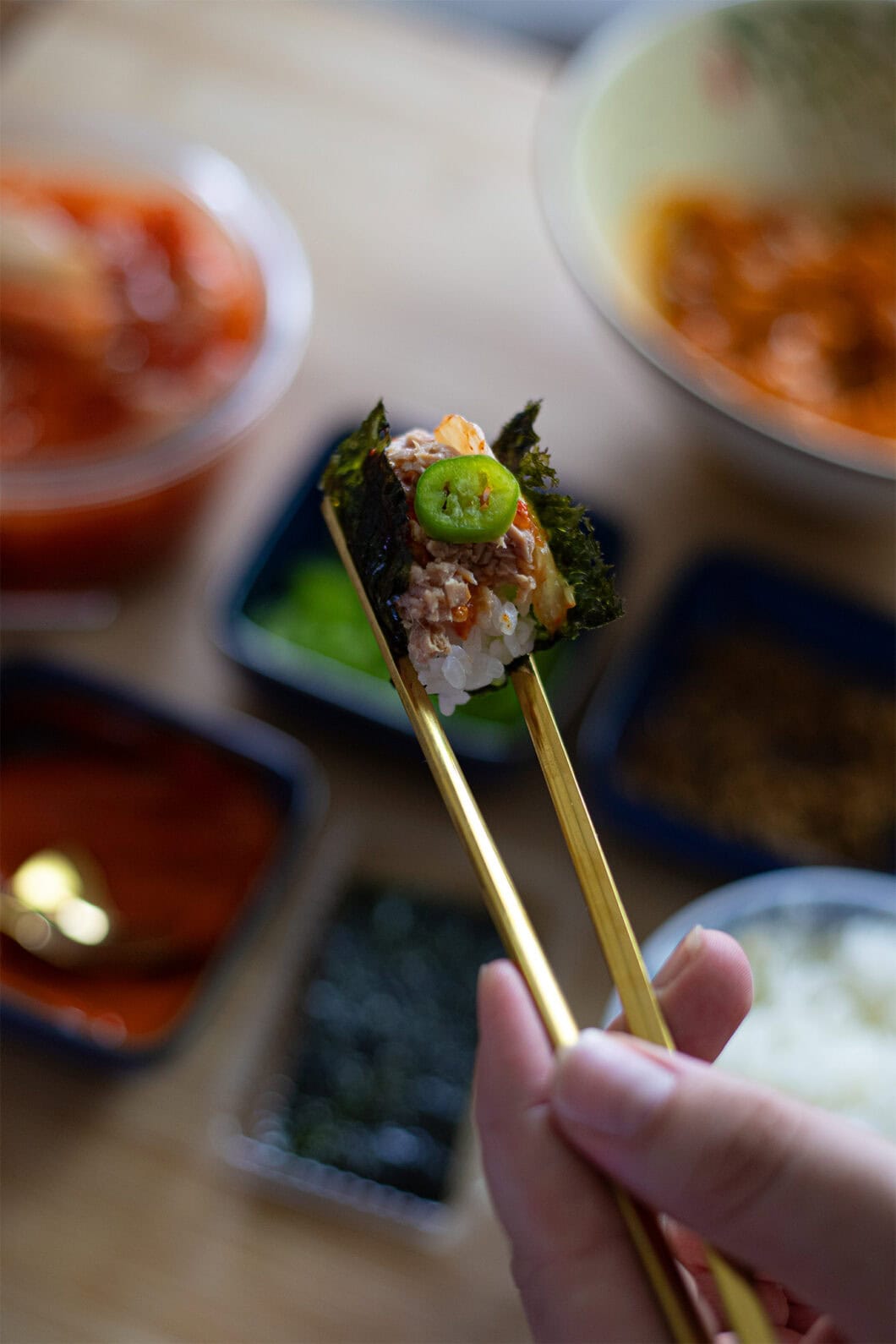
I crafted those Spicy Tuna Bites in this spirit. I bought some of these cute small nori sheets, designed to individually pile a mouthful of ingredients upon it. I started to picture rice, then tuna. As a simple sauce to get everything to slide, a gochujang spicy mayo -because what’s better than tuna and mayo ??- with a touch of sesame, that I love with tuna.

Where’s the crunch though ? The special kick ? Well, kimchi here has you covered, with its spicy tang ; add a slice of green chili pepper if you dare, to make the whole bite properly spicy and crunchy and perfect. I absolutely adored this canned tuna bite. It takes some humble tuna to the very next level, in a matter of minutes.

Then I thought ; tuna + rice… Ahi Poke… Of course, let’s make a raw tuna bite !! You simply dice your sushi-grade raw tuna, then mix it with the spicy mayo. That’s it. Then everybody assembles it the way they want.

You launch your rice, then get both kinds of tuna ready within 10 minutes. You spend one minute slicing the green chili pepper, one more to quickly put the rest on the table ; that’s it ! That’s honestly my best time spent to pleasure ratio so far -around 10 minutes of active work, then just wait for the rice to be ready.

Spicy Tuna Bites (2 ways) – Recipe

Ingredients – Advice & key points

  • You can buy small nori sheets at Asian stores. If you can’t find them, simply cut your Nori sheets using scissors !
  • It is important to use short-grain rice here, so that it sticks together on your bite. Nowadays, you can find it in your grocery store.
  • Try to pick an oil-based canned tuna. I know, oil + mayo seems unhealthy, but remember that the oil is drained and that you actually eat a small portion of it.
  • For the raw tuna version, only pick sushi-grade raw tuna, or tell your fishmonger’s you plan on eating it raw.
  • For the Gochujang paste, you’ll likely need to go to an Asian store to find it. You can substitute it with another hot sauce, but Gochujang is a tad more relevant in this simple recipe ; as it is fermented, it brings in a nice depth of flavour.
  • Also, feel free to add any ingredient you like to this spread ! You could go for raw/pickled/spring onions, add pieces of fruit such as a cubed apple, replace your nori sheets with lettuce leaves ; or make a miso mayo if you don’t like it spicy !

Recipe – Advice & key points

  • If you want to prep it in advance, you can, except for the rice !

All set ? Let’s dig into it !