
Korean Beef Bowl
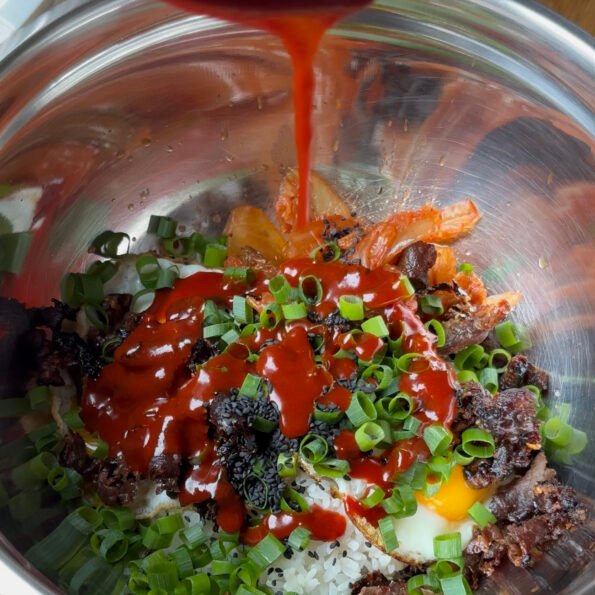
I know a real bibimbap when I see one, and I apologize in advance to all my fellow Korean friends. When I was in Seoul, close to my university dorms, there was this very unassuming little restaurant that made the very best of them, and I enjoyed it on a weekly basis. There was this tiny tweak – maybe a tad more sesame oil in the seasoning, maybe a secret ingredient in the bulgogi, I wish I knew.
But bibimbap is a labour of love. I would know: I’ve already made it from scratch, as well as gimbap. Tasty as they may be, I’m sure as hell not cooking one of those bad boys at the end of my workday. Hence how this recipe was born: a craving for bibimbap, with only 30 minutes ahead of me.
Korean Beef Bowl – About the Dish
This bowl borrows from two Korean classics. The first one is bulgogi, which literally means “fire meat” – bul meaning fire, and gogi meaning meat. Thin slices of beef are marinated in soy sauce, garlic, sesame oil and something sweet, then cooked over high heat so the sugars caramelise. It’s traditionally grilled, often right at the table, but a very hot pan does a great job at home.
The second one is bibimbap – bibim meaning mixed, and bap meaning rice. It’s a bowl of warm rice topped with seasoned vegetables, meat, an egg and a spoonful of gochujang sauce, that you mix thoroughly before eating. The city of Jeonju is famous for its version, and a popular story says the dish was born from mixing leftover side dishes into rice. Mine is a massive shortcut: kimchi stands in for the usual array of vegetable sides, and the bulgogi beef takes centre stage.
Korean Beef Bowl – Recipe
Ingredients – Advice & where to find them
- Short grain rice: Japanese or Korean rice, the kind sold as “sushi rice” in most supermarkets. It’s slightly sticky, so it holds the sauce and the egg yolk instead of letting them slide to the bottom of the bowl. Basmati or jasmine won’t give you the same result.
- Beef: you want very thin slices, so it cooks in two minutes flat. Ribeye or sirloin are perfect. Pop the piece in the freezer for 30–45 minutes and it will be much easier to slice thinly – or look for pre-sliced beef for bulgogi or shabu-shabu in the freezer section of Asian stores.
- Rice syrup (ssal-yeot): the secret behind that glossy, lacquered finish on both the beef and the sauce. It’s less sweet than sugar and you’ll find it in Korean or rather large Asian stores. No rice syrup? Use 2 tsp of sugar, honey or agave for the beef, and 1.5 tsp of agave or honey for the sauce.
- Gochujang: the fermented Korean chili paste – sweet, savoury, a little funky and spicy. It comes in red tubs with a heat level marked on the lid, so pick yours according to your spice tolerance. Once opened, it keeps for months in the fridge.
- Toasted sesame oil: make sure it’s the dark, toasted one, not the pale cold-pressed kind – all the nutty aroma comes from the toasting.
- Kimchi: the more fermented and sour, the better here, because it cuts through the richness of the beef and the yolks. Look for napa cabbage kimchi in the fridge section of Asian stores.
- Rice vinegar: mild and slightly sweet, it just brightens the sauce. Avoid swapping it for a stronger vinegar, it would take over.
Cooking Tips
- Rinse the rice until the water runs clear: usually 3 or 4 changes of water. It removes the surface starch so the grains stay distinct instead of turning gluey.
- Marinate the beef first: it only needs the time it takes to prep everything else, about 10 minutes, but give it that time.
- Get your pan very hot: heat the neutral oil over high heat until it shimmers, then spread the beef in a single layer. Leave it alone for 1 minute to sear, then toss it for 1 more minute.
- Keep an eye on the beef: the sugar in the marinade means it goes from caramelised to burnt very fast. Take it off the heat as soon as it’s browned.
- Fry the eggs in the same pan: quickly wipe it with paper towel but keep a thin film of oil (add a few drops if needed), and cook the eggs over medium-high heat for 2 to 3 minutes, until the edges are golden and crispy and the yolks still runny.
- Adjust the sauce texture: it should flow like runny honey. The rice syrup thickens it, so add water half a teaspoon at a time until you get there.
- Mix right before eating: bibimbap literally means “mixed rice” – burst the yolks and mix everything thoroughly so the sauce and yolk coat every grain.
Sweet, spicy, savoury and ready in around 30 minutes – just don’t skip the most important step: mix like you mean it. Enjoy!
A Korean beef bowl inspired by bibimbap: glossy bulgogi beef seared in a very hot pan, crispy fried eggs with runny yolks, kimchi and short grain rice, all mixed together with a quick gochujang sauce – ready in about 35 minutes.
- 100 grams Short grain rice (Japanese or Korean), uncooked (about 250 g cooked)
- 125 grams Beef, very thinly sliced (ribeye or sirloin)
- 1 tablespoon Soy sauce
- 1 Small garlic clove, minced
- 1 tablespoon Rice syrup (or 2 tsp sugar, honey or agave)
- 1 teaspoon Toasted sesame oil
- 1 pinch Black pepper
- 2 teaspoons Neutral oil (for cooking)
- 1 large Tablespoon Gochujang (heaped)
- 1 teaspoon Toasted sesame oil
- 1 tablespoon Rice syrup (or 1.5 tsp agave or honey)
- 2 teaspoons Water (a little more if needed)
- 1 teaspoon Rice vinegar
- 2 Eggs
- Kimchi (a generous handful)
- 2 Spring onions (thinly sliced)
- 1 tablespoon Black sesame seeds (or white)
- Cook the rice
Rinse the rice in cold water until it runs clear (3 to 4 changes of water), then cook it in the rice cooker or how you usually do.
- Marinate the beef
Mix the beef with the soy sauce, garlic, rice syrup, toasted sesame oil and black pepper – everything except the neutral oil. Set aside while you prep the rest, about 10 minutes.
- Make the sauce
Whisk all the sauce ingredients together until smooth. Adjust with a little more water if needed: it should flow like runny honey, neither too thick nor too thin.
- Slice the spring onions
Thinly slice the spring onions.
- Sear the beef
Heat the neutral oil in a large frying pan over high heat until it shimmers. Spread the beef in a single layer and let it sear for 1 minute without touching it, then toss for 1 more minute. Keep a close eye on it: the sugar makes it burn fast. Set aside.
- Fry the eggs
Quickly wipe the pan with paper towel, keeping a thin film of oil (add a few drops if needed). Over medium-high heat, fry the eggs for 2 to 3 minutes, until the edges are golden and crispy and the yolks are still runny – they’re what brings everything together.
- Assemble
In a large bowl, add the rice, then the eggs, the beef, the kimchi and the spring onions. Pour the sauce and sprinkle with black sesame seeds.
- Mix and serve
Mix everything together: the yolks burst and coat the rice. Serve right away – bibimbap literally means “mixed rice”.
No rice cooker? Bring the rinsed rice and 120 ml of water to a boil in a small covered saucepan, then cook over the lowest heat for 12 minutes, lid on. Turn off the heat and let it rest for 10 minutes without lifting the lid.
Thank you for trying out this recipe ! Do not hesitate to leave some feedback. I hope it brightened your day.