
Traditional Bissap
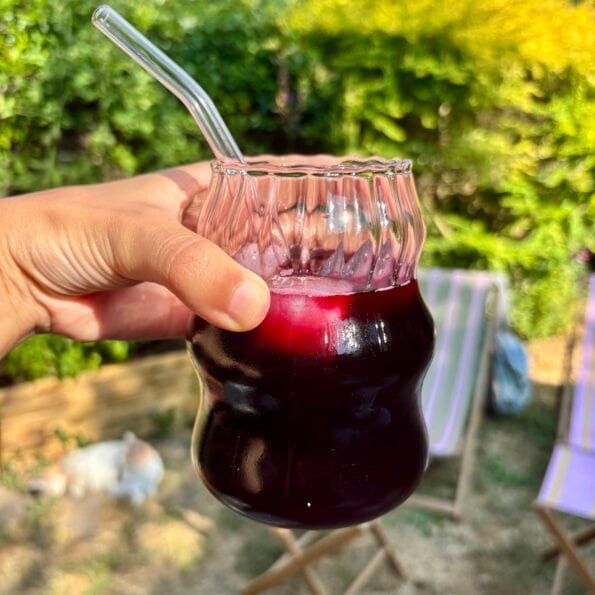
Every time I go to an African restaurant, ordering bissap isn't really a choice, it's the rule. Not the shy, barely-there infusion you get at trendy coffee shops calling itself "hibiscus tea", but the real thing: deep, dark red, and intensely flavorful.
It's hands down my favorite non-alcoholic drink. There's a tannic backbone to it that speaks to me, it's not just sweet, it's aromatic, round, and floral all at once. I'm completely obsessed.
I've tried, more than once, to get as close as possible to the most traditional version I could find.
Traditional Bissap - About the dish
Bissap is the name used across Senegal and much of West Africa for a deep red infusion made from dried hibiscus flowers, technically the calyxes of Hibiscus sabdariffa, also known as roselle. The word comes from Wolof, and the drink shows up everywhere: family gatherings, street stalls, and the menu of pretty much every African restaurant you'll ever walk into.
The same flower travels under different names depending on where you land: karkade in Sudan and Egypt, sorrel in Jamaica and across the Caribbean, agua de jamaica in Mexico. Wherever it goes, it keeps that same tart, tannic, faintly fruity character, usually softened with sugar and dressed up with mint, ginger, or a touch of orange blossom water, exactly how it's made here.
Traditional Bissap - Recipe
Ingredients – Advice & key points
- Dried hibiscus flowers: look for whole, deep red dried flowers (sold as bissap, karkade, or roselle) rather than powdered hibiscus tea bags, they give a deeper color and less bitterness.
- Fresh mint: stirred in only after the tea comes off the heat, so its aroma stays bright instead of turning bitter from prolonged boiling.
- Dried mint: adds a deeper, more concentrated mint flavor that fresh leaves alone can't give; look for it at North African or Middle Eastern grocery stores.
- Cloves: just a few are enough, they add warmth without overpowering the floral notes of the hibiscus.
- Sugar: stir it in while the tea is still hot so it dissolves completely.
- Orange blossom water: a delicate, floral ingredient, a little goes a long way, and timing matters, more on that below.
Recipe – Advice & key points
- Gentle simmer: 5 minutes is enough to pull deep color and tannins out of the hibiscus without turning the tea bitter.
- Off-heat infusion: add the mint only after turning off the heat, then let everything steep for 20 minutes, this keeps the mint flavor fresh instead of cooked.
- Straining: a fine sieve removes every small hibiscus petal for a smooth, clean drink.
- Orange blossom timing: don't add it during cooking, its delicate scent is best preserved when stirred in right after straining, while the tea is still warm.
- Chilling: let the bissap rest in the fridge overnight if you can, the flavors meld and taste even better the next day.
- Serving: enjoy it ice-cold, over plenty of ice, bissap is not meant to be served lukewarm.
Serve it well chilled, over plenty of ice, it's the kind of drink that disappears fast on a hot day.
A deep red, intensely aromatic Senegalese hibiscus infusion flavored with mint, cloves and orange blossom water, chilled and served ice-cold.
- 70 grams dried hibiscus flowers (whole, deep red, not powdered)
- 1,6 liter water
- 30 fresh mint leaves
- 3 tablespoons dried mint
- 3 whole cloves
- 7 tablespoons sugar
- 1 tablespoon orange blossom water
- Rinse the hibiscus
Quickly rinse the dried hibiscus flowers under cold water to remove any dust.
- Boil the water and add the flowers
Bring the water to a boil in a large pot, then add the hibiscus flowers and the cloves.
- Simmer, then steep with mint
Let it simmer for 5 minutes, then turn off the heat and add the fresh and dried mint. Cover and let steep for 20 minutes.
- Strain
Strain the infusion through a fine sieve into a large pitcher or bowl, discarding the flowers, mint and cloves.
- Sweeten and flavor
While the infusion is still warm, stir in the sugar until fully dissolved, then add the orange blossom water and mix well.
- Chill
Let the bissap cool, then refrigerate for at least a few hours, ideally overnight, until well chilled.
Thank you for trying out this recipe ! Do not hesitate to leave some feedback. I hope it brightened your day.