Thai Egg & Rice (Khao Khluk Nam Pla)
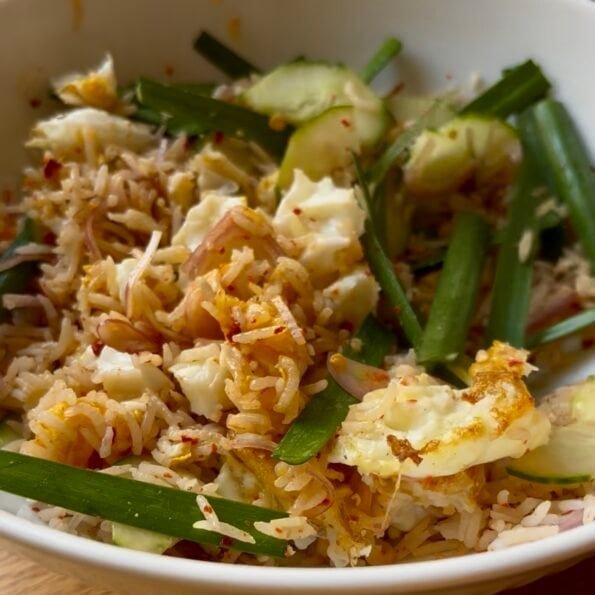
There's a very specific kind of morning that produces this bowl.
I was in Chiang Mai, staying in a guesthouse somewhere off the old city moat. It was 7am, the kind of light that's still soft and almost orange. I'd walked past the same rice shop three mornings in a row without stopping, which is embarrassing in retrospect, because on the fourth morning I finally sat down on one of the plastic stools and watched the woman at the wok for a full two minutes before I even looked at the menu. She cracked two eggs into a small pool of oil, pressed the whites slightly into the pan with a spoon so the edges went golden and lace-like, left the yolk completely runny, and then placed them over a bowl of plain jasmine rice she'd already dressed with fish sauce, raw shallot, and lime juice.
She put the bowl in front of me, dropped a few pinches of smoked chili flakes on top, slid a plate of sliced cucumber across the counter, and walked away.
I sat there for a second wondering if something else was coming. Nothing was coming. This was it. And it was one of the best things I ate in Thailand.
The bowl costs almost nothing. It takes less than ten minutes. And every single element does exactly what it's supposed to do -- which is the whole point.
Khao Khluk Nam Pla - Thailand's Simplest Perfect Bowl
The name translates almost literally to what it is: khao (rice) + khluk (to mix) + nam pla (fish sauce). It's not a recipe in the way most dishes are -- it's more of a technique, a ratio, a philosophy. You season your rice directly, in the bowl, and the mixing itself (the khluk) is part of the cooking process.
This is quintessential Thai home food and street breakfast food -- the kind of thing eaten at plastic-stool shops at dawn, before the tourist food wakes up. It's in the same family as rice dishes that use fermented fish sauce as the primary seasoning - deeply savoury, slightly pungent, beautifully bright from the lime. The shallots are always raw (this is non-negotiable, as you'll see below), the chili flakes add warmth and smoke, and the cucumber provides the cool crunch that makes the whole thing feel complete.
The eggs are traditionally fried Thai-style - cooked in more oil than you'd think necessary, edges crispy and almost frilly, yolk still liquid. The slight bitterness of the lacy fried white against the runny, rich yolk is genuinely the best possible egg preparation for this bowl. It's not health food. It's egg perfection.
An important note on the fermented fish sauce : this bowl calls for a thick, gray fermented fish sauce. You can order it online (I did) or find it in a Thai produce store.
Also, authentic Thai chili flakes are often lightly smoked or toasted, which gives them a depth that regular dried chili flakes don't quite have. If you can find them at an Asian grocery, use them. If not, a mix of regular chili flakes with a very small pinch of smoked paprika gets you most of the way there.
Your 10-mn Thai bibimbap : rice, eggs, shallots, chives, and a few seasonings. That's it.
- 100 grams jasmine rice
- 2 eggs (fried Thai-style)
- 1 shallot (thinly sliced)
- 1/2 lime (start with 1/4 then adjust to taste)
- 1/6 cucumber (thinly sliced)
- 1 handful Chinese chives (cut into 3-4cm pieces; sub with scallions if unavailable)
- 1 tablespoon fermented fish sauce
- 1,5 teaspoon Thai chili flakes (ideally smoked/grilled; sub with any chili flakes)
- Prep the garnishes
Thinly slice the cucumber and shallot. Cut the Chinese chives into 3-4cm pieces. Set aside.
- Fry the eggs
Heat a good splash of neutral oil in a small pan over medium-high heat. Crack in the 2 eggs. Use a spoon to gently baste the whites with the hot oil so the edges turn golden and lacy. The yolks should stay runny. This takes about 2 minutes. You want crispy, frilly edges - this is non-negotiable.
- Season the rice (the khluk)
Into a large bowl with hot cooked jasmine rice, add the fish sauce, raw shallot, chili flakes, and squeeze in the lime juice. Mix everything directly in the bowl - this is the khluk. Mix well. The rice should be fragrant, salty, slightly spicy, and lightly glossy.
- Plate and serve
Top the seasoned rice with the cucumber, Chinese chives, and then lay the fried eggs on top. Optionally add a few extra drops of the egg frying oil over the rice. Mix well. Eat immediately.
Raw shallots are essential - do not cook or soften them. The sharpness cuts through the fish sauce and is a defining part of the dish.
Some people add a few drops of the hot egg frying oil directly onto the rice for extra richness and flavour.
Optionally add leftover meat or other toppings of your choice on top -- this is very common in Thailand.
If you can't find Thai chili flakes, a mix of regular dried chili flakes with a small pinch of smoked paprika is a good substitute.
Thank you for trying out this recipe ! Do not hesitate to leave some feedback. I hope it brightened your day.