
Spicy Cold Noodles (Bibim Guksu)
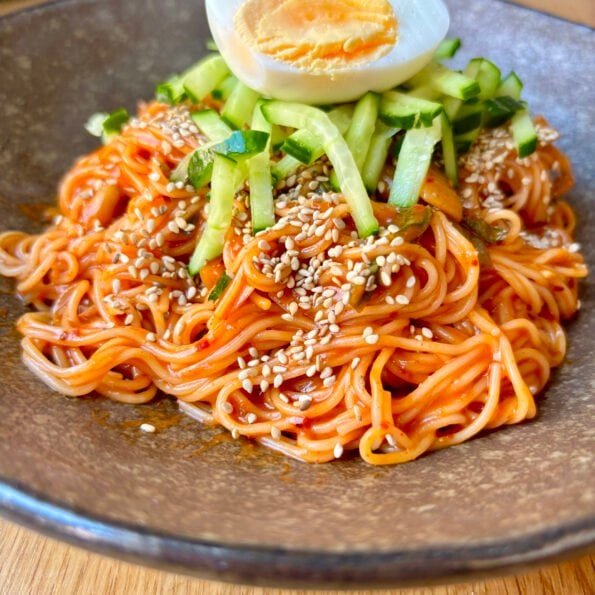
Bibim Guksu — A Korean Summer Classic
Bibim guksu (비빔국수) literally translates to "mixed noodles." Bibim means mixed, guksu means noodles — and the act of mixing is very much the point. Unlike ramen or udon served in broth, bibim guksu is a dry noodle dish: thin wheat noodles tossed in a cold, bold sauce, with toppings piled on top. It's a staple of Korean home cooking, especially in summer, when heavy stews and soups lose their appeal. The base sauce varies by household, but the soul of the dish is always the same: gochujang (fermented chili paste) for heat and depth, sesame oil for richness, and some form of acidity to cut through. Here, the kimchi does double duty — it's both a topping and a key ingredient in the sauce, with the kimchi brine bringing that funky, sour punch that makes the whole bowl sing. The toppings are flexible, but a halved boiled egg, cucumber matchsticks and sesame seeds are pretty classic. And honestly, pretty perfect.Bibim Guksu — Recipe
Ingredients — Advice & key points
- Somen noodles : These thin wheat noodles are the go-to for bibim guksu, and for good reason — they're delicate, quick to cook, and take on the sauce beautifully. If you can't find them, no problem : udon or ramen work as a substitute, as they maintain this bouncy texture we love. A close substitute would also be soba noodles.
- Kimchi : The more fermented, the better. Fresh kimchi is fine, but well-aged kimchi has a depth of flavour and a sourness that transforms this dish. Don't skip the brine — it's liquid gold here.
- Gochujang : Don't substitute with generic chili paste. Gochujang has a fermented, slightly sweet, earthy heat that is very specific and very necessary. You should be able to find it in any Asian grocery store -now you can even find some at large grocery stores!
- Gochugaru : Gochugaru = Korean red chili flakes -a staple in the Korean pantry. You can skip it altogether if you don't already have it.
- Corn syrup vs sugar : Corn syrup gives a slight glossy finish to the sauce and a rounder sweetness. Sugar works perfectly well as a substitute — just use slightly less, as it's sweeter.
Cooking process — Advice & key points
- Rinse those noodles properly. After cooking, rinse under cold running water until they're genuinely cold and have lost any stickiness. Drain well. This step is what makes bibim guksu refreshing rather than gluey.
- Mix the sauce first, then add the noodles. Building the sauce in a large bowl before the noodles go in means everything coats evenly from the start.
- Serve immediately. Bibim guksu waits for no one. The noodles will absorb the sauce and soften as they sit — which is fine for leftovers, but the texture straight after mixing is really the best version of this dish.
- Taste and adjust before adding the noodles. More gochujang for heat, more sesame oil for richness, a splash more brine for tang. Make it yours.
- Careful : the dish is spicyyy ! Remove gochugaru for a tad less heat, but it'll still be quite spicy nonetheless.
Cold, spicy, tangy Korean noodles tossed with kimchi sauce. The ultimate summer bowl.
- 200 grams somen noodles (thin wheat noodles)
- 170 grams well-fermented kimchi (chopped)
- 1/3 cup kimchi brine (or water + rice wine vinegar)
- 4 tablespoons gochujang
- 1 teaspoon gochugaru (optional)
- 1 tablespoon corn syrup (or sugar)
- 2 garlic cloves (minced)
- 1 tablespoon toasted sesame oil
- 2 tablespoons toasted sesame seeds
- 1/4 cucumber (cut into matchsticks)
- 1 egg (halved)
- Prep your ingredients
Dice the kimchi, cut the cucumber into matchsticks, and mince the garlic cloves.
- Make the sauce
In a large bowl, combine the kimchi, kimchi brine, gochujang, corn syrup, minced garlic, gochugaru (if using) and sesame oil. Mix well until everything is combined into a thick, punchy sauce.
Taste and adjust here — more gochujang for heat, a splash more brine for tang, a touch more sesame oil for richness. - Cook the noodles
Bring a pot of water to a boil and cook the somen noodles as instructed on the packet (about 3 to 3.5 minutes). Drain and rinse under cold running water until genuinely cold and no longer slippery. Drain well.
- Mix and serve
Add the drained noodles to the kimchi sauce. Mix well and aggressively — you want every strand coated. Transfer to bowls and top with sesame seeds, cucumber matchsticks, and the halved egg with a pinch of salt. Serve right away.
Thank you for trying out this recipe ! Do not hesitate to leave some feedback. I hope it brightened your day.