
Dry Tom Yum Noodles
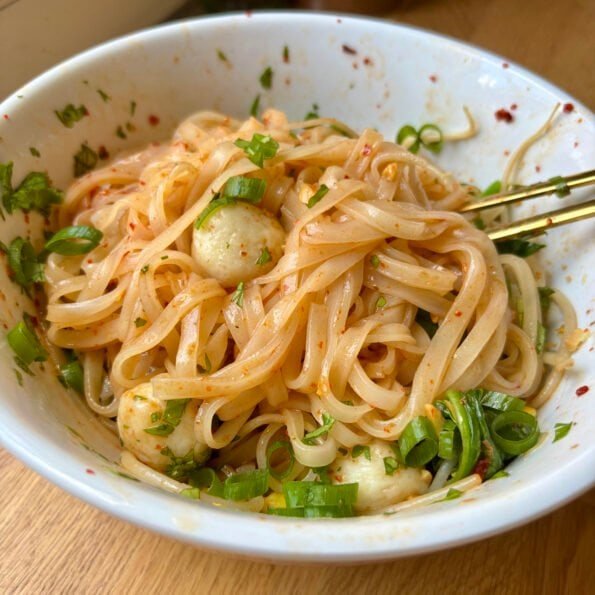
Dry Tom Yum Noodles – About the dish
Tom yum (ต้มยำ) is one of Thailand's most iconic dishes — a spicy, sour soup built on lemongrass, galangal, kaffir lime leaves, chili, lime juice, and fish sauce. The name literally translates to "boiling" (tom) and "mixed" or "spiced" (yum), and it's been a cornerstone of Thai cooking for centuries. Traditionally a soup, it's associated with central and northern Thai street food culture and is one of the dishes most strongly tied to Thai culinary identity internationally. What makes this version different — and arguably even better for a weeknight — is that it's dry. No broth. Instead of being a soup base, the tom yum flavour profile becomes a punchy, glossy sauce that coats every noodle and clings to the fishballs and vegetables. The technique of building a sauce directly in the bowl and tossing hot noodles through it is common across Southeast Asian street food — you see it in Singaporean dry laksa, Malaysian dry char kway teow, and Thai dry noodle variations like this one. The real star here is the nam prik pao (น้ำพริกเผา) — a roasted chili paste made from dry-roasted shallots, garlic, dried chilies, and sometimes tamarind and shrimp paste, caramelised into a dark, smoky, deeply aromatic paste. It's the ingredient that makes this dish taste like Thailand. Worth tracking down at a well-stocked Asian grocery — it lives in a jar and lasts forever.Dry Tom Yum Noodles – Recipe
Ingredients – Advice & key points
- Nam prik pao (Thai roasted chili paste): 1 tbsp. This is the soul of the dish — don't skip it or substitute it. Nam prik pao is made from dry-roasted shallots, garlic, and dried chilies, blended into a thick, smoky, slightly sweet paste. It brings a depth and complexity that no other ingredient can replicate. Look for it in Asian grocery stores (usually in a glass jar, in the Thai condiments aisle). The version with shrimp paste is the most flavourful; if you're avoiding seafood, look for a vegetarian version. Brands like Maesri or Mae Ploy are widely available and excellent.
- Lime: The acid is what makes the whole bowl sing and keeps it from feeling heavy. Roll the lime on the counter before cutting to get maximum juice out of it.
- Fish sauce: The umami backbone of the sauce. Use a good quality Thai fish sauce — Tiparos or Megachef are solid options. Fish sauce is salty, so taste before adding any extra salt.
- Honey or corn syrup: This is your sweetness and balance. Honey works beautifully and adds a subtle floral note. Corn syrup is more neutral and gives a slightly shinier gloss to the sauce. Either works — it's personal preference.
- Warm water: Loosens the sauce so it coats the noodles evenly without being gluey. Add it to the bowl when mixing the sauce base.
- Frozen fishballs (or any protein): Fishballs are the classic pairing here — they're slightly bouncy, subtly savoury, and absorb the sauce beautifully. Find them in the freezer section of any Asian grocery store. That said, this dish is extremely forgiving: sliced chicken breast, shrimp, tofu, or even a soft-boiled egg all work brilliantly. Use what you have.
- Rice noodles: Fresh rice noodles are silkier and take less than 2mn to cook — they're ideal here. Dry rice noodles usually need soaking ; follow the packet instructions carefully to avoid mushiness. Either works, but fresh is nice.
- Chinese broccoli (gai lan), chopped: Slightly bitter, sturdy, and holds up to the heat without going limp. If you can't find it, regular broccoli florets, pak choi, or even spinach work as substitutes — just adjust the blanching time accordingly.
- Bean sprouts: Add crunch and freshness. Blanch them for just 10 seconds — you want them still snappy, not wilted.
- Green onions, green part only: The fresh, mild onion flavour cuts through the richness of the sauce. Green part only here — the white part would be too sharp.
- Coriander: Adds freshness and a herbal lift. If you're in the camp that finds coriander tastes like soap, swap for Thai basil or just leave it out.
- Crushed roasted peanuts: Texture, richness, and a subtle nuttiness that rounds everything out. Dry-roasted unsalted peanuts are ideal. Crush them roughly — you want some texture, not peanut dust.
- Red pepper flakes: 1 tsp, or less/skip for less heat. The dish already has some spice from the nam prik pao — add flakes on top if you want it properly fiery.
Recipe – Advice & key points
- Build the sauce in the bowl first: It makes this dish of so easy to prep. Combine the nam prik pao, lime juice, fish sauce, honey, and warm water directly in your serving bowl and mix until the paste is fully dissolved into a glossy, pourable sauce. Taste it — it should hit sour, salty, sweet, and slightly smoky all at once. Adjust lime or fish sauce as needed before you add anything else.
- Cook the fishballs properly: Simmer or boil frozen fishballs for about 5 minutes until cooked through and slightly puffed. Don't overcook or they'll go rubbery. Drain and set aside — they'll absorb the sauce when you toss everything together.
- Blanch the vegetables fast: Chinese broccoli and bean sprouts need just 10 seconds in boiling water — seriously, no more. You want them cooked but still with bite and colour. Drain immediately and set aside.
- Cook noodles according to the packet: Fresh rice noodles need about 1 to 2mn in boiling water. Dry rice noodles need longer — follow the packet instructions exactly. The key is draining them well so they don't water down your sauce.
- Assemble straight into the sauce, immediately: The moment the noodles are drained, tip them directly into the bowl with the sauce. Add the fishballs, vegetables, and all the toppings. Toss everything together quickly and thoroughly — you want every noodle coated and the sauce evenly distributed. Serve immediately. The noodles should be beautifully shiny, but not too oily — if the sauce seems too thick, add a tiny splash of warm water.
- Serve right away — no waiting: This dish does not hold well. The noodles absorb the sauce rapidly and the vegetables lose their crunch. Make it, eat it instantly. It's a two-minute assembly job, so everything else should be ready before the noodles go in.
A Thai street food classic reimagined for weeknights. Rice noodles tossed in a punchy, glossy tom yum sauce — smoky nam prik pao, lime, fish sauce, and honey — with fishballs, crunchy vegetables, and fresh toppings. Insanely fragrant, ready in under 20 minutes.
- 1 tablespoon Thai nam prik pao (Thai chili paste)
- 1 lime
- 2 tablespoons fish sauce
- 1,5 tablespoon honey (or corn syrup)
- 2 tablespoons warm water
- 130 grams frozen fishballs (or any protein you want)
- 260 grams fresh rice noodles (or 130g dry)
- 60 grams Chinese broccoli (gai lan) (chopped, optional)
- 60 grams bean sprouts
- 1 teaspoon red pepper flakes (or less/skip for less heat)
- 2 green onions (chopped)
- 2 tablespoons cilantro (chopped)
- 1 tablespoon roasted peanuts (crushed)
- Make the sauce
Mix the nam prik pao, lime juice, fish sauce, honey, and warm water directly in your serving bowl.
Stir until the paste is fully dissolved into a glossy sauce.
Taste — it should be sour, salty, a teeny bit sweet, and a bit spicy. Adjust lime or fish sauce as needed. - Cook the fishballs
Boil the frozen fishballs for about 5 minutes until cooked through and slightly puffed. Drain and set aside.
- Blanch the vegetables
Drop the Chinese broccoli and bean sprouts into boiling water for 10 seconds only. Drain immediately and set aside. They should still have bite and colour.
- Cook the noodles
Cook the rice noodles according to packet instructions. Fresh noodles: 1-2mn tops. Dry noodles: follow the packet. Drain well.
- Assemble and serve immediately
Tip the freshly drained noodles directly into the bowl with the sauce.
Add the fishballs, vegetables, and all the toppings.
Toss everything together quickly until every noodle is coated and the sauce is evenly distributed. The noodles should be beautifully shiny, not too oily.
Serve immediately.
Thank you for trying out this recipe ! Do not hesitate to leave some feedback. I hope it brightened your day.